Last updated: September 2026
How Much Is My Utility Trailer Worth?
Whether you have a flatbed trailer, enclosed cargo trailer, dump trailer, car hauler, landscape trailer, or any other utility trailer, our AI analyzes the type, size, weight rating, and condition to provide an accurate market valuation. Get a fair price before selling, trading in, or buying a used trailer.
Get the free app for unlimited scans


Compare real prices
See what utility trailers are listed for right now
Affiliate link: we earn a commission if you buy, at no extra cost to you.
What do you want to value?
Get the free app for unlimited scans
Why Knowing Your Utility Trailers Value Matters
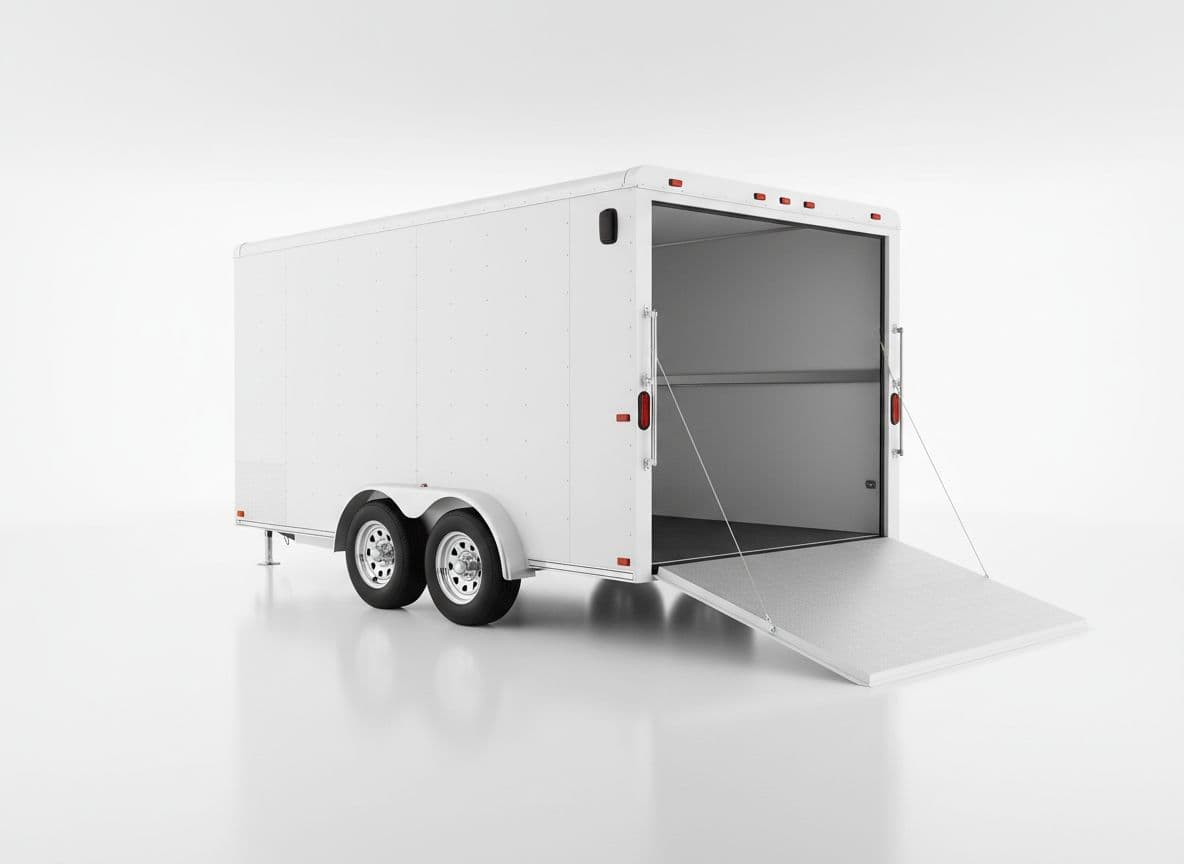
Utility trailers are essential equipment for contractors, landscapers, farmers, and homeowners, and the used trailer market is surprisingly strong. New trailer prices have increased 30-50% in recent years due to steel costs and demand, making used trailers an attractive alternative. A quality 6x12 enclosed cargo trailer that sold new for $4,000-$6,000 might retain 60-70% of its value after five years. Heavy-duty dump trailers, car haulers, and equipment trailers hold value even better due to their higher price points and professional demand. Many people inherit trailers, receive them as part of business sales, or simply have unused trailers sitting on their property without knowing their current market value. The trailer market is less transparent than vehicles. There is no universally recognized Blue Book for utility trailers. Making accurate valuation particularly valuable. Factors like axle rating, floor condition, electrical systems, and tire condition can create $500-$2,000 value differences between seemingly similar trailers.
Key Factors That Affect Utility Trailers Value
Understanding what drives the price of utility trailers helps you get the most accurate valuation.
Type & Configuration
Enclosed cargo trailers command higher prices than open utility trailers due to weather protection and security. Dump trailers hold value exceptionally well due to high new prices and contractor demand. Car haulers and equipment trailers with ramps are popular for automotive and construction use. Flatbed and landscape trailers are the most common and most affordable. Specialty trailers (motorcycle, snowmobile, concession) have niche markets with dedicated buyers.
Size & Weight Rating
Larger trailers with higher GVWR (Gross Vehicle Weight Rating) are worth more. A 7x14 enclosed trailer is worth significantly more than a 5x8. Tandem axle trailers (two axles) command premiums over single-axle trailers for their higher capacity and stability. The GVWR rating (3,500 lbs to 14,000+ lbs) directly correlates with capability and value. Gooseneck and fifth-wheel connection trailers are a higher-value category than bumper-pull trailers.
Brand & Build Quality
Recognized trailer brands (Big Tex, PJ Trailers, Sure-Trac, Haulmark, Wells Cargo, Carry-On) hold value better than unknown manufacturers. Aluminum trailers (Aluma, Featherlite) command significant premiums over steel trailers due to weight savings, corrosion resistance, and longevity. The quality of steel gauge, welding, and hardware varies enormously between manufacturers and directly impacts durability and resale value.
Condition & Maintenance
Floor condition is the single most important structural factor. Rotted wood floors, rusted steel floors, or bent aluminum floors significantly reduce value. Frame condition (rust, cracks, bent sections) is critical for safety and value. Tire condition and age matter. Trailer tires degrade with age even if tread remains. Electrical systems (lights, brakes, breakaway switch) must function properly. Fresh paint or undercoating signals maintenance and adds perceived value.
Features & Accessories
Electric brakes on both axles add value and may be legally required over certain weight ratings. Side doors, ramp doors, and loading ramp quality affect enclosed trailer value. Tie-down points, D-rings, E-track, and built-in storage add utility value. Spare tire mounts, tool boxes, and ladder racks add convenience premiums. LED lighting upgrades, fresh bearings, and recently serviced wheel hubs add buyer confidence.
Tips for Valuing Utility Trailers
Get the most accurate valuation by following these tips when photographing your utility trailers.
Photograph the trailer from all four corners showing the overall condition, tires, and body
Include close-ups of the floor condition (inside for enclosed trailers), frame, axles, and hitch/coupler
Show the electrical connections, lights, and brake controller compatibility. Working electrical systems are essential
Photograph the VIN plate or manufacturer label showing the GVWR, year, and model specifications
Utility Trailers Market Insights
The used trailer market is robust and primarily local due to transportation logistics. Facebook Marketplace dominates used trailer sales, followed by Craigslist and specialized sites like TrailerTrader.com. New trailer prices have risen significantly, pushing more buyers to the used market and supporting strong resale values. The strongest demand segments are enclosed cargo trailers (contractor and moving use), dump trailers (landscaping and construction), and car haulers (automotive enthusiasts). Aluminum trailers command the highest premiums due to corrosion resistance and weight savings. The market is less seasonal than some powersport categories, though spring and summer see slightly higher activity. If you are selling, a clean trailer with working lights, good tires, and a solid floor sells quickly. Addressing minor issues like dead lights, missing reflectors, or worn tires before listing can increase your sale price by more than the repair cost.
Notable Utility Trailers Values
Real-world examples of what specific utility trailers have sold for, so you can benchmark your own.
| Utility Trailer | Condition | Typical Value |
|---|---|---|
| Single-Axle Open Utility Trailer (4x6 or 5x8) | Used | $400 - $1,200 |
| Tandem-Axle Flatbed Trailer (16-20 ft) | Used | $2,500 - $6,500 |
| Single-Axle Enclosed Cargo Trailer (5x8 or 6x10) | Used | $1,500 - $4,000 |
| Tandem-Axle Enclosed Cargo Trailer (7x16 or 8.5x24) | Used | $5,000 - $14,000 |
| Bumper-Pull Dump Trailer (7x14, 14,000 lb GVW) | Used | $6,000 - $12,000 |
| Gooseneck Flatbed Trailer (35-40 ft, 25,000+ lb GVW) | Used | $10,000 - $28,000 |
| Car Hauler / Auto Transport Trailer (2-car, tandem-axle) | Used | $3,500 - $9,000 |
| New Single-Axle Utility Trailer (5x10, entry-level brand) | New / Dealer | $1,200 - $2,500 |
| Vintage or Antique Farm Wagon / Hay Trailer (pre-1980) | Aged / Functional | $300 - $1,800 |
Based on aggregated eBay sold listings, Facebook Marketplace comps, and dealer pricing from Big Tex, PJ Trailers, and Load Trail published price sheets.
Find Out What Your Utility Trailers Are Worth
Upload a photo now and get a free AI-powered valuation in seconds. No sign-up required.
Utility Trailers Valuation FAQ
How much do used utility trailers typically cost?
Small open utility trailers (4x6, 5x8) sell for $500-$1,500 used. Mid-size enclosed cargo trailers (6x12, 7x14) range from $2,000-$5,000. Large enclosed trailers (8.5x20+) sell for $4,000-$10,000+. Dump trailers range from $3,000-$10,000+. Car haulers sell for $2,000-$6,000. Aluminum trailers command 30-50% premiums over comparable steel trailers. Brand, condition, and features significantly affect pricing within each category.
Do trailers hold their value?
Quality trailers hold value well compared to most equipment. A well-maintained enclosed trailer typically retains 50-70% of its value after five years. Dump trailers and aluminum trailers hold value best due to high new prices and strong demand. Steel open utility trailers depreciate more due to rust and lower new prices. The key factors for value retention are structural condition (frame and floor), brand reputation, and overall maintenance.
How do I find the year and specs of my trailer?
Check the VIN plate, typically located on the tongue (front) of the trailer on the driver's side. The VIN contains the year of manufacture (10th character). The data plate or sticker near the VIN shows GVWR, GAWR (axle ratings), tire size, and manufacturer information. If the plates are missing or unreadable, the manufacturer may be able to look up the VIN. State title and registration documents also show the year.
Is an aluminum trailer worth the premium over steel?
For many buyers, yes. Aluminum trailers cost 30-50% more new but do not rust, are significantly lighter (improving fuel economy and tow vehicle wear), and require less maintenance. They also hold resale value better than steel trailers. The weight savings can mean the difference between towing safely with a half-ton truck versus needing a three-quarter-ton. For coastal areas or regions with road salt, aluminum is particularly advantageous.
What should I check before buying a used trailer?
Inspect the floor for rot (wood) or rust holes (steel). Check the frame for cracks, rust, and straightness. Verify all lights and brakes work. Inspect tires for age (date code on sidewall. Replace if over 5-6 years regardless of tread). Check wheel bearings for play or noise. Test the coupler and safety chains. Verify the VIN matches the title. For enclosed trailers, check for leaks, wall delamination, and door seal condition. Have the brakes tested under load if possible.
Value anything, anytime
Unlimited valuations, saved history and full reports in the free app.