Last updated: September 2026
How Much Is My E-Bike Worth?
Whether you have a Trek, Specialized, Rad Power, Aventon, Lectric, or any other electric bicycle, our AI analyzes the brand, motor system, battery capacity, and condition to provide an accurate market valuation. From commuter e-bikes to eMTBs and cargo bikes, get the right price before selling.
Get the free app for unlimited scans


Compare real prices
See what e-bikes are listed for right now
Affiliate link: we earn a commission if you buy, at no extra cost to you.
What do you want to value?
Get the free app for unlimited scans
Why Knowing Your E-Bikes Value Matters
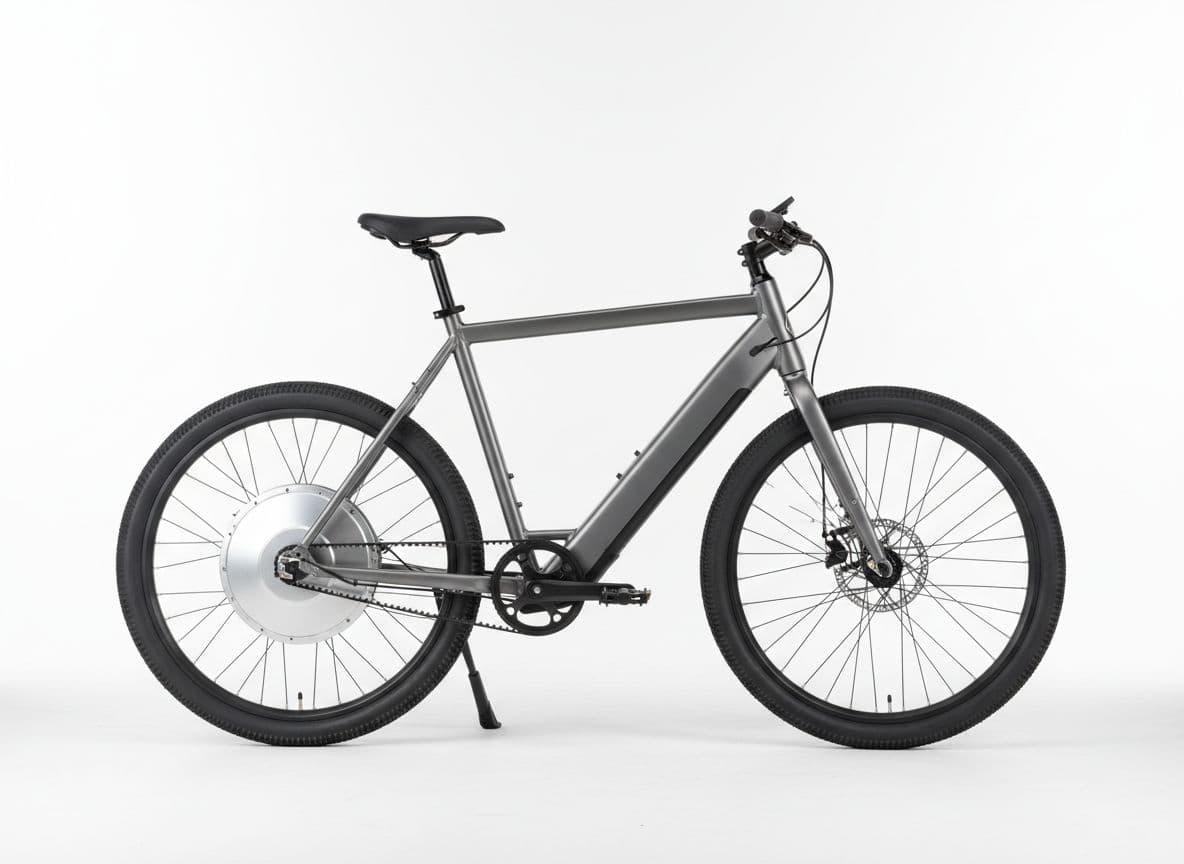
The e-bike market has exploded, with sales growing rapidly year over year, but the resale market is still maturing and many sellers do not know how to price their bikes. E-bikes range from $500 budget models to $10,000+ premium bikes, and depreciation rates vary enormously by brand and category. A Specialized Turbo Levo eMTB that retailed for $6,000 might hold 50-60% of its value, while a direct-to-consumer Rad Power Bike that sold for $1,500 might only bring $600-$800 used. The battery is the single most important value factor. A bike with a healthy battery that holds its full range is worth dramatically more than one with a degraded battery that needs a $400-$800 replacement. Motor system brand matters significantly: Bosch, Shimano STEPS, and Brose mid-drive motors hold value better than generic hub motors. As e-bike technology advances rapidly, older models with smaller batteries, lower power, and fewer features depreciate faster. Whether you are upgrading, no longer riding, or selling an impulse purchase, understanding battery health, motor brand, and current market pricing is essential for a fair sale.
Key Factors That Affect E-Bikes Value
Understanding what drives the price of e-bikes helps you get the most accurate valuation.
Brand & Motor System
Premium e-bike brands (Specialized, Trek, Giant, Cannondale) with Bosch or Shimano STEPS mid-drive motors hold value best. 50-65% after two years. Direct-to-consumer brands (Rad Power, Aventon, Lectric) offer great value new but depreciate faster on resale. The motor brand is critical: Bosch Performance Line CX and Shimano EP8 are the most valued mid-drive systems. Generic hub motors from Chinese manufacturers are the least valuable.
Battery Health & Capacity
Battery condition is the single biggest value factor. A battery retaining 90%+ of original capacity is worth full market value. Degraded batteries (below 70% capacity) significantly reduce bike value since replacement batteries cost $400-$800+. Higher-capacity batteries (500Wh-750Wh) command premiums over smaller packs. Battery cycle count and charge history (if accessible through the motor system app) are key data points for informed buyers.
Type & Category
Electric mountain bikes (eMTBs) from premium brands command the highest absolute prices ($2,000-$5,000+ used).commuter and urban e-bikes are the highest volume segment. Cargo e-bikes (Yuba, Tern, RadWagon) hold value well due to high new prices and family demand. Folding e-bikes (Brompton Electric, Tern Vektron) have dedicated markets. Fat-tire e-bikes and hunting/utility e-bikes serve niche but active markets.
Components & Features
Higher-quality bicycle components (Shimano Deore/XT/XTR, SRAM GX/X01) add value compared to basic components. Hydraulic disc brakes are expected on quality e-bikes. Suspension quality (RockShox, Fox) adds value on eMTBs. Integrated lighting, fenders, racks, and displays add convenience value for commuter bikes. The display and connectivity system (Bosch Kiox, Shimano E-Tube) affects user experience and value.
Condition & Mileage
Tire condition, chain and drivetrain wear, brake pad life, and frame condition all affect value. E-bikes accumulate miles faster than regular bikes due to the motor assistance, so drivetrain wear is more common. Cosmetic condition (paint, decals, display screen) matters for perceived value. A well-maintained e-bike with recent chain replacement, tuned brakes, and clean drivetrain shows care and commands premiums.
Tips for Valuing E-Bikes
Get the most accurate valuation by following these tips when photographing your e-bikes.
Photograph the complete bike from both sides showing the frame, motor, battery, and component level
Include a screenshot of the battery health or remaining capacity from the motor system app (Bosch eBike Flow, Shimano E-Tube, etc.)
Show close-ups of the motor system label, battery capacity markings, and frame serial number
Photograph the drivetrain, brakes, tires, and display screen to show component condition and wear level
E-Bikes Market Insights
The used e-bike market is growing rapidly as first-generation owners upgrade and the overall e-bike installed base expands. Facebook Marketplace is the dominant platform for local e-bike sales. The Pro's Closet and eBay handle higher-value bikes with shipping. Specialized and Trek dealers may accept trade-ins. The biggest challenge in the used e-bike market is battery anxiety. Buyers worry about battery degradation and replacement costs, so bikes with verifiable battery health data sell faster and for more. The direct-to-consumer segment (Rad Power, Aventon, Lectric) creates pricing pressure since new bikes at $1,000-$2,000 compete directly with used premium bikes. The eMTB segment is the strongest for resale value due to the high cost of new bikes and the performance-focused buyer base. Seasonal patterns affect pricing. Spring and early summer are best for selling. As the e-bike market matures, resale values are expected to stabilize similarly to the traditional bicycle market.
Notable E-Bikes Values
Real-world examples of what specific e-bikes have sold for, so you can benchmark your own.
| E-Bike | Condition | Typical Value |
|---|---|---|
| Rad Power Bikes RadRunner 2 | Used | $600 - $900 |
| Trek Allant+ 7 | Used | $1,800 - $2,800 |
| Specialized Turbo Vado SL 4.0 | Used | $2,200 - $3,200 |
| Cannondale Mavaro Neo 2 | Used | $1,400 - $2,200 |
| Cowboy 4 ST | Used | $900 - $1,400 |
| Riese & Muller Load 75 | Used | $4,500 - $7,000 |
| Lectric XP 3.0 | Used | $400 - $650 |
| Giant Trance X Advanced E+ 1 Pro | Used | $3,500 - $5,500 |
| Aventon Pace 500.3 | Used | $550 - $850 |
Based on eBay sold listings, Facebook Marketplace comps, and manufacturer MSRP depreciation benchmarks.
Find Out What Your E-Bikes Are Worth
Upload a photo now and get a free AI-powered valuation in seconds. No sign-up required.
E-Bikes Valuation FAQ
How fast do e-bikes depreciate?
E-bikes typically depreciate 25-35% in the first year and 10-15% annually thereafter. Premium bikes with Bosch or Shimano motors depreciate more slowly (20-25% first year). Budget and direct-to-consumer e-bikes can lose 30-40% in the first year. Battery degradation accelerates depreciation. A 3-year-old bike with a healthy battery is worth much more than one needing a $500+ battery replacement.
How long do e-bike batteries last?
Most e-bike batteries are rated for 500-1,000 full charge cycles before reaching 80% capacity. With typical use (charging 2-3 times per week), this translates to 3-5+ years. Bosch batteries are known for longevity. Proper care extends life. Avoid storing at full charge or completely depleted, keep out of extreme temperatures, and use the manufacturer's charger. A battery at 80% capacity still functions but noticeably reduced range affects resale value.
Is a Bosch motor e-bike worth more than a hub motor e-bike?
Yes, significantly. E-bikes with Bosch mid-drive motors (Performance Line CX, Performance Line) typically sell for 30-50% more than comparable hub motor bikes. Bosch motors offer better hill climbing, more natural ride feel, superior integration, and a strong dealer service network. Shimano STEPS motors also command premiums. Hub motors are simpler and cheaper but less desirable on the used market.
Where is the best place to sell an e-bike?
Facebook Marketplace is the most active platform for local e-bike sales. The Pro's Closet handles consignment for premium bikes. eBay works for shippable bikes with established brand value. Local bike shops may offer trade-in or consignment programs. E-bike-specific Facebook groups connect you with knowledgeable buyers. For premium eMTBs, mountain bike forums and Pinkbike classifieds reach targeted audiences.
Should I sell my e-bike with or without the battery?
Always sell with the battery. An e-bike without a battery loses most of its value proposition and is essentially an overweight regular bike. If your battery is degraded, be transparent about its condition and price accordingly. A new replacement battery from the manufacturer costs $400-$800, and buyers will factor this into their offer. If you have a second battery, selling it with the bike adds $200-$400 in value.
Value anything, anytime
Unlimited valuations, saved history and full reports in the free app.