Last updated: September 2026
How Much Is My Tractor Worth?
Whether you have a John Deere, Kubota, Case IH, New Holland, or Massey Ferguson tractor, our AI analyzes the make, model, hours, and condition to provide an accurate market valuation. From compact utility tractors to large row-crop machines, get a fair value before selling, trading in, or settling a farm estate.
Get the free app for unlimited scans


Compare real prices
See what tractors are listed for right now
Affiliate link: we earn a commission if you buy, at no extra cost to you.
What do you want to value?
Get the free app for unlimited scans
Why Knowing Your Tractors Value Matters
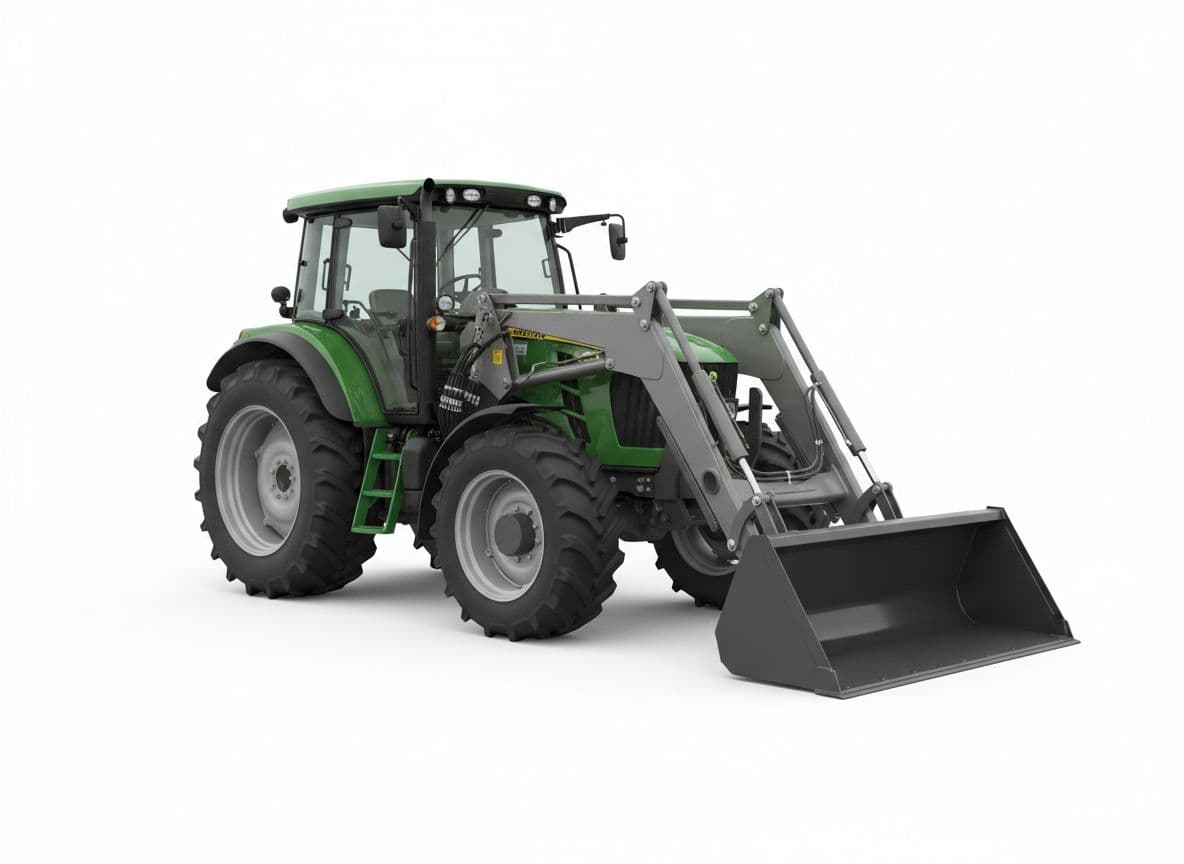
Tractors represent one of the most significant investments on any farm or rural property, and their values can range from a few thousand dollars for a worn compact model to $500,000+ for a large modern row-crop tractor. Unlike cars, tractors are valued heavily by engine hours rather than mileage, and well-maintained machines hold their value remarkably well. John Deere tractors in particular are known for exceptional resale value. Estate settlements involving farm equipment often require accurate valuations for dozens of pieces of machinery, and without market knowledge, heirs frequently accept dealer trade-in values that are 20-40% below retail. Auction results from platforms like Tractor Zoom, Machinery Pete, and Fastline provide market data, but interpreting these values requires understanding of the agricultural equipment market. Whether you are downsizing a farming operation, retiring, settling an estate, or just selling a hobby tractor, knowing the true market value saves you thousands of dollars.
Key Factors That Affect Tractors Value
Understanding what drives the price of tractors helps you get the most accurate valuation.
Make & Model
John Deere tractors consistently command the highest resale values, often 10-20% more than comparable Kubota, Case IH, or New Holland models. Within each brand, specific model series are more desirable. John Deere's 6R, 7R, and 8R series, Kubota's M and L series, and Case IH Magnum series hold value exceptionally well.compact tractors (under 50 HP) have a different value curve than large agricultural tractors.
Engine Hours
Hours are the primary wear indicator for tractors, similar to mileage on cars. A tractor with under 1,000 hours is considered low-use. Most farm tractors accumulate 300-800 hours per year. A 10-year-old tractor with 2,000 hours is worth significantly more than the same model with 8,000 hours. However, very low hours on an old tractor can indicate sitting and potential maintenance issues.
Condition & Maintenance
Mechanical condition. Engine, transmission, hydraulics, PTO, and three-point hitch. Is critical. A tractor with a well-documented service history is worth more. Tire condition matters significantly as replacement tires can cost $1,000-$5,000+ per set. Cab condition, air conditioning, and seat condition affect value on cab tractors. Fluid leaks, worn hydraulics, and transmission issues are major value reducers.
Features & Equipment
Cab vs. open station, 2WD vs. 4WD (MFWD), loader-ready or loader-equipped, creeper gear, rear remotes, and PTO speed options all affect value. A 4WD cab tractor with a front loader is worth substantially more than a 2WD open-station base model. GPS/precision agriculture equipment, autosteer, and modern displays add value to newer models.
Age & Market Demand
Newer tractors with modern emissions controls (Tier 4 Final engines) are sometimes less desirable than older Tier 3 or pre-emissions models due to maintenance complexity. 1960s-1980s tractors have a strong collector and hobby farm market. The 25-50 HP compact tractor segment has particularly strong demand from hobby farmers, landscapers, and rural property owners.
Tips for Valuing Tractors
Get the most accurate valuation by following these tips when photographing your tractors.
Photograph the tractor from all four corners showing overall condition, tires, and any attachments or loaders
Include close-ups of the hour meter, serial number plate, and any model identification decals
Show the engine compartment, hydraulic connections, PTO, and three-point hitch condition
Photograph any accessories, implements, or attachments being sold with the tractor. These add significant value
Tractors Market Insights
The used tractor market is robust, driven by strong agricultural commodity prices and the high cost of new equipment. New tractor prices have increased significantly, pushing more buyers to the used market. Auction platforms like Tractor Zoom, Machinery Pete, Purple Wave, and BigIron provide transparent pricing data. John Deere tractors continue to command premium resale values, with some used models selling for near-new prices during peak demand. The compact and utility tractor segment (25-75 HP) is especially hot due to the rural property boom and lifestyle farming trend. Vintage tractors from the 1950s-1970s have a passionate collector community, with restored models sometimes exceeding their inflation-adjusted original prices. Seasonal trends matter. Tractors sell for more in spring planting season. If you are selling farm equipment, understanding current auction trends and retail asking prices ensures you price your tractor correctly.
Notable Tractors Values
Real-world examples of what specific tractors have sold for, so you can benchmark your own.
| Tractor | Condition | Typical Value |
|---|---|---|
| John Deere Model D (1923-1953) | Restored | $8,000 - $18,000 |
| Farmall M (1939-1952) | Running/Restored | $4,500 - $12,000 |
| Ford 8N (1947-1952) | Running | $3,000 - $7,500 |
| Allis-Chalmers WD45 (1953-1957) | Fair to Good | $2,500 - $6,500 |
| John Deere 4020 (1963-1972) | Used/Running | $10,000 - $22,000 |
| Massey Ferguson 35 (1956-1964) | Running | $3,500 - $8,000 |
| Case IH Magnum 340 AFS Connect (2020s) | Used | $180,000 - $280,000 |
| Kubota L3560 Compact Tractor (recent) | Used | $22,000 - $32,000 |
| Oliver 88 (1947-1954) | Project/Non-Running | $800 - $2,500 |
Based on eBay sold listings, tractor auction records (Mecum, Purple Wave), and NADA/farm equipment dealer asking prices.
Find Out What Your Tractors Are Worth
Upload a photo now and get a free AI-powered valuation in seconds. No sign-up required.
Tractors Valuation FAQ
How many hours is too many on a tractor?
It depends on the tractor's size and build quality.compact tractors (under 50 HP) are generally considered high-hours at 3,000-5,000 hours. Larger agricultural tractors are built for 10,000-15,000+ hours with proper maintenance. A John Deere 8R series might still have significant life at 8,000 hours, while a compact Kubota BX at the same hours would be worn. Engine hours matter less than overall maintenance and condition.
Why are John Deere tractors worth more than other brands?
John Deere's resale premium comes from several factors: extremely strong brand loyalty, a massive dealer network providing parts and service availability, perceived reliability and build quality, and consistently high demand in the used market. The saying 'nothing runs like a Deere' reflects the market reality. Deere tractors typically sell for 10-20% more than comparable competitors at auction.
Should I sell my tractor at auction or privately?
Auctions provide quick sales with competitive bidding that can drive prices up, especially for desirable models. Online auctions (Tractor Zoom, Purple Wave) reach a national buyer pool. Private sales can yield higher prices if you are patient and your tractor is in good condition. Dealer trade-ins are the quickest but typically offer the lowest value. Expect 20-40% below retail. For rare or collectible tractors, specialty auctions or collector forums yield the best prices.
Are vintage tractors worth restoring?
Some vintage tractors are worth restoring. Particularly John Deere two-cylinder models, Farmall letter series, and rare low-production models. A professionally restored 1950s John Deere can sell for $8,000-$25,000+ at collector shows. However, restoration costs can easily reach $5,000-$15,000, so the math only works for desirable models in decent starting condition. Unrestored original-condition tractors are increasingly valued by collectors who prefer patina over paint.
Where can I find the serial number and model of my tractor?
Serial number locations vary by manufacturer. John Deere tractors have a serial number plate on the right side of the frame. Kubota serial numbers are typically on a plate on the right side of the tractor frame or hood. Case IH and New Holland have plates on the right side of the transmission housing. Ford tractors have the serial number stamped on the left side of the engine block. The serial number can be used to determine exact model, year, and factory specifications.
Tractors Price Guides
Value anything, anytime
Unlimited valuations, saved history and full reports in the free app.