Last updated: September 2026
How Much Is My Go-Kart Worth?
Whether you have an off-road fun kart, a competitive racing kart, a dune buggy, or a youth go-kart, our AI analyzes the brand, engine, type, and condition to provide an accurate market valuation. From backyard fun karts to professional racing chassis, get the right price before selling.
Get the free app for unlimited scans


Compare real prices
See what go-karts are listed for right now
Affiliate link: we earn a commission if you buy, at no extra cost to you.
What do you want to value?
Get the free app for unlimited scans
Why Knowing Your Go-Karts Value Matters
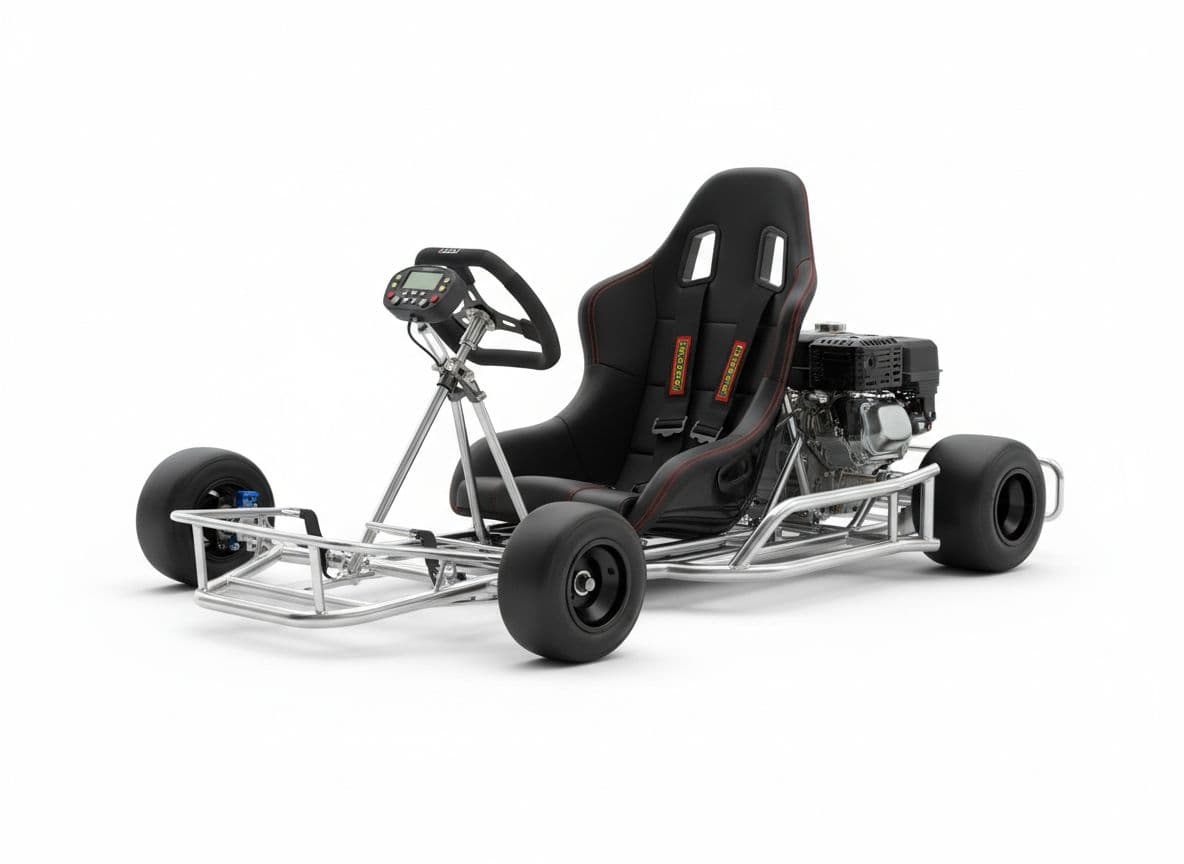
The go-kart market covers a surprisingly wide value range. From $200 used backyard karts to $5,000+ competitive racing chassis with engines. Off-road fun karts from brands like TrailMaster, Hammerhead, and Coleman are popular family recreational vehicles that hold moderate value.competitive racing karts (Tony Kart, CRG, OTK, Birel ART) with Rotax, IAME, or Briggs & Stratton racing engines represent serious investments that retain value well within the racing community. The growing popularity of rental karting experiences has also increased interest in owning personal karts. Many go-karts are sold when children outgrow them or families move away from areas with riding space, and sellers often do not understand the distinction between a $300 Chinese import kart and a $3,000 Italian racing chassis. Engine brand and condition, frame integrity, and safety equipment all significantly impact value. Whether you have a simple yard kart or a competition machine, accurate valuation ensures fair pricing.
Key Factors That Affect Go-Karts Value
Understanding what drives the price of go-karts helps you get the most accurate valuation.
Type & Purpose
Competitive racing karts (sprint, enduro) command the highest prices. A used Tony Kart or CRG chassis with a Rotax engine can sell for $2,000-$5,000+. Off-road fun karts (TrailMaster, Hammerhead, BMS) sell in the $500-$2,500 range. Youth karts (Baja, Coleman) bring $200-$800. Dune buggies and larger off-road karts overlap with the ATV/UTV market and can reach $3,000-$8,000. Electric karts are an emerging segment.
Engine & Drivetrain
For racing karts, the engine is often worth more than the chassis. Rotax Max engines hold strong value ($1,000-$2,500). IAME X30 and Leopard engines are similarly valued. Briggs & Stratton 206 racing engines are the most popular entry-level racing engine ($300-$600). For off-road karts, engine size (150cc-400cc), brand, and reliability affect value. Two-stroke racing engines need documented maintenance and rebuild history.
Brand & Chassis
Italian racing chassis brands (Tony Kart, CRG, Birel ART, Kosmic) are the most valuable. American racing brands (Margay, Coyote, MGM) have strong domestic followings. For off-road karts, TrailMaster, Hammerhead, and BMS are the most recognized brands. Budget Chinese karts from unknown manufacturers have minimal brand value. The chassis model year matters for racing. Current homologation models are worth more than outdated designs.
Condition & Safety
Frame condition (straight, no cracks or welds, proper alignment) is critical for racing karts. Seat condition, harness/restraint system, bumper integrity, and wheel/tire condition all affect value. For off-road karts, roll cage condition, body panels, and suspension components matter. A kart that passes a visual safety inspection is worth significantly more than one with obvious safety concerns. Racing karts with recent chassis alignment are premium.
Accessories & Spares
Spare tires and wheels, extra sprockets, rain setup (wet tires and equipment), and data acquisition systems add value to racing karts. For off-road karts, tops, windshields, lights, and upgraded seats add recreational value. Tool sets, stands, and transport equipment (kart stands, trailer mounts) add convenience value. A complete racing package (kart, engine, spares, stand, fuel can) sells for a premium over a bare chassis.
Tips for Valuing Go-Karts
Get the most accurate valuation by following these tips when photographing your go-karts.
Photograph the complete kart from both sides and front/rear showing the chassis, engine, and bodywork
Include close-ups of the engine showing the brand, model, and any serial numbers. Engine identification is critical for racing kart value
Show the condition of the frame, welds, bumpers, seat, and safety equipment
Photograph any spare parts, tools, stand, and accessories included in the sale. A complete package commands a premium
Go-Karts Market Insights
The go-kart market is split between recreational and competitive segments with minimal overlap. Recreational off-road karts trade primarily on Facebook Marketplace, Craigslist, and local classifieds.competitive racing karts trade through kart-specific forums (EKN forums, KartPulse), Facebook racing groups, and specialized dealers. The racing kart market is driven by the competitive calendar. Prices peak before racing season (spring) and drop after the season ends (fall). Youth and kid-sized karts have the fastest turnover as children grow quickly. The electric kart segment is growing with companies bringing consumer models to market. If you are selling a racing kart, targeting the karting community directly (via track bulletin boards, racing forums, and Facebook groups) yields better prices than general marketplaces where buyers may not understand the value of competitive equipment.
Notable Go-Karts Values
Real-world examples of what specific go-karts have sold for, so you can benchmark your own.
| Go-Kart | Condition | Typical Value |
|---|---|---|
| Tony Kart Racer 401R (OTK) | Used, Race-Ready | $2,500 - $5,500 |
| Margay Ignite K3 (Entry-Level Racing) | Used | $800 - $2,000 |
| CRG Road Rebel (Shifter Kart, 125cc) | Used | $3,000 - $7,000 |
| Yerf-Dog GX150 (Recreational Off-Road) | Used, Running | $300 - $900 |
| TrailMaster 150cc Go-Kart | Used | $400 - $1,200 |
| Sodi SR4 / SR5 (Rental/Track Kart) | Used, Commercial Fleet | $1,500 - $3,500 |
| Birel ART C28-S12 (Junior Racing) | Used | $1,800 - $4,000 |
| Razor Dune Buggy / Crazy Cart (Electric) | Used | $100 - $350 |
| Arrow AX9 (Vintage Sprint Kart, 1990s-2000s) | Vintage, Good | $200 - $700 |
Based on eBay sold listings, Facebook Marketplace transactions, and karting forum classifieds (Kartpulse, Reddit r/Karting).
Find Out What Your Go-Karts Are Worth
Upload a photo now and get a free AI-powered valuation in seconds. No sign-up required.
Go-Karts Valuation FAQ
How much is a used go-kart worth?
Backyard and youth karts sell for $200-$800. Off-road fun karts (150cc-400cc) from brands like TrailMaster range from $500-$2,500.competitive racing kart chassis alone sell for $500-$2,000. A complete racing kart with engine can bring $1,500-$5,000+. The type, brand, engine, and condition determine the specific value. Racing karts and off-road karts are essentially different products with different markets.
Do kids' go-karts hold their value?
Kids' go-karts hold value moderately well because demand is constant. New families are always entering the market as kids reach riding age. A quality kids' kart purchased for $600-$1,000 might sell for $300-$600 after a few years of use. The quick turnover (kids outgrow them in 2-4 years) creates a steady supply and demand cycle. Safety equipment condition and engine reliability are the key value factors.
Where can I sell a racing go-kart?
The best markets for racing karts are within the racing community. EKN (eKartingNews) forums, KartPulse forums, and Facebook racing kart groups connect you with knowledgeable buyers. Local kart tracks often have bulletin boards or online classifieds. Racing kart dealers may buy or consign equipment. General marketplaces like Facebook Marketplace and Craigslist work but attract more casual inquiries. Specify the chassis brand, engine type, and any race history in your listing.
Are Chinese go-karts worth buying or selling?
Chinese-manufactured off-road karts (TrailMaster, BMS, TaoTao) provide affordable fun but have lower resale values than premium brands. A used Chinese kart typically sells for 30-50% of its new price. Parts availability varies. TrailMaster and BMS have better parts networks. Quality has improved in recent years, but reliability concerns persist. They sell best in the $300-$1,000 range on Facebook Marketplace to families seeking affordable outdoor recreation.
What safety features should a go-kart have?
At minimum, a safe go-kart needs a roll cage or overhead protection (off-road), a seatbelt or harness, a kill switch accessible to the driver, and functional brakes. Racing karts require specific safety gear (helmet, suit, gloves, rib protector) and bumper systems. A kart with complete, functional safety equipment is worth more because buyers. Especially parents. Prioritize safety. Non-functional brakes or compromised structural integrity should be disclosed and reduce value accordingly.
Value anything, anytime
Unlimited valuations, saved history and full reports in the free app.