Last updated: September 2026
How Much Is My Vintage Pyrex Worth?
Whether you have rare promotional patterns, iconic Butterprint mixing bowls, colorful Friendship dishes, or hard-to-find Lucky in Love casseroles, our AI identifies the pattern, color, era, and condition of your Pyrex to deliver an accurate market value. Skip the guesswork and antique dealer fees. Get your Pyrex valued instantly.
Get the free app for unlimited scans


Compare real prices
See what vintage pyrex are listed for right now
Affiliate link: we earn a commission if you buy, at no extra cost to you.
What do you want to value?
Get the free app for unlimited scans
Why Knowing Your Vintage Pyrex Value Matters
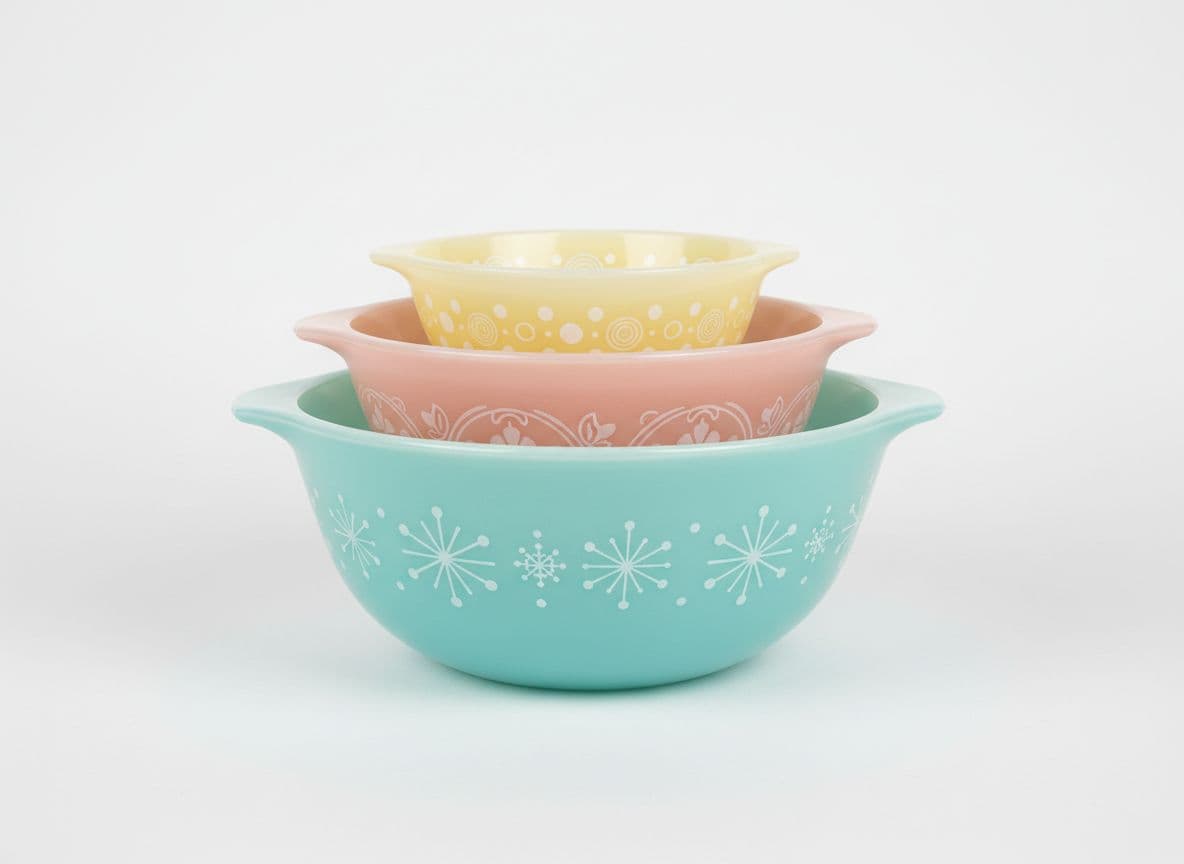
Vintage Pyrex has exploded in popularity among collectors, with rare patterns selling for hundreds or even thousands of dollars. A single Lucky in Love casserole dish has sold for over $4,000, and complete sets of rare promotional patterns routinely fetch $500-$2,000. Many people inherit Pyrex collections or find pieces at thrift stores without realizing their potential worth. Understanding your Pyrex's value is crucial before selling at a garage sale, listing online, or donating to charity. Dealers at antique malls often underprice Pyrex because they lack pattern expertise. Our free AI tool helps you identify exactly what you have and what it's worth.
Key Factors That Affect Vintage Pyrex Value
Understanding what drives the price of vintage pyrex helps you get the most accurate valuation.
Pattern & Rarity
Pyrex produced hundreds of patterns from the 1940s through the 1980s.common patterns like Butterfly Gold or Spring Blossom sell for $10-$30, while rare promotional patterns like Lucky in Love, Starburst, or Turquoise Diamonds can fetch $500-$4,000+. Knowing which pattern you have is the single biggest value factor.
Condition
Mint condition Pyrex with no scratches, fading, or paint loss commands the highest prices. Even light utensil marks or dishwasher fading can reduce value by 30-50%. Chips and cracks make pieces nearly worthless to serious collectors.
Completeness of Set
Complete sets. Especially nesting bowl sets or matched casserole sets with lids. Sell for significantly more than individual pieces. A complete set of four Primary Colors mixing bowls in excellent condition can bring $150-$300, while individual bowls sell for $20-$60 each.
Color & Era
Certain colors are more desirable. Turquoise, pink, and black Pyrex pieces are highly sought after. Earlier pieces from the 1940s-1950s tend to be more valuable than later 1970s-1980s production. Opal (white) pieces with bold solid colors command premiums.
Lids & Accessories
Original lids, cradles, and candle warmers significantly increase value. A casserole without its lid may sell for half or less of the complete piece. Clear lids are common, but colored or patterned lids add substantial value.
Tips for Valuing Vintage Pyrex
Get the most accurate valuation by following these tips when photographing your vintage pyrex.
Photograph the pattern clearly, including any stamps or markings on the bottom
Use natural lighting and a clean background so the colors and pattern details are visible
Note any condition issues like fading, scratches, chips, or paint loss in your photos
If you have matching lids, cradles, or complete sets, photograph them together
Vintage Pyrex Market Insights
The vintage Pyrex market has grown dramatically since 2015, driven by social media communities on Instagram and Facebook. Prices for rare patterns have increased 200-400% over the past decade. eBay remains the primary marketplace, with Facebook groups and Etsy also popular. The most active collectors focus on completing specific pattern sets, which creates strong demand for individual pieces from desirable lines.common patterns remain affordable and accessible, making Pyrex a collectible with entry points at every budget level.
Notable Vintage Pyrex Values
Real-world examples of what specific vintage pyrex have sold for, so you can benchmark your own.
| Vintage Pyrex | Condition | Typical Value |
|---|---|---|
| Pyrex Lucky in Love (Pink Hearts) 4-Piece Mixing Bowl Set | Near Mint | $800 - $2,500+ |
| Pyrex Butterprint (Amish) 4-Piece Mixing Bowl Set (441-444) | Good to Excellent | $80 - $250 |
| Pyrex Friendship (Red Birds) Casserole Dish | Used | $20 - $60 |
| Pyrex Gooseberry (Pink/White) Cinderella Mixing Bowl Set | Near Mint | $150 - $400 |
| Pyrex Snowflake Garland (Blue) Casserole with Lid | Used | $15 - $50 |
| Pyrex Spring Blossom (Crazy Daisy) 4-Piece Mixing Bowl Set | Good | $40 - $120 |
| Pyrex Promotional Turquoise Cinderella Nesting Bowl Set (441-444) | Near Mint | $200 - $600 |
| Pyrex Old Orchard (Apple/Fruit) Casserole Set | Used | $25 - $80 |
| Pyrex Pink Daisy Cinderella Casserole Dish | Near Mint | $60 - $180 |
Based on eBay sold listings, Etsy completed sales, and collector price guides for vintage Pyrex.
Find Out What Your Vintage Pyrex Are Worth
Upload a photo now and get a free AI-powered valuation in seconds. No sign-up required.
Vintage Pyrex Valuation FAQ
Which Pyrex patterns are the most valuable?
The most valuable Pyrex patterns include Lucky in Love ($2,000-$4,000+), Turquoise Diamonds, Starburst, and rare promotional patterns produced in limited quantities. Eyes and Atomic Eyes patterns also command high prices. Even within common lines, certain color combinations are worth more than others.
How can I tell how old my Pyrex is?
Check the backstamp on the bottom of the piece. Older Pyrex (1940s-1960s) typically has all capital letters and specific logo styles. The pattern itself also helps date the piece. Primary Colors bowls are from the 1940s, while Butterfly Gold is from the 1970s. Our AI can help identify the era from your photo.
Does dishwasher damage affect Pyrex value?
Yes, significantly. Repeated dishwasher use causes fading and a cloudy appearance that collectors call 'dishwasher haze.' This can reduce value by 30-50% or more. Pieces with crisp, unfaded patterns are always worth more. Hand-washed pieces that retain their original vibrancy are most desirable.
Is all old Pyrex valuable?
Not all vintage Pyrex is valuable.common patterns produced in large quantities, like Butterfly Gold, Spring Blossom, or plain clear Pyrex, typically sell for $5-$20 per piece. Value depends on pattern rarity, condition, and collector demand. However, even common patterns in mint condition can bring decent prices as sets.
Where is the best place to sell vintage Pyrex?
eBay is the largest marketplace for vintage Pyrex, offering access to the widest collector base. Facebook Pyrex collector groups are also excellent for selling directly to enthusiasts. Etsy works well for curated shops. Local antique malls can work but typically take 30-50% commission. Avoid garage sales for rare pieces. You'll likely undervalue them.
Vintage Pyrex Price Guides
Vintage Pyrex Guides & Articles
Value anything, anytime
Unlimited valuations, saved history and full reports in the free app.