Last updated: September 2026
How Much Is My Clock Worth?
From towering grandfather clocks and ornate French mantel clocks to Black Forest cuckoo clocks and Art Deco wall clocks, our AI identifies your clock's maker, style, movement type, and era to provide accurate market valuations. Whether you inherited a family heirloom or found a timepiece at an estate sale, discover its true worth.
Get the free app for unlimited scans


Compare real prices
See what clocks are listed for right now
Affiliate link: we earn a commission if you buy, at no extra cost to you.
What do you want to value?
Get the free app for unlimited scans
Why Knowing Your Clocks Value Matters
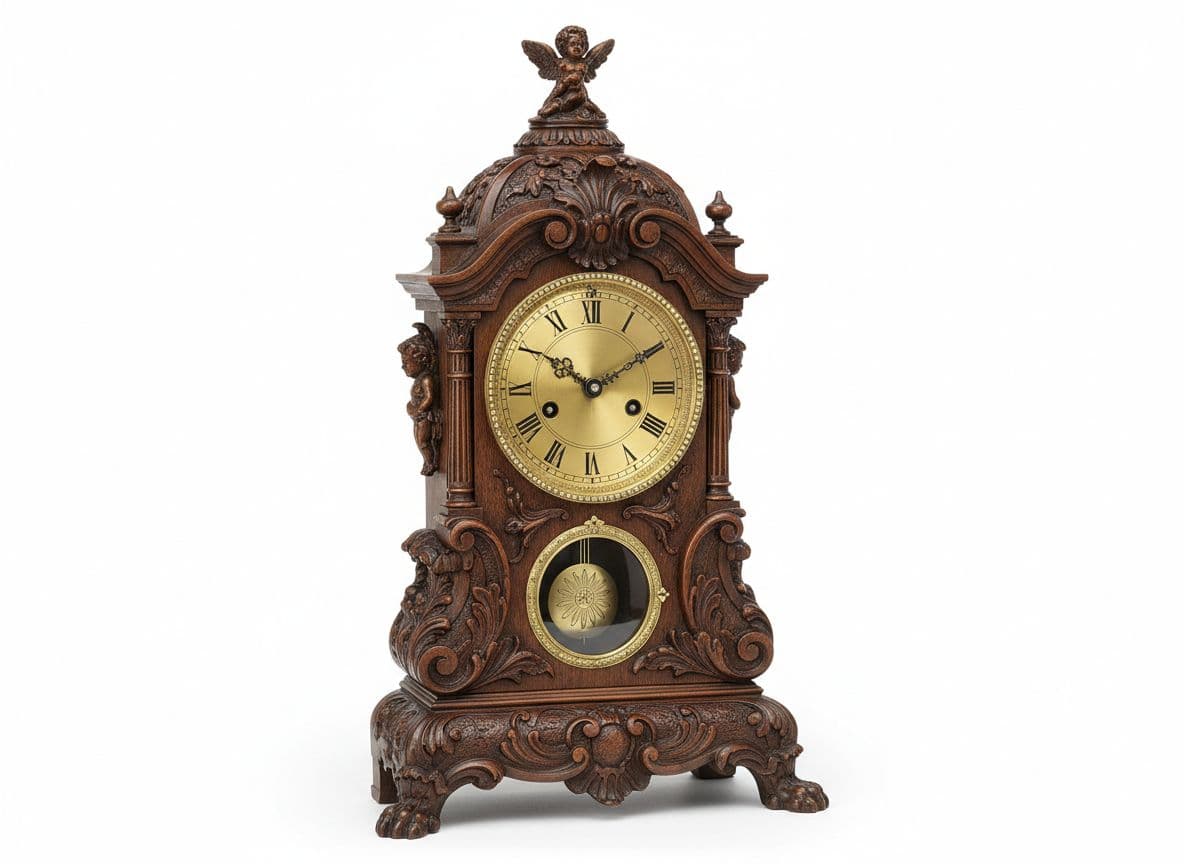
Antique and vintage clocks are functional works of art that combine mechanical ingenuity with decorative craftsmanship. A fine 18th-century tall case clock by a noted maker can sell for $10,000-$100,000+, while quality 19th-century French mantel clocks regularly command $1,000-$10,000. Even common American shelf clocks from the 1800s have collector value. The clock market is highly dependent on maker, style, and condition, making accurate identification essential. Many people have inherited clocks they assume are either worthless or priceless, when the reality usually falls somewhere in between. Professional clock appraisals can be expensive, making our free AI tool a valuable first step.
Key Factors That Affect Clocks Value
Understanding what drives the price of clocks helps you get the most accurate valuation.
Maker & Origin
Clocks by prestigious makers command premium prices. American makers like Simon Willard, Eli Terry, and Seth Thomas have strong collector followings. European makers including Jaeger-LeCoultre (Atmos clocks), Comtoise, and Black Forest workshops are also highly valued. Signed and labeled pieces are worth significantly more than anonymous ones.
Movement Type & Quality
The internal mechanism is crucial. High-quality hand-crafted movements with complications (striking, chiming, moon phase, calendar) are more valuable than simple time-only movements. Original movements are essential - replacement movements significantly reduce value. Weight-driven movements are generally more valued than spring-driven ones in tall case clocks.
Case Design & Materials
The case is often as important as the movement. Fine wood cases (mahogany, walnut, cherry) with original finish are more valuable. Bronze, ormolu (gilt bronze), and marble cases add substantial value to French clocks. Ornate carving, inlay, and painted dials contribute to value.
Condition & Originality
Original dial, hands, finials, and case finish are critical. Replaced dials, refinished cases, and missing elements significantly reduce value. A clock with original paint decoration on the dial is worth far more than one with a replaced or repainted dial. Working condition adds value but many collectors expect to invest in servicing.
Style & Period
Certain styles are more collectible. Federal-period American tall case clocks, French Empire mantel clocks, Vienna regulators, and Art Nouveau designs are in strong demand. The decorative style must match a period collectors are pursuing. Currently, clean-lined designs and mid-century styles are particularly popular.
Tips for Valuing Clocks
Get the most accurate valuation by following these tips when photographing your clocks.
Photograph the clock from the front showing the dial and overall case design
Include photos of any maker's labels, stamps, or signatures on the movement or case
Open the case (if possible) to show the movement mechanism
Note whether the clock runs, keeps time, and whether striking/chiming functions work
Clocks Market Insights
The clock market has experienced a split. High-end antique clocks from noted makers continue to perform well at auction, while common Victorian and Edwardian mantel clocks have softened in value. Grandfather (tall case) clocks have seen reduced demand due to changing home sizes and decorating preferences, though exceptional examples still command strong prices. French decorative clocks with bronze and ormolu cases remain popular with interior designers. The market for Atmos clocks by Jaeger-LeCoultre has grown, with early models appreciating steadily. Cuckoo clocks from the Black Forest have a dedicated collector base but values remain modest for most examples. American banjo clocks and mission/arts-and-crafts style clocks have loyal followings.
Notable Clocks Values
Real-world examples of what specific clocks have sold for, so you can benchmark your own.
| Clock | Condition | Typical Value |
|---|---|---|
| Seth Thomas Adamantine Mantel Clock (c. 1890s) | Good/Working | $150 - $600 |
| Black Forest Cuckoo Clock (German, mechanical, 8-day) | Working | $200 - $800 |
| Howard Miller Grandfather Clock (floor clock, mid-range model) | Used/Working | $300 - $1,500 |
| Ansonia Porcelain Mantel Clock (c. 1880s-1900s) | Good | $100 - $500 |
| Hermle Bracket/Mantel Clock (Westminster chime, 20th c.) | Working | $150 - $700 |
| Gilbert or Ingraham Shelf Clock (c. 1890s-1920s) | Fair/As-Found | $30 - $150 |
| Tiffany & Co. Carriage Clock (brass, 19th-early 20th c.) | Authenticated | $800 - $5,000+ |
| French Pendulum Mantel Clock (ormolu/marble, c. 1850s-1880s) | Good | $400 - $3,000 |
| Waterbury Regulator Wall Clock (weight-driven, c. 1880s) | Original/Working | $200 - $900 |
Based on eBay sold listings, auction house records (Sotheby's, Christie's, local auction houses), and antique clock dealer pricing guides.
Find Out What Your Clocks Are Worth
Upload a photo now and get a free AI-powered valuation in seconds. No sign-up required.
Clocks Valuation FAQ
Is my grandfather clock worth anything?
Grandfather (tall case) clocks vary enormously in value. Mass-produced examples from the 1970s-90s might sell for $200-800, while quality antique tall case clocks from the 18th-19th century can be worth $2,000-$50,000+. Key factors include the maker, age, movement quality, and case craftsmanship. Our AI can help identify the era and quality level of your clock.
Does a clock need to work to be valuable?
Working clocks are worth more, but non-working antique clocks still have significant value. Many buyers expect to invest in servicing. However, if the movement is missing or has been replaced, value drops substantially. The cost of professional clock repair ($200-$1,000+) can be worthwhile for valuable pieces.
How do I identify who made my clock?
Look for labels on the back of the case, signatures on the dial face, and stamps or engravings on the movement (the internal mechanism). Many American clocks have paper labels inside the case. European clocks often have marks stamped into the movement's back plate. Our AI can identify many clock types from photos of these markings.
Should I have my antique clock serviced before selling?
Having a clock professionally serviced can increase its sale price, but only use a qualified horologist experienced with antique movements. Modern repair techniques can damage antique movements. Never oil a clock yourself - improper lubrication causes more damage than no lubrication. For high-value clocks, document the servicing history.
Clocks Price Guides
Similar Valuations
Value anything, anytime
Unlimited valuations, saved history and full reports in the free app.