Last updated: September 2026
How Much Is My Fiestaware Worth?
Whether you own vintage 1936-era radioactive red Fiesta, mid-century original colors, or retired modern Fiesta colors, our AI identifies the piece type, color, era, and condition to provide an accurate market value. From rare No. 1 mixing bowls to covered onion soup bowls, get your Fiesta valued in seconds.
Get the free app for unlimited scans


Compare real prices
See what fiestaware are listed for right now
Affiliate link: we earn a commission if you buy, at no extra cost to you.
What do you want to value?
Get the free app for unlimited scans
Why Knowing Your Fiestaware Value Matters
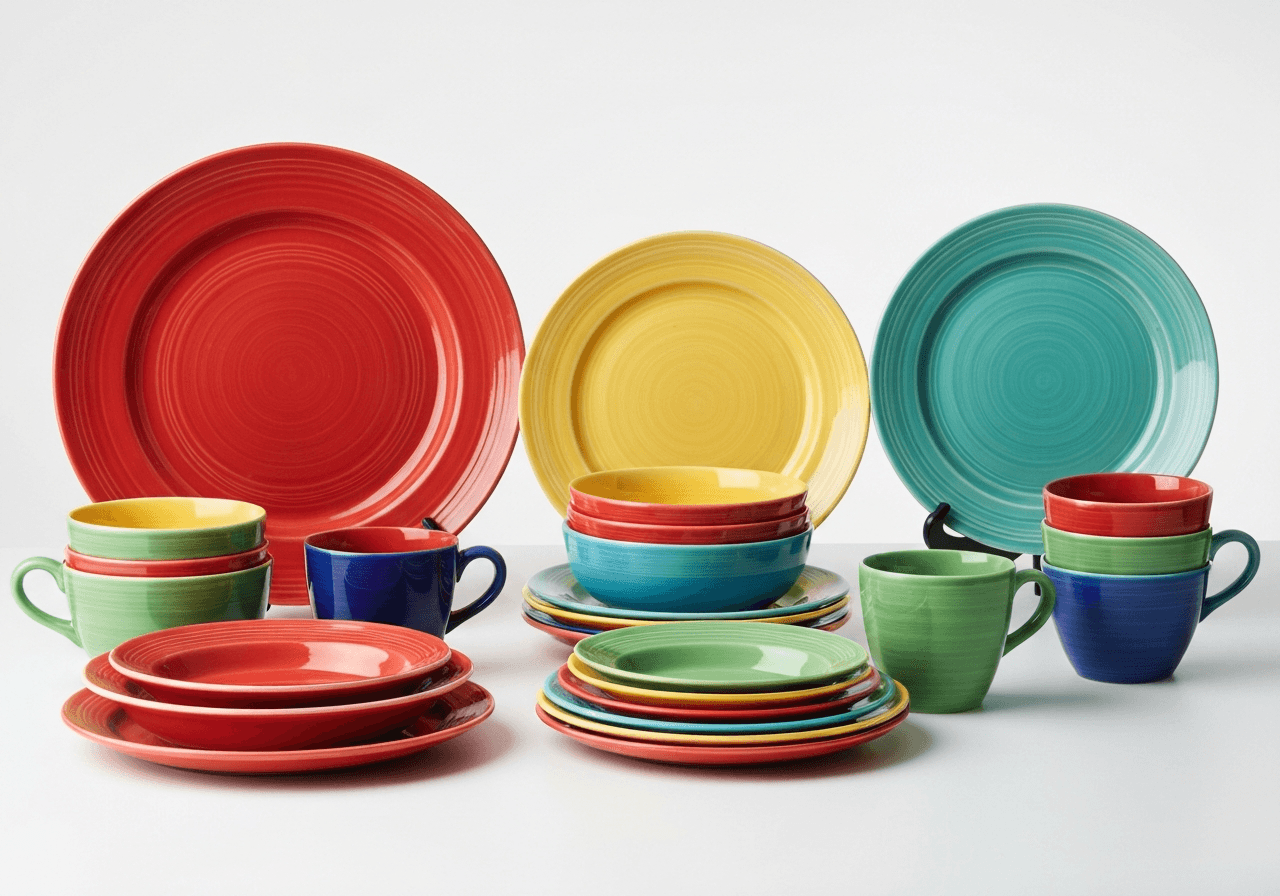
Vintage Fiestaware has been a staple of American pottery collecting for decades, with rare pieces commanding impressive prices. A vintage Fiesta medium green coffee cup can sell for $300-$500, and a No. 1 mixing bowl in a rare color can bring $500-$1,000+. The original radioactive red (sometimes called 'Fiesta red' or 'uranium oxide') glaze pieces are especially sought after. Many families have inherited Fiesta sets without knowing which colors and pieces are valuable.common pieces may be worth $5-$15, while a single rare piece in the same set could be worth hundreds. Knowing the difference before selling at a yard sale can save you from leaving money on the table.
Key Factors That Affect Fiestaware Value
Understanding what drives the price of fiestaware helps you get the most accurate valuation.
Color & Era
Fiesta colors are grouped by era. Original colors (1936-1969) include Red, Cobalt, Ivory, Yellow, Light Green, and Turquoise. The most valuable color is Medium Green (1959-1969), produced for the shortest period. Post-86 retired colors also have varying values. Original-era colors in good condition are worth significantly more than modern production.
Piece Type
Certain pieces are dramatically more valuable than others. Covered onion soup bowls ($500-$2,000+), No. 1 mixing bowls ($300-$1,000), cake plates, and syrup pitchers are among the most valuable.common dinner plates, cups, and saucers are worth much less. The combination of rare piece type and rare color creates the highest values.
Condition
Chips, cracks, and glaze flakes significantly reduce value. Often by 50-80%. Minor utensil marks and light wear are acceptable for most collectors. Fiesta with no chips, no cracks, and vibrant original glaze commands full market price. Rings on the bottom from stacking are normal and not considered damage.
Marks & Authenticity
Genuine vintage Fiesta is marked with an incised 'Fiesta' and 'HLC USA' or 'GENUINE FIESTA.' Some early pieces are unmarked but identifiable by glaze and form. Post-1986 pieces have different markings. Reproductions and lookalikes exist, so proper identification is essential for valuation.
Completeness
Complete place settings and serving sets command premiums over individual pieces. A complete vintage 5-piece place setting in a desirable color can sell for $100-$300, while individual plates from the same set might bring only $15-$30 each.
Tips for Valuing Fiestaware
Get the most accurate valuation by following these tips when photographing your fiestaware.
Photograph the top of the piece showing the color and any pattern, plus the bottom showing marks
Use natural daylight so the color is accurately represented. Fiesta colors vary and identification depends on true color
Note any chips, cracks, or glaze loss and photograph them clearly
If you have multiple pieces or a set, photograph them together to show the scope of your collection
Fiestaware Market Insights
The Fiestaware market is mature and well-established, with a dedicated collector base. eBay, Replacements Ltd., and Facebook collector groups are the primary marketplaces. Vintage original-era pieces (1936-1969) remain the most valuable and actively traded. Medium Green is consistently the most expensive color, followed by original Red and Cobalt. Post-86 Fiesta has a smaller but growing collector segment focused on retired colors. Prices for common vintage pieces have softened slightly as baby boomer collectors downsize, but rare pieces continue to bring strong prices.
Notable Fiestaware Values
Real-world examples of what specific fiestaware have sold for, so you can benchmark your own.
| Fiestaware | Condition | Typical Value |
|---|---|---|
| Fiesta Medium Green Teapot (1959-1969) | Used, Good | $400 - $900 |
| Fiesta Red/Radioactive Red Covered Casserole (1936-1944) | Used, No Chips | $80 - $200 |
| Fiesta Gray Vintage Piece (1951-1959) | Used, Good | $60 - $180 |
| Fiesta Vintage Dinner Plate (Original Colors: Red, Cobalt, Yellow, Green, Ivory) | Used | $15 - $50 |
| Fiesta Medium Green Dinner Plate (1959-1969) | Used | $80 - $200 |
| Fiesta Ironstone Tureen with Lid (1969-1972) | Used, Complete | $100 - $300 |
| Post-86 Fiesta Lilac Piece (1993-1995) | Used | $40 - $120 |
| Fiesta Original Promotional Carafe (1936-1946) | Used, No Damage | $60 - $180 |
| Fiesta Sapphire Blue (HLC Bloomingdale's Exclusive, 1996) | Used | $60 - $200 |
Based on eBay sold listings, Ruby Lane dealer prices, and established Fiesta collector price guides.
Find Out What Your Fiestaware Are Worth
Upload a photo now and get a free AI-powered valuation in seconds. No sign-up required.
Fiestaware Valuation FAQ
Is my red Fiestaware radioactive?
If your red Fiesta is from the original production era (1936-1943 and 1959-1972), the red-orange glaze does contain uranium oxide and is mildly radioactive. The radiation levels are extremely low and not considered a health risk for normal use, but some collectors prize 'radioactive red' specifically. Post-1986 Fiesta red does not contain uranium.
What is the most valuable Fiestaware color?
Medium Green (1959-1969) is consistently the most valuable Fiesta color because it was produced for the shortest period. A Medium Green covered onion soup bowl can sell for $2,000-$4,000+. Among original colors, Red and Cobalt Blue are also highly valued. For post-86, Lilac and Sapphire are among the most sought-after retired colors.
How can I tell vintage Fiesta from modern Fiesta?
Vintage Fiesta (1936-1969) has concentric rings on all pieces, slightly different shapes, and an incised mark. Post-86 Fiesta has slightly redesigned shapes, a different marking system, and new colors. The glazes also differ. Vintage glaze tends to be thicker and richer. Our AI can distinguish between eras from your photo.
Is modern Fiestaware worth collecting?
Modern post-1986 Fiesta is primarily functional dinnerware, but retired colors do develop collectible value over time. Colors like Lilac, Sapphire, and Chartreuse in mint condition have appreciated. Most current-production Fiesta sells near retail on the secondary market. For investment potential, vintage Fiesta remains the stronger choice.
Fiestaware Price Guides
Fiestaware Guides & Articles
Similar Valuations
Value anything, anytime
Unlimited valuations, saved history and full reports in the free app.