Last updated: September 2026
How Much Is My Grandfather Clock Worth?
Grandfather clocks (also called longcase or tall case clocks) are among the most iconic pieces of antique furniture, combining mechanical artistry with fine cabinetry. Our AI analyzes your clock's maker, movement type, case style, age, and condition to provide an accurate market valuation. Whether you've inherited a family heirloom, purchased a clock at an estate sale, or are evaluating a collection, understanding your grandfather clock's true value is essential for insurance, selling, or estate planning.
Get the free app for unlimited scans


Compare real prices
See what grandfather clocks are listed for right now
Affiliate link: we earn a commission if you buy, at no extra cost to you.
What do you want to value?
Get the free app for unlimited scans
Why Knowing Your Grandfather Clocks Value Matters
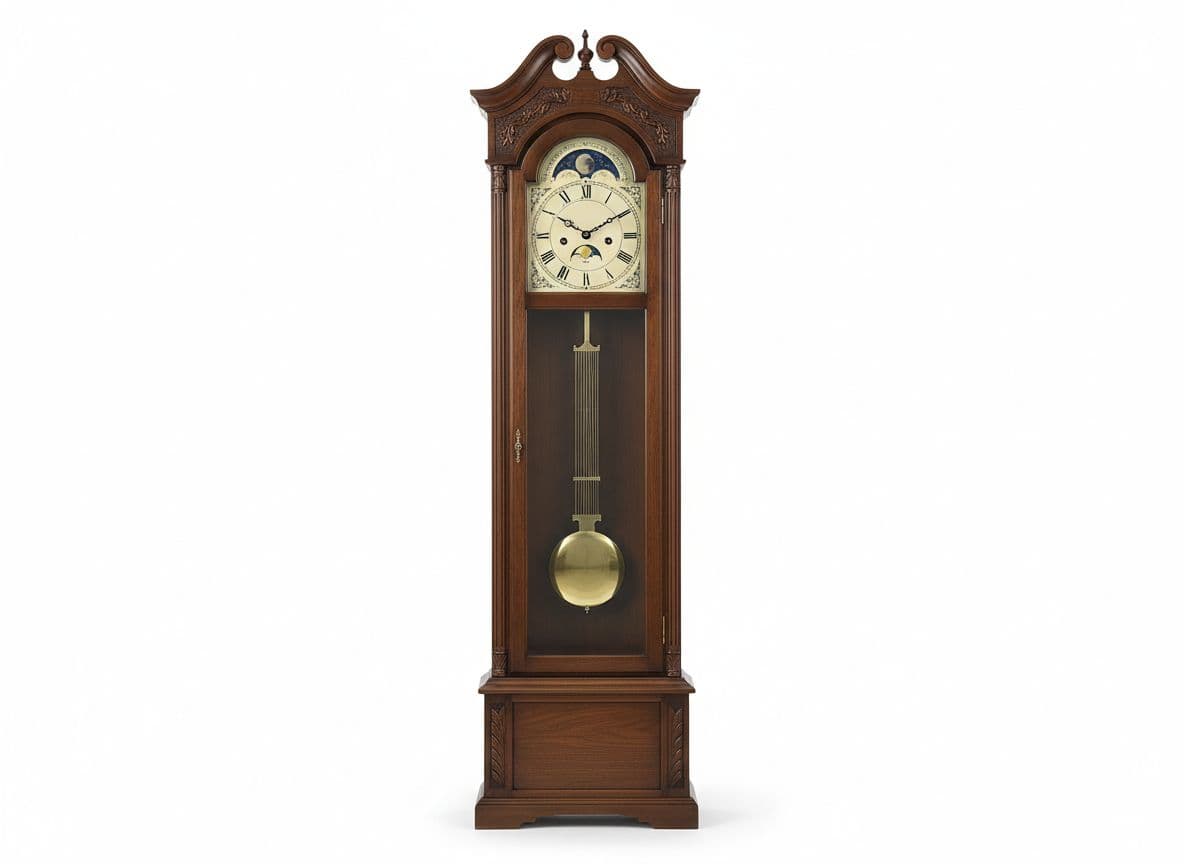
Grandfather clock values range enormously. From $200 for a modern mass-produced unit to $50,000-$200,000+ for a fine antique by a renowned maker. Many families own inherited grandfather clocks without knowing whether they have a $500 decorative piece or a $15,000 horological treasure. The market for grandfather clocks has shifted dramatically: modern reproduction clocks (Howard Miller, Ridgeway, Sligh) have depreciated significantly and are often difficult to sell for more than $200-$800, despite original prices of $2,000-$8,000. Meanwhile, genuine antique clocks by English, American, and Continental makers from the 18th and 19th centuries have held value or appreciated, with fine examples by makers like Thomas Tompion, Simon Willard, or Eli Terry commanding $5,000-$100,000+. Professional clock appraisals cost $75-$250, and many buyers (antique dealers, clock shops) deliberately undervalue clocks to maximize their margins. Movement condition is critical. A non-running clock can cost $300-$2,000 to restore, which directly affects its market value. Our free estimator helps you understand whether your clock is a valuable antique or a modern reproduction, and what it might realistically sell for in today's market.
Key Factors That Affect Grandfather Clocks Value
Understanding what drives the price of grandfather clocks helps you get the most accurate valuation.
Maker & Origin
The clockmaker is the single most important value factor. English makers like Thomas Tompion ($50,000-$500,000), George Graham, and Joseph Knibb are the most valuable. American makers like Simon Willard ($10,000-$80,000), Eli Terry ($3,000-$25,000), and Aaron Willard are highly collectible. Scottish and Continental (German, Dutch, French) makers also command strong prices for quality examples. Modern manufacturers. Howard Miller, Ridgeway, Sligh, Emperor. Are worth $200-$1,500 on the used market regardless of original retail price. The maker's name is usually found on the clock dial or on a label inside the case.
Movement Type & Condition
The movement (mechanism) is the heart of a grandfather clock. Hand-crafted brass movements from the 17th-19th centuries are far more valuable than modern German-made movements. Key movement features affecting value include: eight-day vs. thirty-hour winding (eight-day is more desirable), number of trains (two-train for time and strike, three-train adds chime), moon phase display (+$200-$1,000), musical chimes (Westminster, Whittington, St. Michael), and calendar functions. A fully functional, original movement adds 30-50% more value than a non-running one. Professional movement restoration costs $300-$2,000 depending on the work required.
Case Style & Wood
The case contributes significantly to both aesthetic appeal and value. Mahogany and walnut cases are the most desirable for antique clocks. Oak cases are common on English longcase clocks and valued for their character. Cherry and maple are typical of American tall case clocks. Case style indicators include the bonnet type (arched, flat-top, broken pediment, swan-neck), column design, base style, and overall proportions. Original finish is preferred. Refinished cases lose 20-40% of value compared to original patina. Carved or inlaid cases command 20-50% premiums over plain cases.
Age & Authenticity
Genuine antique grandfather clocks (pre-1900) are significantly more valuable than 20th-century or modern reproductions. 17th-century English longcase clocks are the rarest and most valuable ($10,000-$500,000+). 18th-century American tall case clocks by known makers bring $5,000-$80,000. 19th-century clocks are more common and range from $1,000-$15,000. Early-to-mid 20th-century clocks (1920-1960) represent a middle market ($500-$5,000). Modern clocks (1970-present) from manufacturers like Howard Miller rarely exceed $800 on resale despite original prices of $2,000-$8,000. Authenticity of all components. Original dial, hands, movement, and case together. Is critical.
Dial & Decorative Elements
The dial is the 'face' of the clock and a major value factor. Hand-painted dials, brass chapter rings, engraved spandrels, and moon phase displays all increase value. Silvered brass dials from the 18th century are highly prized. White-painted dials with floral decorations are typical of later 18th and early 19th-century clocks. Replacement or repainted dials reduce value by 30-50%. Decorative elements like automata (moving figures), rocking ships, and musical complications add $500-$5,000+ to value. Original hands are important. Replaced hands reduce value by 10-20%.
Tips for Valuing Grandfather Clocks
Get the most accurate valuation by following these tips when photographing your grandfather clocks.
Photograph the clock from the front showing the full case, a close-up of the dial and hands, the movement (open the side or back panel), and any maker's labels or signatures
Note whether the clock is currently running and keeping accurate time. A working clock is worth 30-50% more than a non-functional one
Do not attempt to repair, refinish, or restore the clock yourself. Amateur repairs can destroy significant value, especially on antique clocks
Check inside the case door and on the back of the movement for maker's marks, serial numbers, or paper labels that help identify the manufacturer and age
Grandfather Clocks Market Insights
The grandfather clock market has undergone a significant generational shift. Baby boomers who inherited and purchased grandfather clocks are downsizing, creating an oversupply of mid-range and modern clocks. Millennials and Gen Z generally prefer minimalist aesthetics, reducing demand for large case clocks in the decorative market. This has caused modern reproduction clocks (Howard Miller, Ridgeway) to depreciate dramatically. A clock purchased for $5,000 in 2005 might sell for $500-$1,200 today. However, the fine antique clock market remains robust among serious collectors and horological enthusiasts. Auction houses like Bonhams, Christie's, and specialized clock auctions continue to achieve strong prices for quality antique examples. The moving and shipping challenge (grandfather clocks weigh 100-300+ pounds and require professional disassembly) limits the buyer pool and depresses prices in areas far from major collecting markets. Online sales have expanded reach but shipping costs of $300-$800+ affect net proceeds. For valuable antique clocks, the market remains healthy. For modern reproductions, it's a buyer's market.
Notable Grandfather Clocks Values
Real-world examples of what specific grandfather clocks have sold for, so you can benchmark your own.
| Grandfather Clock | Condition | Typical Value |
|---|---|---|
| Howard Miller Grandfather Clock (mid-range model) | Used, Working | $400 - $1,500 |
| Ethan Allen Grandfather Clock | Used, Working | $300 - $1,200 |
| Ridgeway Grandfather Clock (domestic production era) | Used, Working | $250 - $900 |
| Seth Thomas Longcase Clock (antique, 1880s-1920s) | Antique, Running | $800 - $3,500 |
| German Black Forest Longcase Clock (unsigned, 19th century) | Antique, As-Found | $500 - $2,500 |
| English Longcase Clock, provincial maker (18th century) | Antique, Restored | $2,000 - $8,000 |
| Thomas Tompion or George Graham Longcase Clock (museum-grade) | Authenticated, Museum Quality | $50,000 - $300,000+ |
| Grandmother Clock (small longcase, 20th century) | Used, Working | $150 - $600 |
| Modern Import Grandfather Clock (Asian manufacture, big-box era) | Used, Working | $50 - $300 |
Based on eBay sold listings, auction house records (Christie's, Sotheby's, Bonhams), and estate sale price guides.
Find Out What Your Grandfather Clocks Are Worth
Upload a photo now and get a free AI-powered valuation in seconds. No sign-up required.
Grandfather Clocks Valuation FAQ
How do I identify my grandfather clock's maker?
Check these locations for maker identification: (1) The dial face. The maker's name is often painted or engraved on the dial, typically below the chapter ring (number ring) or in the arch. (2) The movement. Open the side or back panel and look for engraved names, serial numbers, or stamps on the brass movement plates. (3) Inside the case. Check for paper labels, stamps, or handwritten inscriptions on the inside of the door, back panel, or seat board. (4) The pendulum bob. Some makers stamped their name on the pendulum. For modern clocks, Howard Miller, Ridgeway, and Sligh place serial number labels inside the case. If you can't find a maker's mark, the clock may be an unsigned provincial or country-made piece, which can still have value based on age, style, and region of origin.
Is my Howard Miller grandfather clock worth a lot?
Howard Miller grandfather clocks are quality modern reproductions, but they have depreciated significantly on the secondary market. A Howard Miller clock that retailed for $3,000-$8,000 new typically sells for $300-$1,200 used, depending on model, condition, and local demand. Presidential Collection and Ambassador Collection models hold value better than entry-level lines. The challenge with Howard Miller clocks is their size and weight. Shipping is expensive ($300-$800), and local buyers are limited. These clocks sell best locally through Facebook Marketplace, Craigslist, or estate sales. While they are well-made clocks that provide decades of service, they are not antiques and should not be expected to appreciate in value.
Should I get my grandfather clock professionally restored before selling?
It depends on the clock's value and the nature of the issues. For antique clocks worth $5,000+, professional movement servicing ($300-$800) is usually worthwhile, as a running clock sells for 30-50% more than a non-running one. Case restoration is more nuanced: for antique clocks, preserve the original finish. Refinishing reduces value by 20-40% because collectors value original patina. Minor case repairs (re-gluing loose joints, stabilizing the bonnet) are acceptable. For modern clocks worth $300-$1,200, investing $500+ in restoration rarely makes financial sense. The restoration cost may exceed the value increase. The golden rule: for antique clocks, restore the movement but preserve the case; for modern clocks, ensure it's running but skip cosmetic restoration.
How do I move or ship a grandfather clock safely?
Moving a grandfather clock requires careful disassembly and packing: (1) Remove the pendulum first. Open the side panel, stop the pendulum, and carefully unhook it. (2) Remove the weights by slowly lowering them (never let them free-fall). (3) Secure the chains or cables so they don't tangle. (4) Remove the hood/bonnet by sliding it forward off the case (most lift off or slide). (5) Wrap all components individually in moving blankets. (6) Transport the case upright if possible, secured against tipping. Never lay a grandfather clock on its back for transport. This can damage the movement, shift the dial, and crack the case. For shipping, professional clock movers charge $300-$800 depending on distance. For valuable clocks ($5,000+), use a specialized clock shipping service rather than a general mover. Insurance during transit is essential.
Why is my grandfather clock not keeping time?
Common reasons grandfather clocks lose accuracy: (1) The pendulum needs adjustment. Most grandfather clocks have a rating nut at the bottom of the pendulum; turning it clockwise (raising the bob) makes the clock run faster, counter-clockwise (lowering) slows it. (2) The clock is not level. Even a slight tilt affects the escapement and timekeeping. Use a level and adjust the case feet. (3) The movement needs servicing. Clock movements should be professionally cleaned and oiled every 5-8 years; dried lubricants cause friction and inaccuracy. (4) Temperature and humidity changes cause the pendulum rod to expand and contract, affecting timekeeping. (5) Worn escapement parts. The pallets, escape wheel, and suspension spring wear over time. If your clock stops entirely, the most common causes are an unwound mainspring, a broken suspension spring ($20-$50 repair), or a dirty movement requiring cleaning ($200-$500).
Grandfather Clocks Price Guides
Value anything, anytime
Unlimited valuations, saved history and full reports in the free app.