Last updated: September 2026
How Much Is Mid-Century Modern Furniture Worth?
Mid-century modern furniture (1940s-1970s) is one of the hottest categories in the antiques and vintage market. Pieces by iconic designers like Eames, Knoll, Saarinen, Wegner, and Nakashima command premium prices at auction and in the resale market. But even unsigned MCM pieces with good design DNA can be worth $100-$500+. Our AI identifies your furniture's style, likely designer or manufacturer, and estimates its current market value.
Get the free app for unlimited scans


Compare real prices
See what mid-century modern furniture are listed for right now
Affiliate link: we earn a commission if you buy, at no extra cost to you.
What do you want to value?
Get the free app for unlimited scans
Why Knowing Your Mid-Century Modern Furniture Value Matters
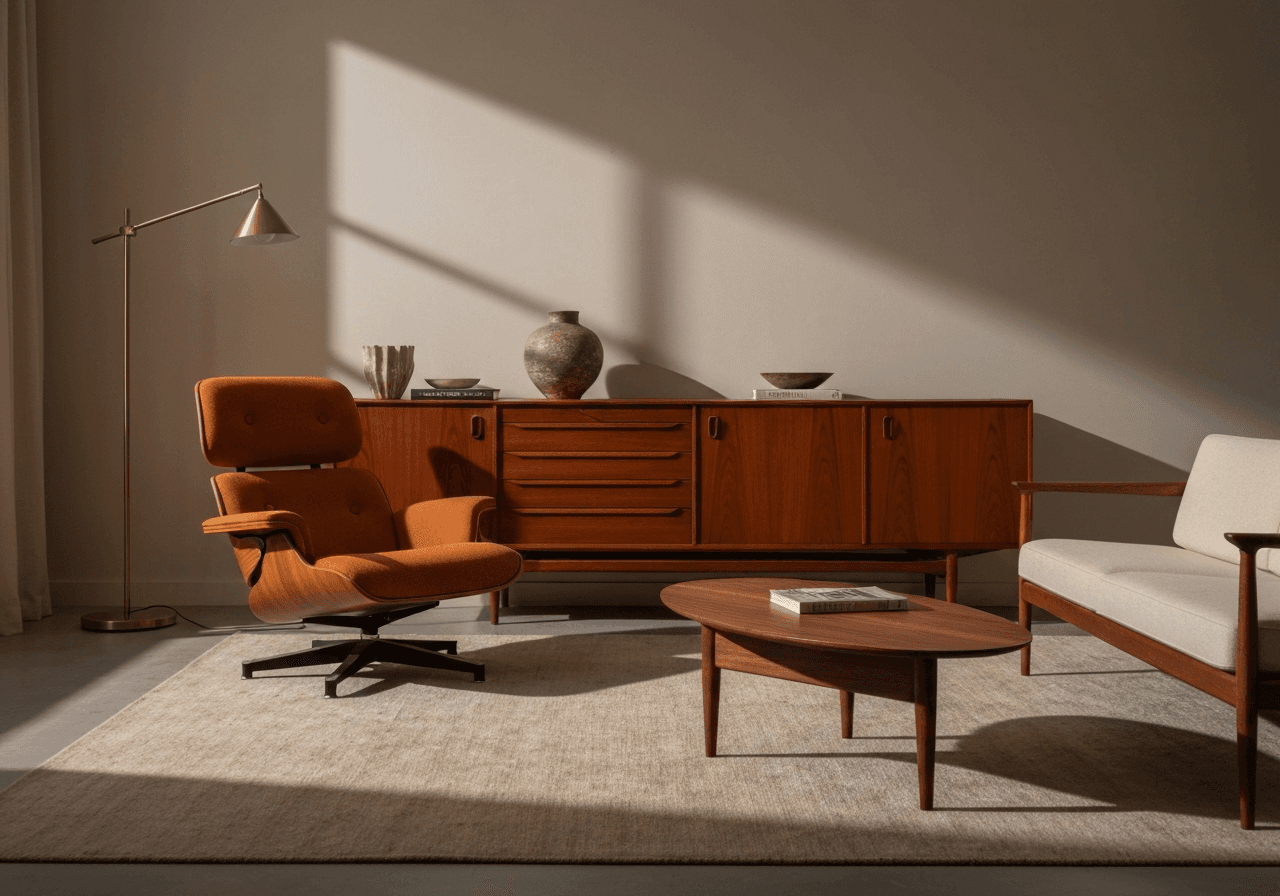
Mid-century modern furniture has seen extraordinary appreciation over the past 20 years. An original Eames Lounge Chair purchased for $500 in the 1960s is now worth $3,000-$8,000 on the secondary market. A George Nakashima coffee table can fetch $10,000-$50,000+ at auction. The style's timeless appeal. Clean lines, organic shapes, quality materials. Means demand consistently outpaces supply of genuine vintage pieces. Many people inherit MCM furniture without realizing its value, or find pieces at estate sales and thrift stores priced as ordinary used furniture. Knowing what to look for and what your pieces are worth can mean the difference between a $50 yard sale and a $5,000 auction consignment.
Key Factors That Affect Mid-Century Modern Furniture Value
Understanding what drives the price of mid-century modern furniture helps you get the most accurate valuation.
Designer & Manufacturer
Top value: George Nakashima ($5K-$100K+), Eames/Herman Miller ($500-$20K), Knoll (Saarinen, Bertoia) ($500-$10K), Danish masters (Wegner, Finn Juhl, Børge Mogensen) ($1K-$30K). Mid-tier: Heywood-Wakefield ($100-$2K), Drexel Declaration ($100-$800), Lane Acclaim ($100-$500). Even unattributed MCM pieces with good design: $50-$500.
Authenticity & Labels
Original manufacturer labels, stamps, or tags dramatically increase value and confidence. Herman Miller labels, Knoll Associates stamps, Danish makers' marks, and Nakashima signatures are the most sought-after. Pieces without labels may still be authentic but sell at 30-50% discount due to uncertainty. Reproductions exist for all major designs and are worth a fraction of originals.
Condition & Originality
Original finish, upholstery, and hardware are preferred by serious collectors. A refinished or reupholstered piece may look better but is typically worth 20-40% less than an original-finish example. Exception: if the original finish is severely damaged, professional restoration can increase value. Original fabric in good condition is a major plus.
Materials & Construction
Solid walnut, teak, and rosewood command the highest premiums. Rosewood pieces are particularly valuable due to CITES trade restrictions that limit new supply. Quality construction details. Dovetail joints, solid brass hardware, hand-finished edges. Indicate higher-end production. Laminate and veneer pieces from budget lines are worth significantly less.
Provenance & Documentation
Pieces with documented ownership history, original purchase receipts, or inclusion in design publications command 20-100% premiums. Estate provenance from notable collections adds significant value. For Nakashima pieces, original order documentation from the Nakashima Studio is particularly valuable.
Tips for Valuing Mid-Century Modern Furniture
Get the most accurate valuation by following these tips when photographing your mid-century modern furniture.
Look underneath for manufacturer labels, stamps, or tags. These are critical for identification
Photograph any labels, stamps, or markings you find on the piece
Note the material. Solid wood vs veneer affects value significantly
Don't refinish or reupholster before getting a valuation. Original condition may be more valuable
Mid-Century Modern Furniture Market Insights
The MCM furniture market remains strong, driven by interior design trends that have kept mid-century style in mainstream demand for over two decades. Top-tier pieces by Nakashima, Juhl, and early Eames have shown investment-grade returns. The market has bifurcated: museum-quality pieces by known designers continue to appreciate, while generic MCM-style furniture has more modest growth. The rise of online platforms (1stDibs, Chairish, EBTH) has expanded the buyer pool globally. Younger buyers are increasingly interested in sustainable, quality-made vintage furniture over disposable modern alternatives, supporting long-term demand.
Find Out What Your Mid-Century Modern Furniture Are Worth
Upload a photo now and get a free AI-powered valuation in seconds. No sign-up required.
Mid-Century Modern Furniture Valuation FAQ
How do I identify mid-century modern furniture?
MCM furniture (1940s-1970s) is characterized by clean lines, organic curves, minimal ornamentation, quality natural materials (teak, walnut, rosewood), and functional design. Look for manufacturer labels underneath or on the back.common MCM manufacturers include Herman Miller, Knoll, Heywood-Wakefield, Drexel, Lane, and various Danish makers.
Is my Eames chair real or a reproduction?
Genuine Eames chairs have Herman Miller labels (or earlier Evans Products labels), specific screw patterns, quality leather and wood veneer, and distinct rubber shock mounts. Reproductions often have thinner plywood, lower-quality leather, and missing or fake labels. If you're unsure, consult with a specialist. The value difference between genuine ($3,000-$8,000) and reproduction ($500-$1,500) is enormous.
Should I refinish my mid-century furniture?
Generally no. Original finish is preferred by collectors and commands higher prices. Light cleaning and wax/oil are fine for maintenance. If the original finish is severely damaged, consult with a furniture restoration specialist who has MCM experience before proceeding. A bad refinish can destroy value permanently.
Where can I sell mid-century modern furniture?
For high-end pieces ($1,000+): auction houses like Wright, Rago, and Phillips specialize in MCM design. 1stDibs and Chairish are premium online marketplaces. For mid-range ($100-$1,000): Facebook Marketplace, Craigslist, and local vintage shops work well. For quick sales: EBTH (Everything But The House) handles estate sales with MCM expertise.
What makes Danish Modern furniture valuable?
Danish modern furniture (1940s-1970s) is prized for exceptional craftsmanship, high-quality materials (teak, rosewood, oak), elegant minimalist design, and famous designers (Hans Wegner, Finn Juhl, Arne Jacobsen, Børge Mogensen). Pieces with makers' marks from workshops like PP Møbler, Fritz Hansen, or Carl Hansen are most valuable. The style has universal appeal that supports strong international demand.
Value anything, anytime
Unlimited valuations, saved history and full reports in the free app.