Last updated: September 2026
How Much Are My Antique Lamps Worth?
Antique and vintage lamps are among the most sought-after decorative collectibles, combining functional art with historical craftsmanship. Our AI analyzes your lamp's style, period, maker, materials, and condition from a photo to provide an accurate market valuation. Whether you've inherited a Tiffany-style leaded glass lamp, discovered a Victorian oil lamp at an estate sale, found an Art Deco desk lamp at a flea market, or are evaluating a mid-century modern floor lamp, understanding the true value is essential before selling, insuring, or restoring.
Get the free app for unlimited scans


Compare real prices
See what antique lamps are listed for right now
Affiliate link: we earn a commission if you buy, at no extra cost to you.
What do you want to value?
Get the free app for unlimited scans
Why Knowing Your Antique Lamps Value Matters
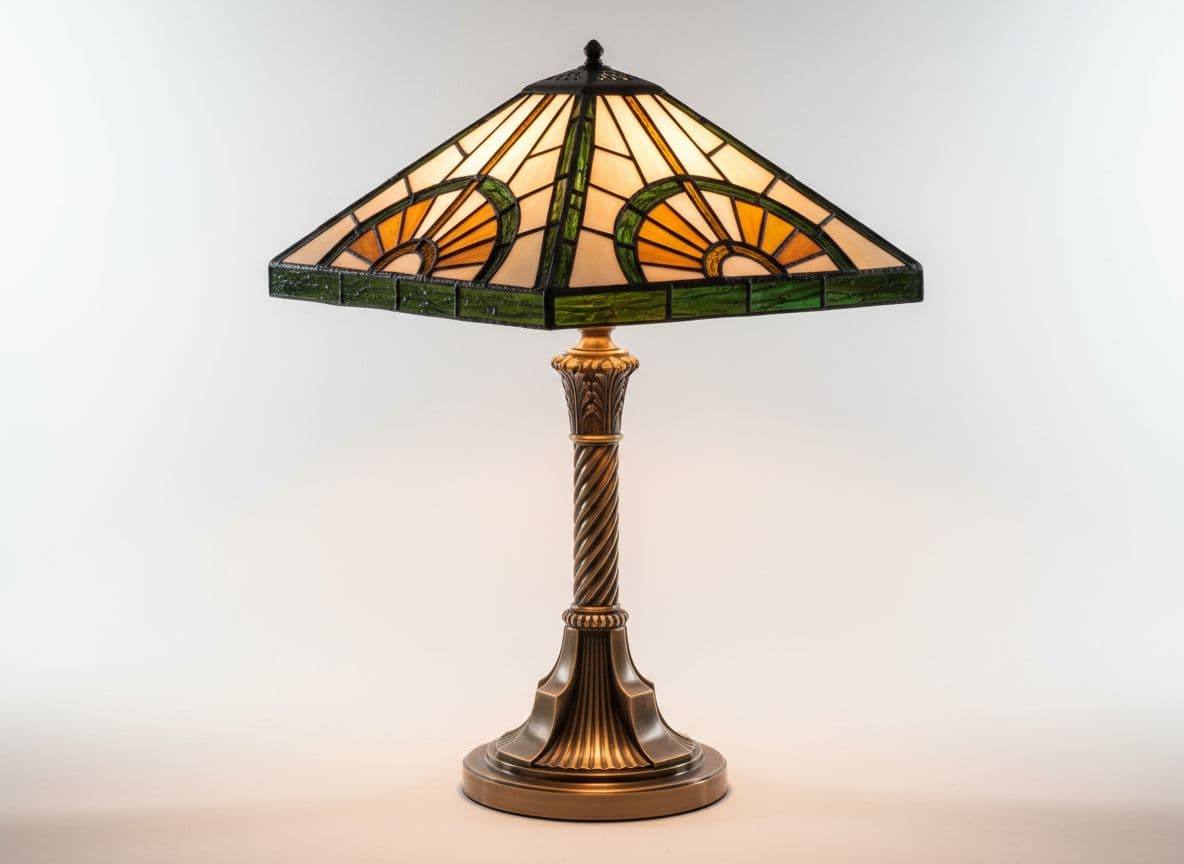
Antique lamp values span an extraordinary range. From $25 for a common vintage table lamp to over $3 million for an authentic Tiffany Studios 'Pond Lily' lamp. Many families own lamps worth hundreds or thousands of dollars without realizing it. Authentic Tiffany Studios lamps start at $4,000 for simple designs and reach $100,000-$3,000,000+ for elaborate floral and scenic patterns. Handel lamps (Tiffany's main competitor) sell for $2,000-$50,000. Art Deco lamps from the 1920s-1930s bring $200-$5,000, with signed pieces by Frankart, Ronson, and Chase commanding premiums. Victorian-era oil lamps with hand-painted glass globes fetch $100-$2,000. Mid-century modern lamps by designers like George Nelson, Isamu Noguchi, and Poul Henningsen sell for $500-$10,000+. Even 1960s-70s lava lamps and novelty lamps have developed collector followings with prices of $50-$300. The market for quality antique lamps has remained strong because these pieces serve as both decorative objects and functional lighting. Professional lamp appraisals cost $50-$200 per piece, and many antique dealers specialize in lamps due to the high values involved. Our free AI estimator helps you identify whether your lamp is a valuable antique worth professional appraisal or a decorative vintage piece with modest value.
Key Factors That Affect Antique Lamps Value
Understanding what drives the price of antique lamps helps you get the most accurate valuation.
Maker & Authenticity
The maker is the single most important value factor for antique lamps. Tiffany Studios (marked 'Tiffany Studios New York' with a number) is the undisputed king. Even small Tiffany desk lamps start at $4,000-$8,000, while elaborate floral and scenic lamps sell for $50,000-$3,000,000+. Handel (marked 'Handel' on shade and base) is the second most valuable, with reverse-painted scenic lamps selling for $5,000-$50,000. Pairpoint, Jefferson, and Moe-Bridges reverse-painted lamps bring $1,000-$10,000. Bradley & Hubbard Arts & Crafts lamps sell for $500-$5,000. Beware of reproductions. Tiffany-style lamps made in the 1960s-present are worth $50-$500, not thousands.
Style & Period
Art Nouveau (1890-1910) lamps featuring flowing organic forms and nature motifs are highly collectible at $500-$50,000+. Victorian (1840-1900) oil lamps and converted gas lamps range from $100-$3,000. Art Deco (1920-1940) lamps with geometric designs and figural elements bring $200-$10,000. Mid-century modern (1945-1970) designer lamps are increasingly collectible at $300-$10,000+. Arts & Crafts (1900-1920) lamps with mica shades and hammered copper bases sell for $500-$5,000. The style should be authentic to the period. Reproduction or 'revival' pieces are worth 10-20% of period originals.
Materials & Craftsmanship
Leaded glass (stained glass) shades are the most valuable, with hand-selected, hand-cut glass pieces soldered together. Reverse-painted glass shades (painted on the interior) are highly valued for scenic and floral designs. Slag glass (swirled colored glass panels in metal frames) is attractive and collectible at $200-$2,000. Mica shades (natural mineral panels) are characteristic of Arts & Crafts style and bring $200-$1,500. Ceramic and porcelain bases by known makers (Moorcroft, Rookwood, Weller) add significant value. Base materials range from patinated bronze (most valuable) to painted metal (least valuable).
Condition & Originality
Condition dramatically affects antique lamp values. Original glass shades without cracks, chips, or replaced panels command full market price. A cracked or heavily damaged Tiffany shade can lose 30-70% of its value, though even damaged authentic Tiffany pieces retain significant worth. Original bases, hardware, sockets, and finials matter. Replaced parts reduce value by 15-40%. Rewiring for safety is generally acceptable and expected without value penalty, but original switch mechanisms and socket configurations should be preserved. Original patina on bronze bases is preferred over polished or re-patinated surfaces.
Size & Visual Impact
Larger lamps generally command higher prices, with floor lamps and large table lamps (20+ inch shade diameter) being the most valuable formats. Tiffany floor lamps routinely sell for 2-5x the price of equivalent table lamp designs. The visual impact. How dramatically the lamp lights up a room. Affects both collector and decorator demand. Lamps with elaborate, multi-colored shades that create beautiful lit effects are especially sought after. Pairs of matching lamps are worth more than twice a single lamp due to their rarity and decorative utility.
Tips for Valuing Antique Lamps
Get the most accurate valuation by following these tips when photographing your antique lamps.
Photograph the entire lamp from multiple angles, including the shade from above to show the pattern, the base from the front and back, and any maker's marks or labels on the base or shade rim
Look for maker's marks on the bottom of the base, the interior rim of the shade, and on metal fittings. These are often small and stamped, requiring close examination
Do not attempt to clean, polish, or repair antique lamps before getting them valued. Original patina and condition are important to collectors and restoring improperly can significantly reduce value
Note whether the lamp is still functional, has original wiring, and whether the shade and base appear to be original matched pieces rather than married components
Antique Lamps Market Insights
The antique lamp market occupies a unique position at the intersection of fine art, antiques, and functional design. Authentic Tiffany Studios lamps remain the blue-chip investment in this category, with prices at major auction houses (Christie's, Sotheby's, Bonhams) setting records regularly. The broader antique lamp market has seen a resurgence in recent years as interior designers and younger collectors discover the appeal of authentic period lighting over mass-produced alternatives. Art Deco lamps have experienced particularly strong growth, with prices up 30-50% over the past five years driven by their compatibility with modern interiors. Mid-century modern lamps by recognized designers (Nelson, Noguchi, Arteluce) have seen explosive appreciation as that design era continues to dominate contemporary taste. The biggest market challenge is authenticity. Reproductions and misattributed pieces flood online marketplaces, making expert authentication essential for high-value purchases. eBay, Chairish, 1stDibs, and specialized antique lighting dealers are the primary marketplaces, with auction houses handling the rarest and most valuable pieces.
Notable Antique Lamps Values
Real-world examples of what specific antique lamps have sold for, so you can benchmark your own.
| Antique Lamp | Condition | Typical Value |
|---|---|---|
| Tiffany Studios Wisteria Table Lamp | Authenticated | $50,000 - $200,000+ |
| Tiffany Studios Dragonfly Table Lamp | Authenticated | $8,000 - $40,000+ |
| Art Deco Frankart Nude Figural Lamp | Good | $200 - $900 |
| Victorian Oil Lamp with Hand-Painted Milk Glass Shade | Good | $75 - $400 |
| Handel Reverse-Painted Landscape Table Lamp | Authenticated | $1,500 - $8,000+ |
| Bradley & Hubbard Cast Iron Banquet Lamp | Used | $100 - $500 |
| Emeralite Banker's Lamp (Green Glass Shade) | Good | $80 - $350 |
| Aladdin Kerosene Mantle Lamp (Model B or C) | Used | $40 - $150 |
| Art Nouveau Figural Bronze Table Lamp | Authenticated | $500 - $5,000+ |
Based on eBay sold listings, major auction house records (Christie's, Sotheby's, Skinner), and established antique dealer price guides.
Find Out What Your Antique Lamps Are Worth
Upload a photo now and get a free AI-powered valuation in seconds. No sign-up required.
Antique Lamps Valuation FAQ
How do I tell if my lamp is a real Tiffany?
Authentic Tiffany Studios lamps have specific identifying features: the shade will be marked 'Tiffany Studios New York' with a model number (usually stamped on the metal rim), and the base will have a similar mark with a different number. The glass pieces should be hand-cut with visible copper foil between pieces (not lead came, which indicates a later reproduction). The patina on the bronze base should be warm brown-to-green. The glass itself should show variation in color and texture. Each piece was individually selected. Modern reproductions often use uniform glass, machine-cut pieces, and lack proper markings. For high-value Tiffany lamps, professional authentication from a recognized expert or auction house is essential before sale.
What types of antique lamps are most valuable?
The most valuable categories are: (1) Authentic Tiffany Studios leaded glass lamps ($4,000-$3,000,000+), (2) Handel reverse-painted scenic lamps ($2,000-$50,000), (3) Pairpoint 'puffy' reverse-painted lamps ($2,000-$25,000), (4) Arts & Crafts lamps by Dirk Van Erp, Roycroft, and Gustav Stickley ($1,000-$20,000), (5) Art Deco figural lamps by Frankart, Ronson, and European makers ($500-$10,000), (6) Mid-century modern designer lamps by Noguchi, Nelson, and Henningsen ($500-$10,000+), and (7) Fine Victorian kerosene/oil lamps with hand-painted glass ($200-$3,000). The combination of maker reputation, artistic quality, condition, and period authenticity determines value within each category.
Should I rewire my antique lamp before selling it?
For safety, rewiring is generally recommended and does not reduce an antique lamp's value. Buyers expect it and appreciate not having to do it themselves. However, preserve the original socket and switch mechanism if possible, as these have historical value. Use a qualified lamp restorer who specializes in antiques, not a general electrician. For very rare or museum-quality lamps (Tiffany, Handel, etc.), consult with a specialist before any work. Some collectors prefer completely original wiring to document the lamp's untouched state. The rewiring itself should use period-appropriate cloth-covered cord for the best aesthetic result.
Are 'Tiffany-style' lamps worth anything?
Tiffany-style reproductions (made by companies like Dale Tiffany, Quoizel, or unmarked manufacturers) are worth $50-$500 depending on size, quality, and age. They are functional decorative items but not valuable antiques. The key distinction: authentic Tiffany Studios lamps were made from 1895-1930 and are marked with specific stamps. Modern reproductions use similar-looking glass techniques but lack the artistic quality, glass selection, and craftsmanship of originals. Some higher-quality reproductions from the 1950s-1970s by Italian and American studios are worth $200-$1,000 and are collected in their own right, but they should never be confused with or priced as authentic Tiffany pieces.
Value anything, anytime
Unlimited valuations, saved history and full reports in the free app.