Last updated: September 2026
How Much Is Uranium Glass Worth?
Uranium glass. Also called vaseline glass for its petroleum-jelly-like yellow-green color. Contains small amounts of uranium oxide that make it glow brilliant green under ultraviolet (blacklight). Produced from the 1830s to the 1940s (and in limited quantities since), uranium glass has become a trendy collectible thanks to viral social media content showing its dramatic UV glow. Our AI identifies your piece's pattern, maker, and era for an accurate valuation.
Get the free app for unlimited scans


Compare real prices
See what uranium glass are listed for right now
Affiliate link: we earn a commission if you buy, at no extra cost to you.
What do you want to value?
Get the free app for unlimited scans
Why Knowing Your Uranium Glass Value Matters
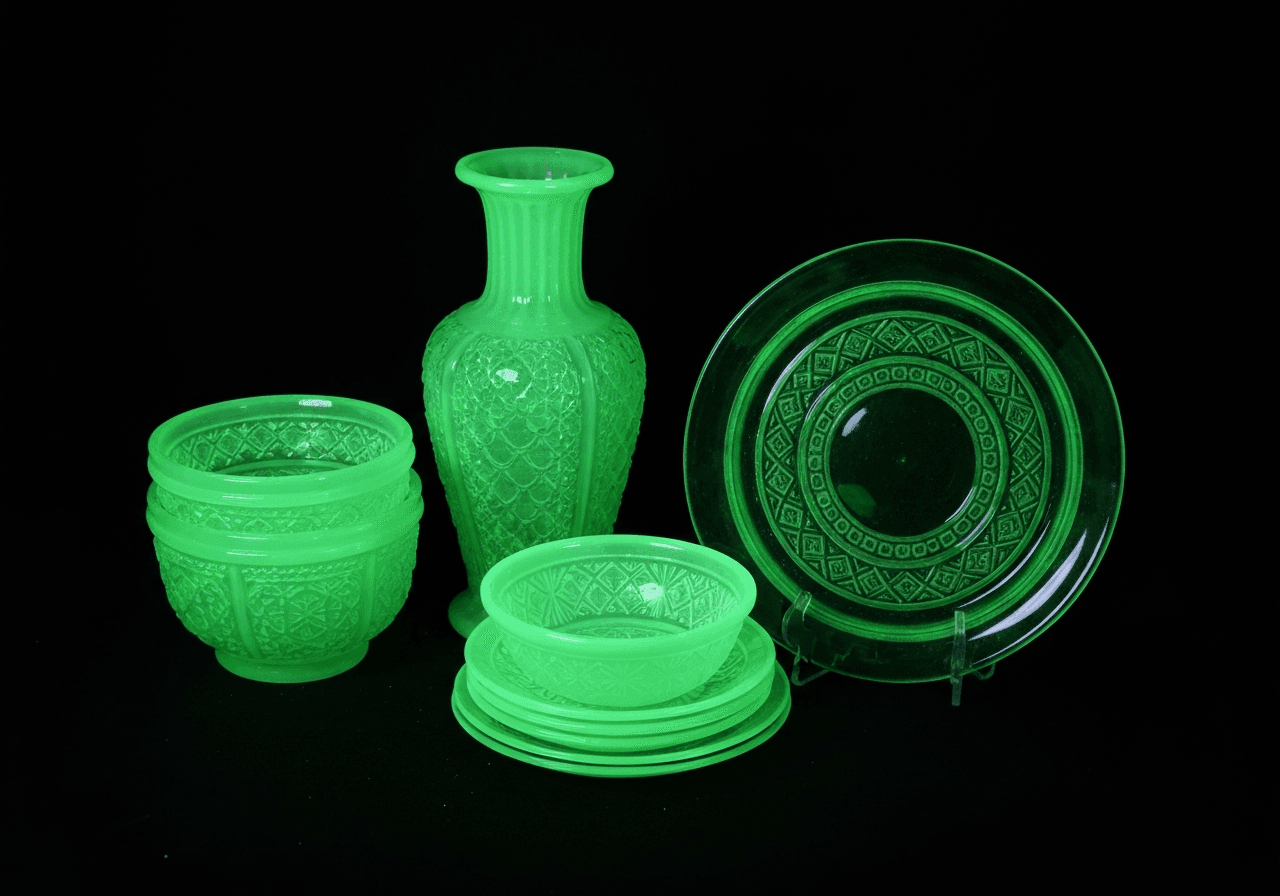
Uranium glass has experienced a massive popularity surge thanks to TikTok and Instagram, where videos of glowing glass go viral regularly. This social media attention has brought a wave of new collectors into the market, pushing prices up for quality pieces. Victorian-era uranium glass with detailed patterns can be worth $50-$500+. Depression-era pieces are worth $10-$100+. Even small items like salt cellars and toothpick holders are worth $10-$30. The UV glow factor makes uranium glass uniquely exciting to collect. It's the only antique glass that literally lights up under a blacklight, giving it an almost magical appeal.
Key Factors That Affect Uranium Glass Value
Understanding what drives the price of uranium glass helps you get the most accurate valuation.
Era & Manufacturer
Victorian era (1840s-1900s): most valuable, $30-$500+. Edwardian/early 20th century: $20-$200+. Depression era (1930s): $10-$100. Post-WWII (limited production): $10-$50. Notable makers: Fenton, Northwood, Imperial, various European factories. Unmarked pieces are common and valued by age and quality.
Form & Size
Larger pieces are generally more valuable. Punch bowls and sets: $100-$500+. Vases and compotes: $30-$200. Bowls and plates: $15-$100. Cups and small pieces: $5-$30. Figural pieces (animals, novelty items): $20-$150+. Lamps and lighting: $50-$300+.
UV Glow Intensity
Stronger uranium content produces more dramatic glowing. Bright, vivid green glow under UV: full value. Moderate glow: standard pricing. Faint glow: may be a lower uranium content piece, somewhat less desirable to collectors seeking the dramatic effect.
Color & Type
Classic vaseline (yellow-green): most recognized and collected. Custard glass (opaque yellow with uranium): $20-$200+. Green transparent uranium glass: $15-$150+. Uranium-containing colors other than yellow-green exist and glow differently. These are less recognized but still collectible.
Condition
Perfect condition: full value. Minor chips: 30-50% reduction. Cracks: 50-80% reduction. Cloudiness or staining: 20-30% reduction. For decorative display purposes, minor imperfections are more acceptable than for serious collectors.
Tips for Valuing Uranium Glass
Get the most accurate valuation by following these tips when photographing your uranium glass.
Use a UV flashlight or blacklight to confirm uranium content. Genuine uranium glass glows bright green
Check antique shops and estate sales with a small UV flashlight. It's easy to spot uranium glass
Photograph pieces both in normal light and under UV to show the glow effect
Don't worry about radioactivity. Uranium glass is safe to handle and display, with negligible radiation levels
Uranium Glass Market Insights
Uranium glass is one of the hottest antique glass categories thanks to social media virality. TikTok videos showing glowing glass regularly get millions of views, driving new collectors to antique shops and online marketplaces. Prices have increased 30-50% over the past few years for quality pieces. The market benefits from both collector and decorator demand. Uranium glass makes a stunning display piece, especially with a UV light strip. Supply is genuinely limited as uranium glass production largely ended after WWII, and new production is minimal. The combination of limited supply, growing demand, and social media visibility supports continued price appreciation.
Find Out What Your Uranium Glass Are Worth
Upload a photo now and get a free AI-powered valuation in seconds. No sign-up required.
Uranium Glass Valuation FAQ
Is uranium glass safe?
Yes. Uranium glass is completely safe to own, display, and even eat from occasionally. The uranium content is very low (0.1-2%) and emits negligible radiation. Less than you'd receive from a banana. The glass is FDA-approved for food contact. Millions of people have collected and used uranium glass for over a century without health issues.
How do I identify uranium glass?
The definitive test is UV light. Shine a blacklight or UV flashlight on the glass, and genuine uranium glass will glow vivid green. In normal light, uranium glass has a distinctive yellow-green (vaseline-like) color, though some pieces appear more green or yellow. A small UV keychain flashlight ($5-$10) is the essential tool for uranium glass hunting.
Why is uranium glass trending?
Social media. Particularly TikTok. Has made uranium glass go viral. Videos of glowing glass under UV light are visually spectacular and easily shareable. This has introduced uranium glass to a younger demographic that finds the combination of vintage aesthetics, science (radioactivity!), and visual drama irresistible. Demand has increased significantly since 2020.
What uranium glass pieces are worth the most?
Victorian-era pressed glass pieces with detailed patterns: $50-$500+. Large pieces like punch bowls and vases: $100-$500+. Figural pieces (animal shapes, novelty items): $30-$150+. Depression-era pieces are more affordable at $10-$100. The most valuable individual pieces are rare Victorian art glass forms with strong uranium content.
Where can I find uranium glass?
Antique shops, estate sales, thrift stores, and flea markets are the best hunting grounds. Bring a UV flashlight! eBay has the largest online selection. Etsy is popular for curated pieces. Antique shows often have dealers specializing in glass who will have uranium glass. Prices are generally lower at estate sales and thrift stores than from specialized dealers.
Similar Valuations
Value anything, anytime
Unlimited valuations, saved history and full reports in the free app.