Last updated: September 2026
How Much Is Your Tea Set Worth?
Antique and vintage tea sets. From sterling silver services to fine bone china to Japanese porcelain. Are among the most commonly inherited household items. Our AI identifies your tea set's maker, material, pattern, and completeness for an accurate market valuation.
Get the free app for unlimited scans


Compare real prices
See what antique tea sets are listed for right now
Affiliate link: we earn a commission if you buy, at no extra cost to you.
What do you want to value?
Get the free app for unlimited scans
Why Knowing Your Antique Tea Sets Value Matters
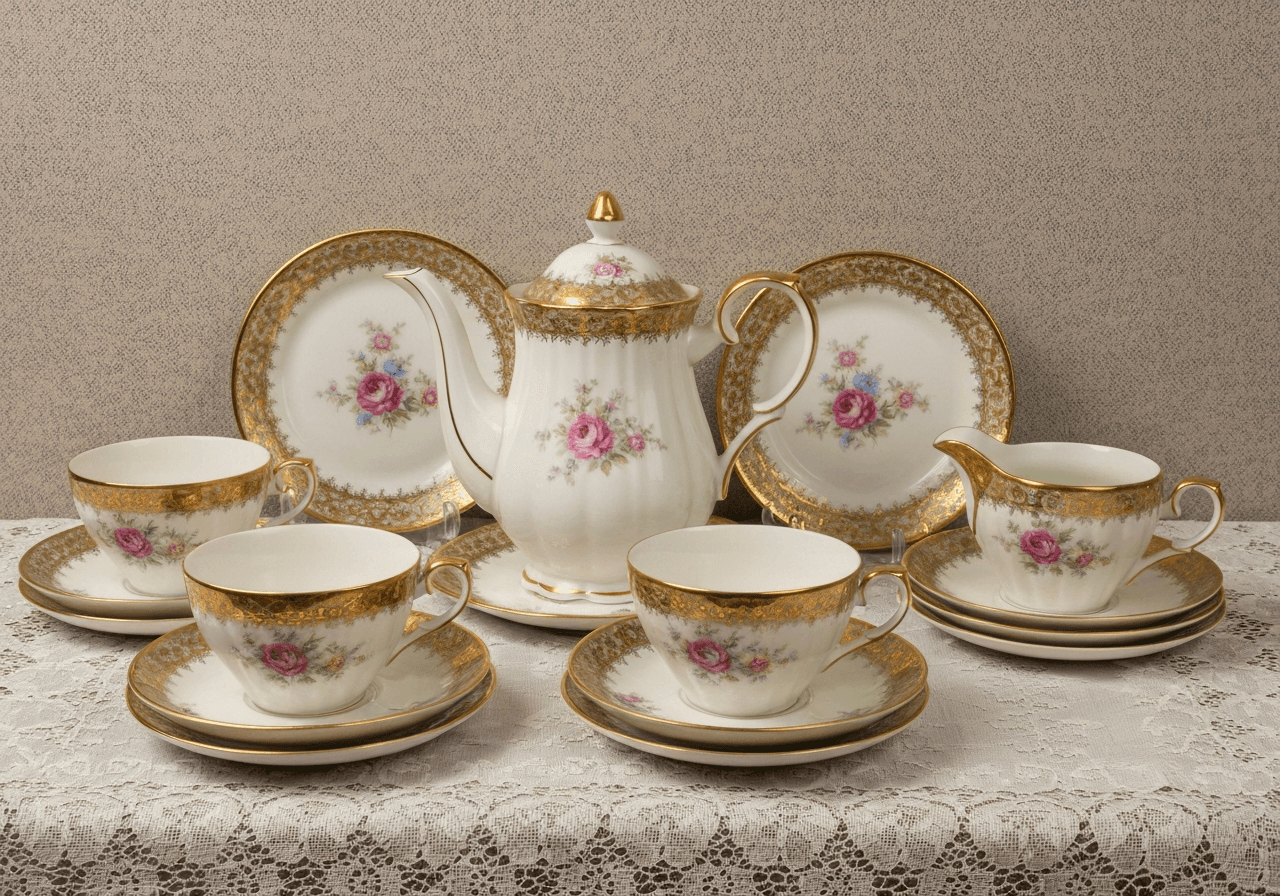
Tea set values vary enormously based on material and maker. A sterling silver tea service by Tiffany or Georg Jensen can be worth $3,000-$10,000+. Fine bone china by Royal Albert, Wedgwood, or Herend: $100-$2,000+ for complete sets. Japanese porcelain (Noritake, Kutani): $50-$500+. Even silver-plated sets from quality makers have decorative value of $30-$150. Many people inherit tea sets without knowing if they're silver (valuable) or silver-plated (modest value), or whether the china pattern is sought-after or common.
Key Factors That Affect Antique Tea Sets Value
Understanding what drives the price of antique tea sets helps you get the most accurate valuation.
Material
Sterling silver: $500-$10,000+ (metal value + maker premium). Silver-plated: $30-$200 (maker-dependent). Fine bone china: $50-$2,000+ (maker and pattern dependent). Porcelain: $30-$500+. Pottery/stoneware: $20-$200. Check bottom marks and test with a magnet (silver is non-magnetic).
Maker & Brand
Silver: Tiffany ($3K-$10K+), Georg Jensen ($2K-$8K+), Gorham ($500-$3K), Reed & Barton ($300-$2K). China: Herend ($500-$2K+), Royal Copenhagen ($200-$1K), Wedgwood ($100-$800), Royal Albert ($100-$500), Noritake ($50-$300). Maker identification is on the bottom marks.
Completeness
Complete service (teapot, creamer, sugar, plus cups/saucers for 6-12): full value. Missing pieces reduce value significantly. A teapot without the set is worth less than proportional share. Extra serving pieces (cake plate, waste bowl) add value.
Condition
Silver: dents, monograms (engravings), and heavy tarnish reduce value 10-30%. China: chips, cracks, or repairs reduce value 30-70%. Crazing (fine crack networks in glaze): 20-30% reduction. Faded gilt edges: 10-20% reduction.
Age & Style
Georgian silver (pre-1837): highest premiums. Victorian (1837-1901): strong values. Art Deco (1920s-30s): design premium. Mid-century: moderate values. The style and era affect both collector appeal and market demand.
Tips for Valuing Antique Tea Sets
Get the most accurate valuation by following these tips when photographing your antique tea sets.
Check the bottom of every piece for maker's marks and material stamps
For silver: look for '925', 'Sterling', or hallmarks
Count all pieces.completeness significantly affects value
Photograph the bottom marks clearly for identification
Antique Tea Sets Market Insights
The tea set market has softened as formal tea service has declined, but quality sets from premium makers maintain value. Sterling silver tea services benefit from precious metal prices. Fine china sets appeal to both collectors and users who appreciate quality tableware. The market for complete sets is stronger than for individual pieces. Online platforms have expanded the buyer pool globally, with strong demand from collectors in Asia and the Middle East.
Find Out What Your Antique Tea Sets Are Worth
Upload a photo now and get a free AI-powered valuation in seconds. No sign-up required.
Antique Tea Sets Valuation FAQ
How do I know if my tea set is silver or silver-plated?
Check bottom marks: 'Sterling', '925', or hallmarks = solid silver (valuable). 'EP', 'EPNS', 'Silver Plate' = plated (modest value). A magnet test also helps: silver is not magnetic, but the base metal under plating often is. Weight is another clue. Sterling is heavier.
What tea sets are worth the most?
Sterling silver by Tiffany, Jensen, or Paul Revere: $3,000-$10,000+. Fine china by Herend or Royal Copenhagen: $500-$2,000+. Georgian-era silver services: $2,000-$20,000+. Even quality silver-plated sets by Christofle: $100-$500.
Should I polish my silver tea set before selling?
Light polishing to remove heavy tarnish is fine and can improve presentation. Don't use harsh abrasives. Some collectors prefer a natural patina. For very valuable sets, professional cleaning is recommended over DIY polishing.
Where can I sell an antique tea set?
For silver sets ($500+): estate jewelry dealers, auction houses, or Replacements Ltd. For china sets: Replacements Ltd (the largest matching service), eBay, Etsy. For silver-plated: eBay, Etsy, or local antique shops.complete sets sell better than individual pieces.
Is my grandmother's china worth anything?
It depends on the maker and pattern. Check the bottom mark and look up the maker. Popular patterns by Wedgwood, Royal Albert, Noritake, and other major makers can be worth $50-$500+ for complete sets.common patterns from mass-market makers may be worth $20-$50 for a full set.
Similar Valuations
Value anything, anytime
Unlimited valuations, saved history and full reports in the free app.