Last updated: September 2026
How Much Is Milk Glass Worth?
Milk glass. Opaque white glass produced since the 1800s. Has experienced a collecting renaissance driven by interior design trends and vintage enthusiasts. From Victorian era pieces to mid-century Fenton and Westmoreland glass, milk glass comes in countless forms, patterns, and makers. Our AI identifies your milk glass piece's pattern, likely manufacturer, and era to estimate its current market value.
Get the free app for unlimited scans


Compare real prices
See what milk glass are listed for right now
Affiliate link: we earn a commission if you buy, at no extra cost to you.
What do you want to value?
Get the free app for unlimited scans
Why Knowing Your Milk Glass Value Matters
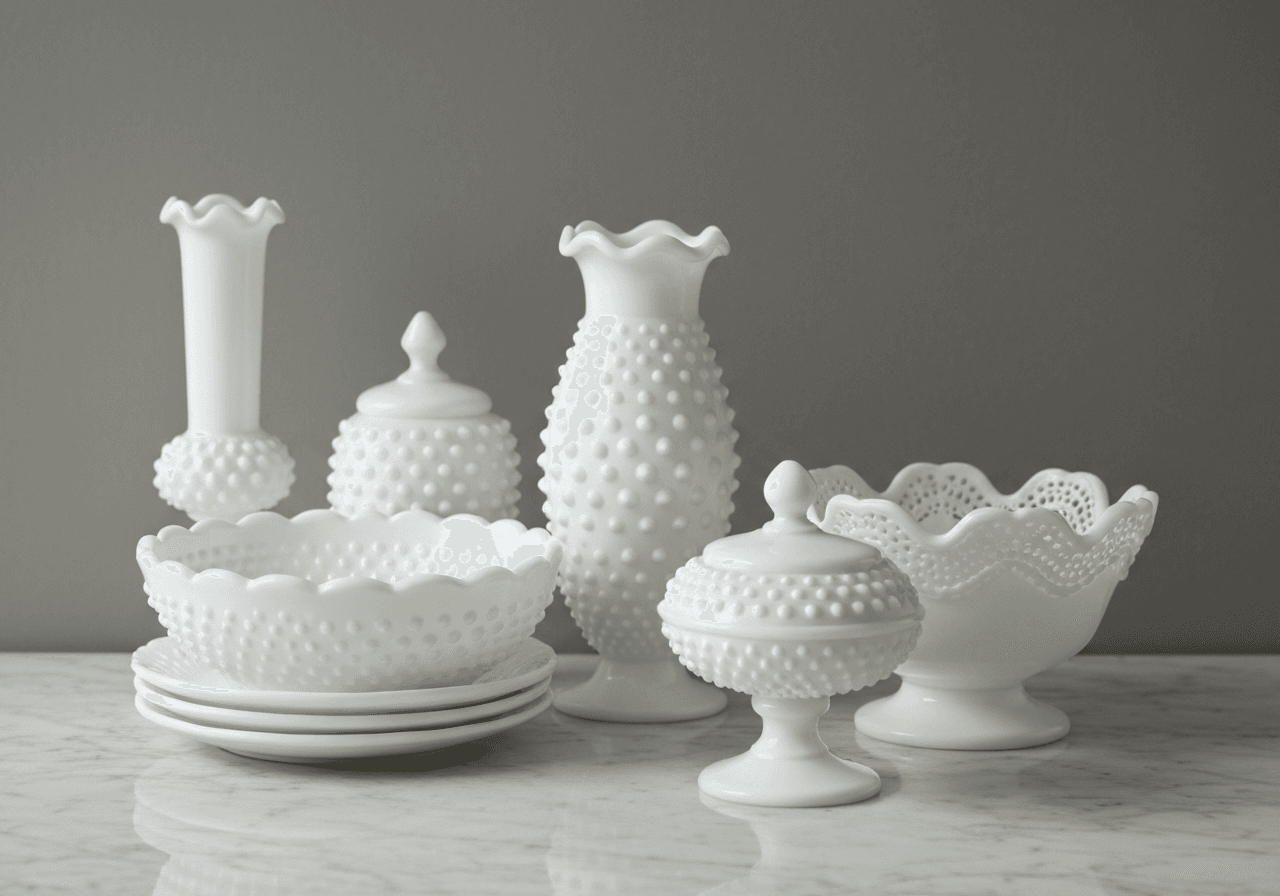
Milk glass collecting sits at the intersection of antiques and home décor, giving it both collector and decorative value. Victorian-era milk glass (1870s-1900s) with intricate patterns can be worth $50-$500+ per piece. Fenton, Westmoreland, and Imperial milk glass from the mid-century era is worth $10-$100+ depending on pattern and form. Even common pieces have decorative value of $5-$20. Many people find milk glass at estate sales and thrift stores without knowing some patterns and forms are genuinely scarce. The Instagram and Pinterest aesthetic has renewed demand, particularly for vases, compotes, and serving pieces.
Key Factors That Affect Milk Glass Value
Understanding what drives the price of milk glass helps you get the most accurate valuation.
Manufacturer & Era
Most valuable: Victorian/Atterbury (1870s-1900s): $50-$500+. Fenton Art Glass: $15-$200+. Westmoreland Glass: $10-$100+. Imperial Glass: $10-$75. Indiana Glass: $5-$30. L.E. Smith: $5-$25. European/French makers: $20-$200+. Unmarked pieces: value based on pattern identification.
Pattern & Form
Covered animal dishes (hens, cats, dogs): $20-$200+. Hobnail pattern (Fenton): $10-$75. Grape pattern: $10-$50. Lace edge/lattice: $10-$50.compotes and cake stands: $20-$100+. Large platters and bowls: $15-$75.common drinking glasses: $3-$10.
Color Variations
While 'milk glass' typically means white, colored variants exist and can command premiums. Blue milk glass: 1.5-2x white value. Pink milk glass: 1.5-2x. Green milk glass: 2-3x (rarer). Black milk glass: collectible niche. Slag glass (marbled/swirled): $15-$100+ depending on colors.
Condition
Perfect condition: full market value. Minor chips on bases: 30-50% reduction. Cracks or significant chips: 50-80% reduction. Staining or cloudiness: 20-30% reduction. Milk glass is fairly durable but chips are common on rims and bases.
Marks & Attribution
Fenton pieces often have a 'Fenton' or 'F' mark (post-1970). Westmoreland uses 'WG' intertwined. Many vintage pieces are unmarked and identified by pattern/mold. Marked pieces from known makers command 20-50% premiums over unmarked equivalents.
Tips for Valuing Milk Glass
Get the most accurate valuation by following these tips when photographing your milk glass.
Check the bottom for maker's marks. Fenton 'F', Westmoreland 'WG' intertwined
Hold pieces up to light. Genuine milk glass has a distinctive translucency at thin areas
Check rims and bases carefully for chips. The most common damage
Photograph any patterns clearly. Pattern identification determines value
Milk Glass Market Insights
The milk glass market benefits from dual demand: collectors who appreciate the glass itself and decorators who use it for weddings, events, and home styling. Instagram and Pinterest have driven strong decorative demand, particularly for vases, cake stands, and serving pieces. The collecting market is accessible. You can build an impressive collection for modest money while occasionally finding genuinely valuable pieces. Vintage Fenton hobnail remains the most recognized and actively traded pattern.
Find Out What Your Milk Glass Are Worth
Upload a photo now and get a free AI-powered valuation in seconds. No sign-up required.
Milk Glass Valuation FAQ
How do I identify who made my milk glass?
Check the bottom for marks: 'F' or 'Fenton' (Fenton Art Glass), intertwined 'WG' (Westmoreland), various marks for other makers. Many pieces are unmarked and identified by pattern. The pattern style, glass quality, and form help narrow the maker. Pattern guides and collector forums are helpful for identification.
What milk glass is most valuable?
Victorian-era covered animal dishes ($50-$500+), early Atterbury pattern glass ($50-$300), large Fenton hobnail pieces ($30-$100+), and rare colored milk glass ($30-$200+).complete sets of serving pieces in matched patterns also command premiums.
Is all white glass milk glass?
Not necessarily. True milk glass is opaque to semi-translucent white glass made with specific opacifying agents. Some white glass is simply painted or enameled clear glass. Hold the piece near a strong light. Genuine milk glass shows a warm glow or 'fire' at the edges where it's thinnest.
Where can I sell milk glass?
Etsy is excellent for decorative pieces (wedding/event buyers). eBay reaches the most collectors. Local antique shops and malls offer consignment. Facebook vintage glass groups are active. For bulk collections, estate sale companies can handle the logistics.
Is milk glass still being made?
Yes, some companies produce new milk glass, and IKEA and Target have sold milk-glass-style pieces. However, new production is usually distinguishable from vintage by weight (lighter), feel (smoother), and marks. Vintage milk glass has a distinctive quality that experienced collectors can identify by feel.
Similar Valuations
Value anything, anytime
Unlimited valuations, saved history and full reports in the free app.