Last updated: September 2026
How Much Are My Longaberger Baskets Worth?
Whether you have a rare JW Collection miniature, a Collectors Club exclusive, a holiday edition, or everyday Longaberger baskets with liners and protectors, our AI identifies the basket type, year, edition, and condition to deliver an accurate market value. From baskets that have appreciated in value to those that have declined, know exactly what your Longaberger collection is worth.
Get the free app for unlimited scans


Compare real prices
See what longaberger baskets are listed for right now
Affiliate link: we earn a commission if you buy, at no extra cost to you.
What do you want to value?
Get the free app for unlimited scans
Why Knowing Your Longaberger Baskets Value Matters
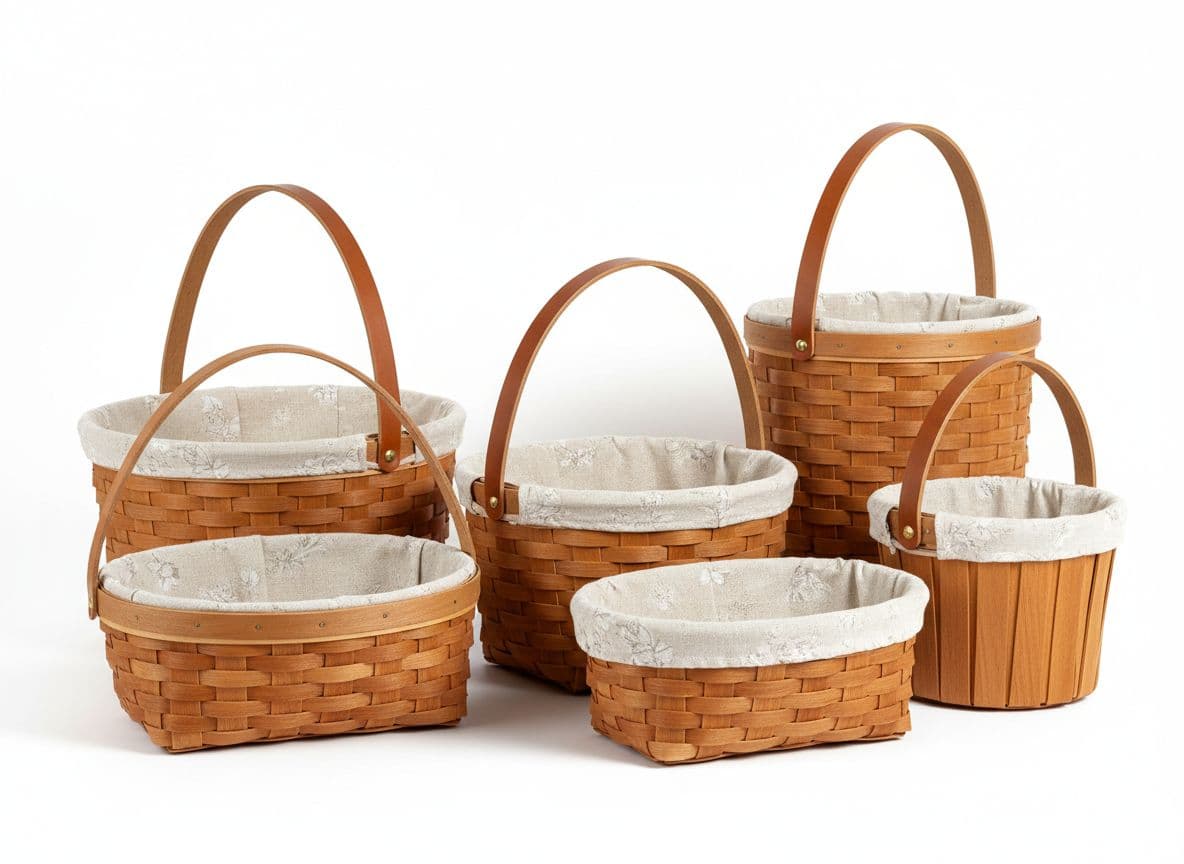
Longaberger baskets. Once the centerpiece of a billion-dollar direct-sales empire. Have seen dramatic price changes since the company ceased production in 2018. Many collectors invested thousands of dollars in Longaberger baskets at retail prices of $40-$200+ per basket, hoping they would appreciate in value. The reality is mixed: most common Longaberger baskets now sell for $10-$40 on the secondary market, well below their original retail prices. However, certain rare pieces. JW Collection miniatures, early signed Dave Longaberger baskets, and specific Collectors Club exclusives. Can still bring $50-$200+. With millions of baskets in circulation, understanding which ones have retained value is essential before selling.
Key Factors That Affect Longaberger Baskets Value
Understanding what drives the price of longaberger baskets helps you get the most accurate valuation.
Collection & Edition
Regular production baskets are the most common and least valuable ($10-$40). JW Collection miniatures, Collectors Club exclusives, Horizon of Hope charity baskets, and early signed pieces command higher prices. Holiday and seasonal editions have moderate collector followings. The specific collection or edition determines the base value range.
Year & Signatures
Earlier baskets (1970s-1980s) handmade when the company was smaller are more valuable than mass-produced 1990s-2000s baskets. Baskets signed by Dave Longaberger himself (who passed in 1999) carry a premium. The year is stamped or branded on the bottom of most baskets. First-year production baskets in a specific style can be worth more.
Completeness
A Longaberger basket's value is significantly higher when it includes the matching fabric liner, plastic protector, lid (if applicable), and original product card. A complete basket with all accessories can be worth 2-3x more than the basket alone. Mismatched or aftermarket liners do not add the same value as original Longaberger liners.
Condition
Baskets should be clean, structurally sound, and free of broken weaves, staining, or mold. The leather handles or ears should be intact and not dried out or cracked. Fabric liners should be clean and unfaded. Since these are handmade wood products, some minor wear is expected with age. Baskets stored in damp conditions may have mold or odor issues that destroy value.
Size & Functionality
Larger baskets and those with practical everyday uses (magazine baskets, laundry baskets, bread baskets) tend to appeal to both collectors and practical buyers. Very small baskets and purely decorative pieces have a narrower market. The most popular sizes for resale are medium baskets that work as home decor or storage.
Tips for Valuing Longaberger Baskets
Get the most accurate valuation by following these tips when photographing your longaberger baskets.
Photograph the basket from the front and top, showing the shape, weave pattern, and any liner
Include a photo of the bottom showing the year stamp, maker's mark, and any signatures
Show all included accessories: liner, protector, lid, tie-on charms, and product card
Note any condition issues such as broken weaves, staining, dried-out leather, or mold
Longaberger Baskets Market Insights
The Longaberger basket market has stabilized at levels well below original retail prices. eBay and Facebook Marketplace are the primary selling platforms, with dedicated Longaberger Facebook buy/sell groups remaining active. The collector base has shrunk as original enthusiasts age and downsize, creating an oversupply of common baskets. However, a core group of dedicated collectors continues to seek rare and early pieces. Prices have largely bottomed out for common baskets, meaning now may actually be a reasonable time to buy for decorative use. The closure of the company in 2018 (and brief restart) added some 'last production' interest.complete baskets with all original accessories sell notably faster and at better prices than bare baskets.
Notable Longaberger Baskets Values
Real-world examples of what specific longaberger baskets have sold for, so you can benchmark your own.
| Longaberger Basket | Condition | Typical Value |
|---|---|---|
| Longaberger 1978 First Edition Collector Basket | Used, Good | $80 - $250 |
| Longaberger Christmas Collection Basket (1990s) | Used, With Liner & Lid | $20 - $75 |
| Longaberger Corn Basket (1990s production) | Used | $15 - $50 |
| Longaberger Pottery Woven Traditions Mixing Bowl Set | Used | $30 - $90 |
| Longaberger Large Market Basket with Lid & Liner | Used, Complete Set | $25 - $80 |
| Longaberger 1999 Millennium Basket (Signed by Dave Longaberger) | Authenticated, Signed | $150 - $500 |
| Longaberger Bentley Basket (Limited Edition) | Used, Near Mint | $40 - $120 |
| Longaberger WoodCrafts Hostess Award Piece | Used | $10 - $35 |
| Longaberger JW Collection Large Gathering Basket | Used, With Protector | $50 - $180 |
Based on eBay sold listings, estate sale records, and collector forum price guides for Longaberger baskets.
Find Out What Your Longaberger Baskets Are Worth
Upload a photo now and get a free AI-powered valuation in seconds. No sign-up required.
Longaberger Baskets Valuation FAQ
Are Longaberger baskets worth what I paid for them?
Unfortunately, most Longaberger baskets have lost significant value from their original retail prices.common production baskets that retailed for $40-$100 now typically sell for $10-$40. However, rare pieces, early signed baskets, and complete sets with all accessories have retained more value. The market reflects supply and demand. Millions of baskets were produced, and fewer people are actively collecting today.
Which Longaberger baskets are most valuable?
The most valuable Longaberger baskets include JW Collection miniatures ($50-$200+), baskets personally signed by Dave Longaberger ($50-$150+), early 1970s-1980s production baskets, Collectors Club exclusives, and complete sets from specific themed collections. Large display baskets and rare one-of-a-kind pieces from company events also command premiums.
Should I sell my Longaberger baskets individually or as a lot?
For rare or valuable individual baskets, sell them individually to maximize price. For common baskets, selling in themed lots (all Christmas baskets together, all medium baskets together) often yields better total returns than individual listings. Very common baskets may be best sold as large lots at a per-basket price to move volume. Facebook Marketplace works well for local lot sales to avoid shipping costs.
Does the liner and protector matter for Longaberger value?
Yes. Significantly. A basket with its matching original Longaberger liner, plastic protector, and any lid or product card can sell for 2-3x the price of a bare basket. Collectors want complete pieces. If you have liners and protectors stored separately from baskets, reunite them before selling. Original accessories in clean condition are essential for maximum value.
Longaberger Baskets Price Guides
Similar Valuations
Value anything, anytime
Unlimited valuations, saved history and full reports in the free app.