Last updated: September 2026
How Much Is My Depression Glass Worth?
Whether you have pink Royal Lace, green Cameo, cobalt blue Moderntone, or amber Madrid Depression glass, our AI identifies the pattern, color, piece type, and condition to provide an accurate market value. From rare dinner plates worth hundreds to common tumblers worth a few dollars, discover what your Depression glass collection is really worth.
Get the free app for unlimited scans


Compare real prices
See what depression glass are listed for right now
Affiliate link: we earn a commission if you buy, at no extra cost to you.
What do you want to value?
Get the free app for unlimited scans
Why Knowing Your Depression Glass Value Matters
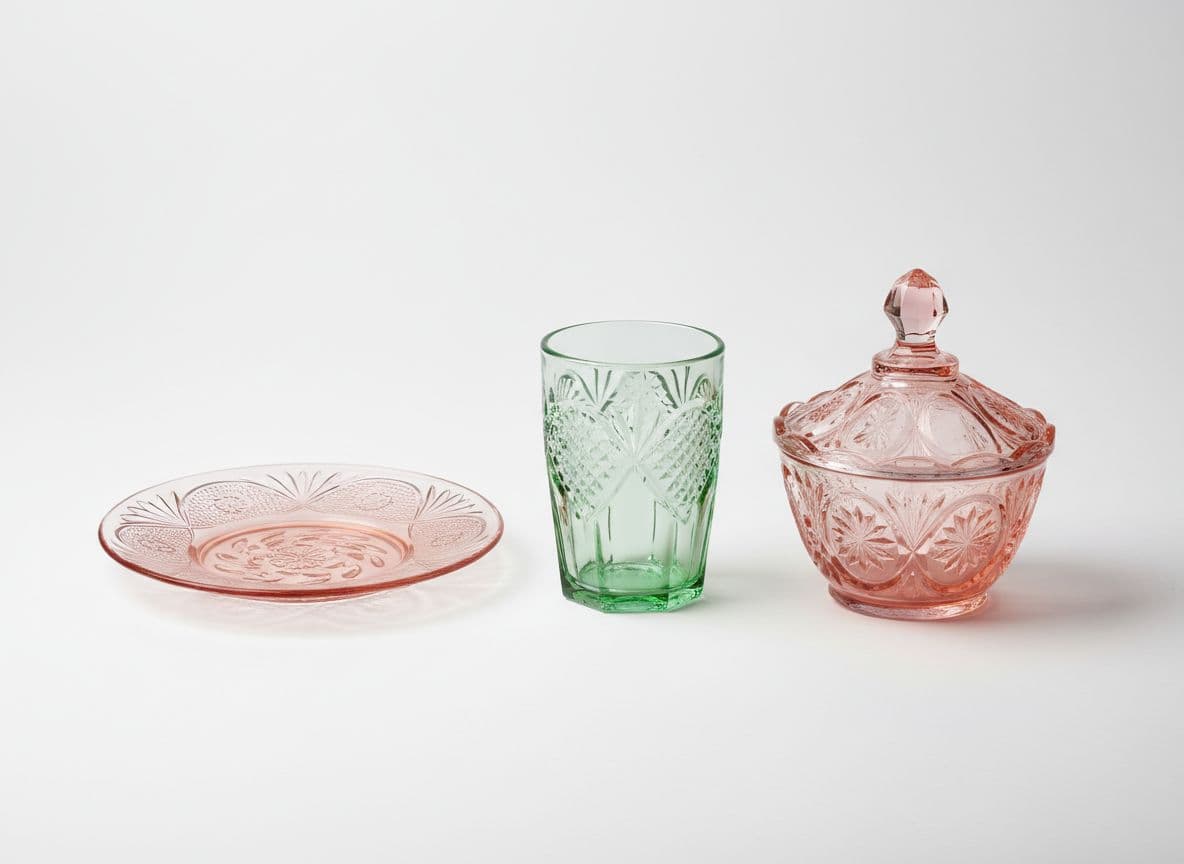
Depression glass. The colorful, machine-made glassware produced from the 1920s through the 1940s. Ranges from affordable everyday finds to genuinely valuable collectibles. A Royal Lace cobalt blue cookie jar can sell for $400-$800, and rare pieces in desirable patterns and colors routinely bring $100-$500+. Many people inherit Depression glass collections without understanding which pieces are common and which are rare. The same pattern in different colors can vary dramatically in value. A pink Sharon plate might be worth $15, while the same plate in amber is worth $5. Knowing these nuances before selling at an estate sale or to a dealer protects you from being undervalued.
Key Factors That Affect Depression Glass Value
Understanding what drives the price of depression glass helps you get the most accurate valuation.
Pattern
There are over 100 recognized Depression glass patterns, each with different collector demand. The most sought-after patterns include Royal Lace, Cameo (Ballerina), American Sweetheart, Cherry Blossom, Mayfair (Open Rose), and Princess.common patterns like Colonial or Bubble are much more affordable. Pattern identification is the first step in valuation.
Color
Color dramatically affects value within the same pattern. Cobalt blue, red (ruby), and tangerine are typically the most valuable colors across patterns. Pink and green are popular and moderately priced. Crystal (clear) and amber are generally the least valuable. Some colors were produced in very limited quantities, making them rare and expensive.
Piece Type
Within any pattern, certain pieces are rarer and more valuable. Cookie jars, butter dishes, pitchers, salt and pepper shakers, and covered candy dishes tend to be the most valuable. Dinner plates, cups, saucers, and small bowls are more common and less expensive. Unusual serving pieces can command premiums.
Condition
Chips, cracks, and heavy scratching significantly reduce value. Depression glass is relatively thin and fragile, so undamaged pieces are increasingly rare. Minor wear on the base from use is acceptable. Mold roughness (not damage) is common on machine-pressed glass and does not reduce value. Pieces with no damage command full market price.
Completeness
Complete sets or near-complete sets sell at a premium. Building a complete set is the goal of many collectors, so individual pieces from desirable patterns sell well. A complete 8-place setting in a rare pattern and color can be worth several thousand dollars. Even partial sets bring more per piece than random singles.
Tips for Valuing Depression Glass
Get the most accurate valuation by following these tips when photographing your depression glass.
Photograph pieces in natural light to accurately show the color. Depression glass colors can look different under artificial lighting
Include a photo showing the pattern detail clearly, ideally from above for plates and bowls
Note any chips, cracks, or damage. Even small chips can significantly affect value
If you have multiple pieces in the same pattern, photograph them together to show the set
Depression Glass Market Insights
The Depression glass market has matured considerably. Prices peaked in the early 2000s and have softened for common patterns and colors as the core collector demographic ages. However, rare pieces in desirable colors continue to bring strong prices. eBay, Replacements Ltd., and the Depression Glass Club (nationaldgclub.com) are primary marketplaces. Local antique shows and Depression glass shows remain important venues. New collectors are entering the hobby attracted by the colorful aesthetic and affordable entry points. Pink and green remain the most popular colors overall, while cobalt blue and red command the highest prices for rare pieces.
Notable Depression Glass Values
Real-world examples of what specific depression glass have sold for, so you can benchmark your own.
| Depression Glas | Condition | Typical Value |
|---|---|---|
| Mayfair "Open Rose" Pink Cookie Jar (Hocking) | Near Mint | $150 - $350 |
| American Sweetheart Pink Monax Lamp Shade (MacBeth-Evans) | Near Mint | $300 - $600 |
| Cherry Blossom Pink Pitcher, 36-oz (Jeannette) | Good | $60 - $130 |
| Cameo Green Grill Plate (Hocking) | Good | $12 - $30 |
| Adam Pink Butter Dish with Lid (Jeannette) | Near Mint | $80 - $175 |
| Patrician Amber Cookie Jar (Federal) | Near Mint | $100 - $200 |
| Royal Lace Cobalt Blue Butter Dish (Hazel Atlas) | Near Mint | $350 - $700 |
| Miss America Pink Cake Plate (Hocking) | Good | $35 - $75 |
| Florentine No. 2 Yellow Pitcher (Hazel Atlas) | Good | $45 - $95 |
Based on eBay sold listings, Ruby Lane dealer prices, and Gene Florence's Collector's Encyclopedia of Depression Glass price guide records.
Find Out What Your Depression Glass Are Worth
Upload a photo now and get a free AI-powered valuation in seconds. No sign-up required.
Depression Glass Valuation FAQ
How do I identify my Depression glass pattern?
Depression glass patterns are identified by their molded designs. Reference books like 'Collector's Encyclopedia of Depression Glass' by Gene Florence are the standard references. You can also compare your pieces to online pattern databases. Key identifying features include the design motif, piece shapes, and available colors. Our AI can identify most common Depression glass patterns from a clear photo.
What is the most valuable Depression glass pattern?
Royal Lace in cobalt blue is consistently among the most valuable, with cookie jars selling for $400-$800 and complete sets worth thousands. Cameo (Ballerina) in green, American Sweetheart in Monax and pink, and Cherry Blossom in green and pink are also highly valued. The specific piece type and condition determine final value within any pattern.
Is all colored glass from the 1930s Depression glass?
No. 'Depression glass' specifically refers to machine-pressed, mass-produced glassware from the 1920s-1940s. Elegant glass from companies like Heisey, Cambridge, and Fostoria was higher quality and hand-finished, forming a separate collecting category. Carnival glass and art glass are also distinct categories. Knowing which type you have is essential for accurate valuation.
Why are some Depression glass colors so much more valuable?
Certain colors were produced in much smaller quantities. Cobalt blue, red, and tangerine required more expensive materials and were manufactured for shorter periods. Crystal and amber were cheapest to produce and made in the largest quantities. The combination of lower supply and higher collector demand for vivid colors drives the price difference.
Depression Glass Price Guides
Similar Valuations
Value anything, anytime
Unlimited valuations, saved history and full reports in the free app.