Last updated: September 2026
How Much Is Carnival Glass Worth?
Carnival glass. Pressed glass with an iridescent metallic finish. Was produced primarily from 1907-1930 and has become one of the most collected types of American art glass. The shimmering rainbow surface treatment gives carnival glass its distinctive beauty. Our AI identifies your carnival glass pattern, color, maker, and form to provide a market valuation.
Get the free app for unlimited scans


Compare real prices
See what carnival glass are listed for right now
Affiliate link: we earn a commission if you buy, at no extra cost to you.
What do you want to value?
Get the free app for unlimited scans
Why Knowing Your Carnival Glass Value Matters
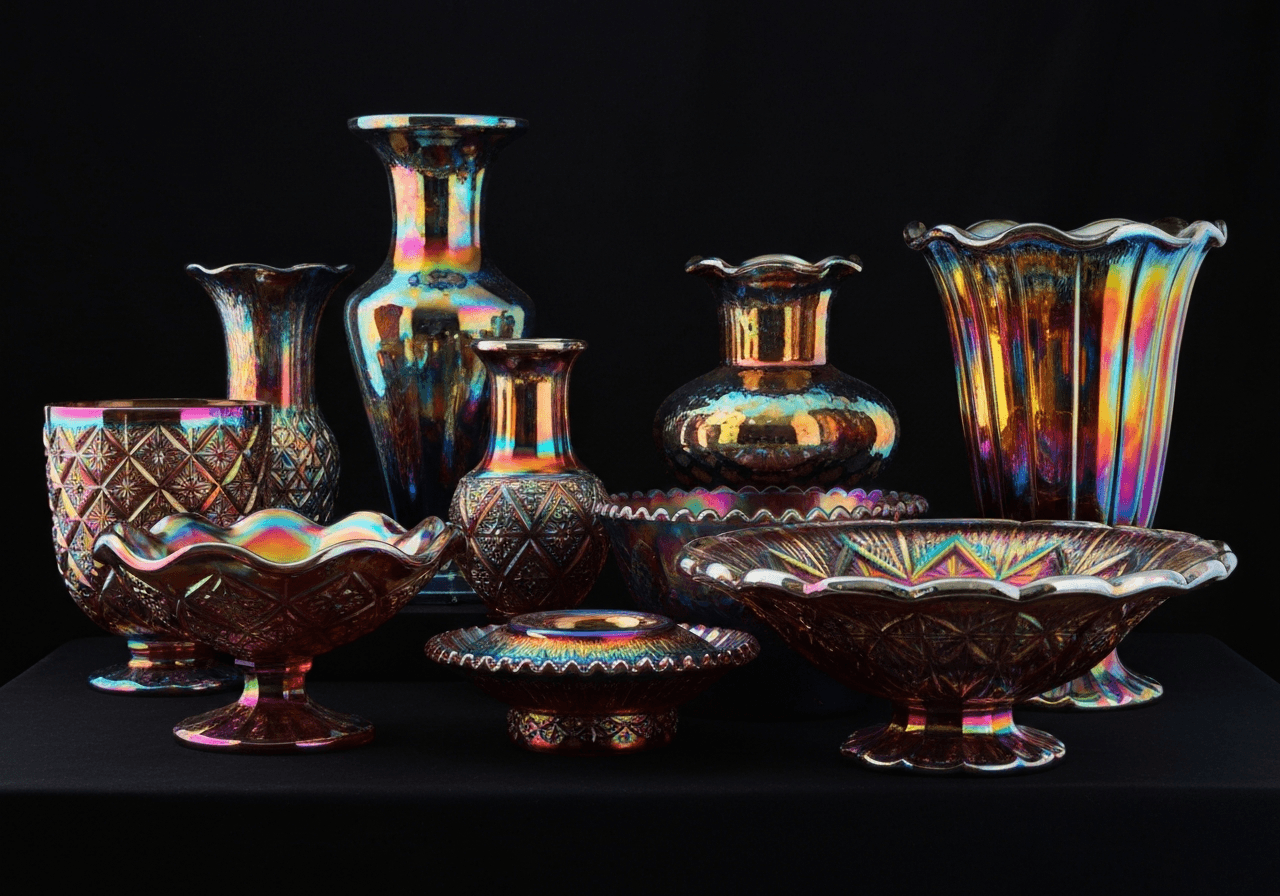
Carnival glass was originally 'the poor man's Tiffany'. an affordable alternative to expensive art glass. Today, rare patterns and colors have become extremely valuable in their own right. A Northwood Grape and Cable blue punch bowl set can sell for $5,000-$10,000+. Rare colors like red, ice blue, and aqua opal command 5-20x the price of common marigold. Even common patterns in marigold are worth $10-$50 per piece, and many people have carnival glass inherited from grandparents or found at estate sales without realizing specific pieces could be worth $100-$1,000+.
Key Factors That Affect Carnival Glass Value
Understanding what drives the price of carnival glass helps you get the most accurate valuation.
Color
This is the biggest value driver. Marigold (gold/amber, most common): base value. Amethyst/purple: 1.5-2x marigold. Green: 2-3x. Blue: 2-5x. Red: 5-20x (very rare). Ice blue: 5-10x. Aqua opal: 5-15x. White: 3-5x. Vaseline: 3-5x. The rarer the color for a given pattern, the higher the premium.
Pattern & Form
Over 2,000 patterns are documented. Most valuable patterns: Northwood Grape and Cable, Fenton Dragon and Lotus, Imperial Grape, Millersburg Peoples Vase. Forms hierarchy: punch bowl sets (highest), water pitcher sets, plates, bowls, vases, tumblers. Rare forms in rare colors create the most valuable combinations.
Manufacturer
Main carnival glass makers: Northwood (marked with an 'N' in a circle), Fenton (various marks), Millersburg (rare, premium values), Imperial (iron cross mark), Dugan/Diamond. Northwood and Millersburg pieces generally command the highest prices. Unmarked pieces are valued by pattern and quality.
Age & Authenticity
Vintage carnival glass (1907-1930): most valuable. Depression-era production (1930s): moderate values. Modern reproductions (1960s-present): $5-$25. Fenton continued making carnival glass into the 2000s. These modern pieces are collectible but worth less than vintage equivalents.
Condition & Iridescence
Strong, vivid iridescence: full value. Weak or worn iridescence: 30-50% reduction. Chips or cracks: 50-80% reduction. Excellent base glass clarity: premium. Straw marks (manufacturing lines): normal, don't affect value.complete sets (punch bowls with base and cups, water sets with tumblers) command significant premiums over individual pieces.
Tips for Valuing Carnival Glass
Get the most accurate valuation by following these tips when photographing your carnival glass.
Note the color carefully. Color is the #1 value factor in carnival glass
Check the base for maker's marks. Northwood 'N in circle' is the most famous
Hold the piece to different light angles. The iridescence reveals the base glass color
Look for the pattern name using reference books or online databases
Carnival Glass Market Insights
Carnival glass collecting has a dedicated community with active clubs, conventions, and auction houses. The market is well-documented with comprehensive pattern guides and price references. Values for rare colors and patterns remain strong, though common marigold pieces have more modest growth. The iridescent finish makes carnival glass visually striking, which helps maintain both collector and decorator demand. Auction results for rare pieces continue to set records, while accessible common pieces keep the hobby welcoming for new collectors.
Find Out What Your Carnival Glass Are Worth
Upload a photo now and get a free AI-powered valuation in seconds. No sign-up required.
Carnival Glass Valuation FAQ
What carnival glass colors are worth the most?
Red is the rarest and most valuable, often 10-20x marigold value. Ice blue, aqua opal, and white are also very valuable (5-15x marigold). Blue and green command 2-5x marigold. Amethyst/purple: 1.5-2x. Marigold (golden amber) is the most common and least expensive, but still worth $10-$50+ per piece for nice patterns.
How do I tell vintage carnival glass from modern reproductions?
Vintage carnival glass (1907-1930) typically has heavier weight, more detailed mold work, and richer iridescence. Reproductions often have smoother surfaces, lighter weight, and more uniform (less natural-looking) iridescence. Check for modern marks (Fenton 'F' logo = post-1970). Pattern identification helps. Some patterns were only made vintage.
What is the most valuable carnival glass pattern?
The Millersburg Peoples Vase is among the most valuable. Rare examples have sold for $20,000+. Northwood Grape and Cable punch bowl sets in rare colors: $5,000-$10,000+. Millersburg Holly Whirl, Fenton Dragon and Lotus, and Northwood Peacock at the Fountain are also highly valued in rare colors.
What does the 'N' mark mean on carnival glass?
The 'N' inside a circle or underline is the mark of the Northwood Glass Company (1908-1925). Harry Northwood was one of the premier carnival glass producers, and his marked pieces are among the most collectible. Not all Northwood pieces are marked, and the mark itself can vary in clarity.
Where can I sell carnival glass?
Tom Burns Auctions and Seeck Auctions specialize in carnival glass and achieve the best prices for rare pieces. eBay reaches the broadest audience for all value levels. Carnival glass collector clubs and conventions have active buy/sell/trade activities. Local antique dealers may buy collections at wholesale prices.
Similar Valuations
Value anything, anytime
Unlimited valuations, saved history and full reports in the free app.