Last updated: September 2026
How Much Is a Mike Trout Rookie Card Worth?
Mike Trout rookie cards from 2009-2011 are the most valuable modern baseball cards. The 2009 Bowman Chrome Draft Picks #BDPP89 Superfractor sold for $3.9 million, making it one of the most expensive sports cards ever. But Trout rookies exist at every price point. From $5 base cards to million-dollar parallels. Our AI identifies your specific Trout card and estimates its current market value.
Get the free app for unlimited scans


Compare real prices
See what mike trout rookie cards are listed for right now
Affiliate link: we earn a commission if you buy, at no extra cost to you.
What do you want to value?
Get the free app for unlimited scans
Why Knowing Your Mike Trout Rookie Cards Value Matters
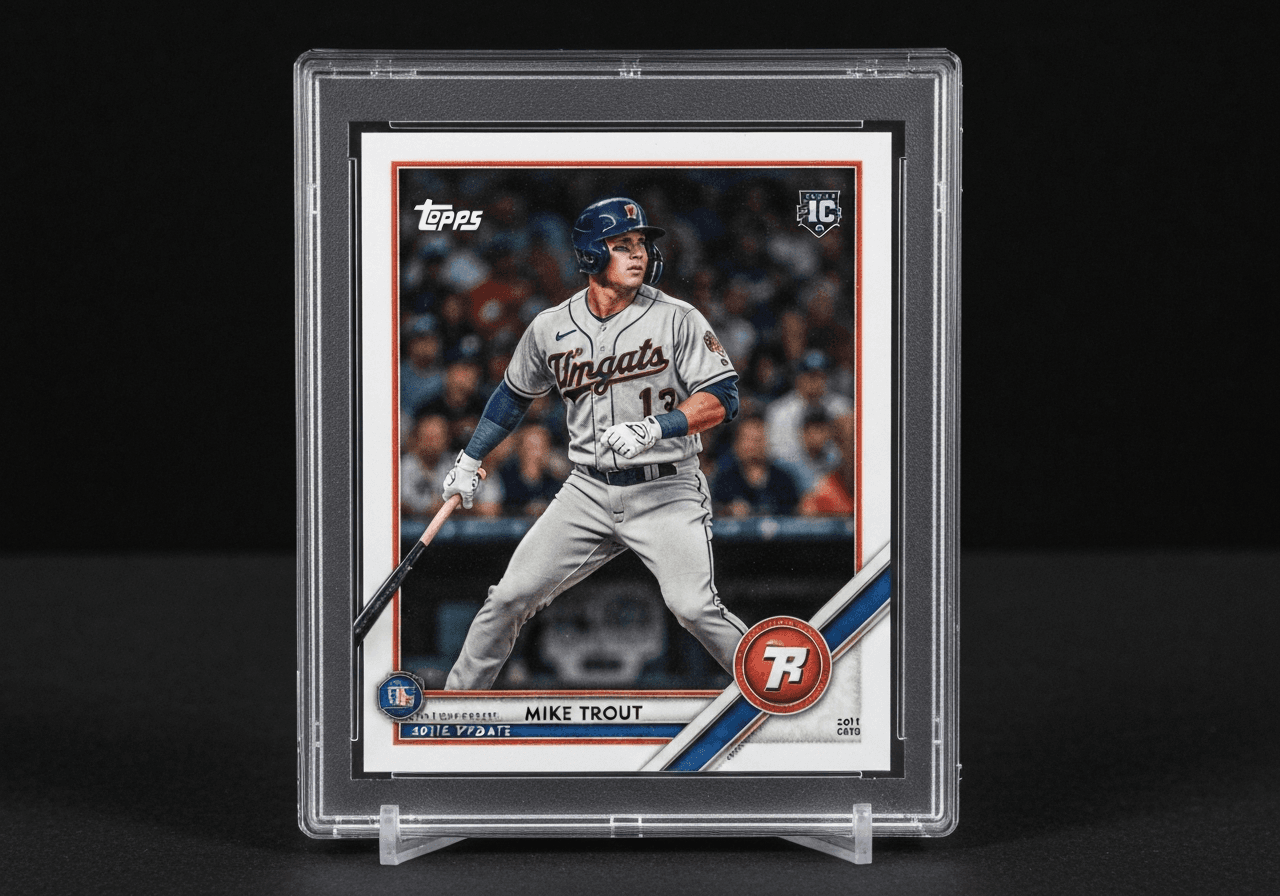
Mike Trout is the consensus best baseball player of his generation, and his rookie cards are the blue-chip investment of modern baseball card collecting. The 2011 Topps Update #US175 is his most widely recognized rookie card, worth $50-$100 raw and $500-$30,000+ in high grades. The 2009 Bowman Chrome Draft Picks is his first Bowman Chrome appearance and commands even higher premiums. What makes Trout rookies particularly interesting is that many were produced during a period of low collector interest (2009-2011), meaning fewer were preserved in mint condition, making high-grade examples genuinely scarce despite production numbers.
Key Factors That Affect Mike Trout Rookie Cards Value
Understanding what drives the price of mike trout rookie cards helps you get the most accurate valuation.
Key Cards & Products
Most valuable Trout rookies: 2009 Bowman Chrome Draft Picks #BDPP89 Superfractor (1/1, $3.9M), Gold Refractor /50 ($100,000+), Refractor ($5,000-$50,000+). 2011 Topps Update #US175 base ($50-$30,000+ depending on grade), Diamond Anniversary ($200-$5,000). 2011 Topps Heritage Minor League #44 ($20-$500+).
Grade Premium
Grade is everything for Trout rookies. A 2011 Topps Update PSA 10 sells for $5,000-$10,000, while a PSA 9 is $200-$500, and a raw copy is $50-$100. The 20-50x price jump between PSA 9 and PSA 10 makes grading essential for any Trout rookie that appears mint.
Parallel & Refractor Types
Base cards are the starting point. Refractors (10-50x base value), Gold Refractors (/50, extremely valuable), Orange Refractors (/25), Red Refractors (/5), and Superfractors (1/1, priceless) create a hierarchy. Each parallel level dramatically increases value.
Autograph & Patch Cards
Trout autographed rookie cards command massive premiums. Bowman Chrome autographed versions are among the most valuable cards in the hobby. Patch cards (with game-worn jersey pieces) combined with autographs can be worth $10,000-$500,000+ depending on the product and serial number.
Condition Factors
For raw (ungraded) Trout rookies, centering is the biggest grading factor. The 2011 Topps Update is notoriously difficult to find well-centered, which is why PSA 10 examples command such high premiums. Surface scratches, corner whitening, and edge dings all reduce grade and value significantly.
Tips for Valuing Mike Trout Rookie Cards
Get the most accurate valuation by following these tips when photographing your mike trout rookie cards.
The 2011 Topps Update #US175 is the flagship Trout rookie. Check your 2011 packs and collections
Centering is critical. Look at the borders on front and back before getting graded
Store ungraded Trout rookies immediately in penny sleeves and top loaders
Check the back of the card for the card number to identify the exact product
Mike Trout Rookie Cards Market Insights
Mike Trout rookie cards have been the benchmark for modern baseball card values since the card market boom of 2020. While prices corrected from peak levels, Trout rookies have shown stronger support levels than most comparable cards. His legacy as a generational talent is secure regardless of injury concerns, and his cards benefit from being produced in a low-interest period that reduced the number of mint-condition survivors. The 2011 Topps Update PSA 10 serves as a market bellwether. Its price movements signal broader trends in the baseball card market.
Find Out What Your Mike Trout Rookie Cards Are Worth
Upload a photo now and get a free AI-powered valuation in seconds. No sign-up required.
Mike Trout Rookie Cards Valuation FAQ
What is the most valuable Mike Trout rookie card?
The 2009 Bowman Chrome Draft Picks Superfractor (1/1) sold for $3.9 million. For more commonly available cards, the 2009 Bowman Chrome Draft Picks Refractor PSA 10 sells for $20,000-$50,000+, and the 2011 Topps Update #US175 PSA 10 sells for $5,000-$10,000.
Is the 2011 Topps Update Mike Trout his real rookie card?
There's debate in the hobby. The 2011 Topps Update #US175 is his most widely recognized rookie card and the one most collectors reference. However, the 2009 Bowman Chrome Draft Picks #BDPP89 is his first Bowman Chrome card (a prospect card, technically). Both are extremely valuable and collectible.
How do I know if my Mike Trout rookie is centered well enough for PSA 10?
PSA 10 requires centering of approximately 60/40 or better on front and 75/25 or better on back. Use a centering tool or app to measure the borders. The 2011 Topps Update is notoriously off-center, with some estimates suggesting fewer than 5% of the print run qualifies for PSA 10 centering.
Are Mike Trout cards a good investment?
Trout rookies have been one of the strongest performers in sports card investing over the past decade. Key considerations: buy PSA/BGS graded examples, focus on flagship products (Topps Update, Bowman Chrome), and buy the highest grade you can afford. Like any collectible, short-term prices fluctuate, but long-term demand for Trout cards is supported by his undeniable on-field legacy.
I found a 2011 Topps Update Mike Trout. What should I do?
First, handle it carefully by the edges. Place it in a penny sleeve, then a top loader. Examine it for centering, surface quality, and corner sharpness. If it appears to be in mint condition, submit it to PSA or BGS for grading. The difference between an ungraded ($50-$100) and PSA 10 ($5,000-$10,000) is enormous. Even a PSA 9 ($200-$500) justifies the $20-$50 grading fee.
Similar Valuations
Value anything, anytime
Unlimited valuations, saved history and full reports in the free app.