Last updated: September 2026
How Much Are One Piece Cards Worth?
The One Piece Card Game by Bandai has become one of the fastest-growing trading card games worldwide since its 2022 launch. With stunning alternate art cards, Secret Rares, and manga-inspired designs, the game has created a thriving secondary market. Our AI identifies your One Piece card's set, rarity, and version to provide an accurate market value.
Get the free app for unlimited scans


Compare real prices
See what one piece cards are listed for right now
Affiliate link: we earn a commission if you buy, at no extra cost to you.
What do you want to value?
Get the free app for unlimited scans
Why Knowing Your One Piece Cards Value Matters
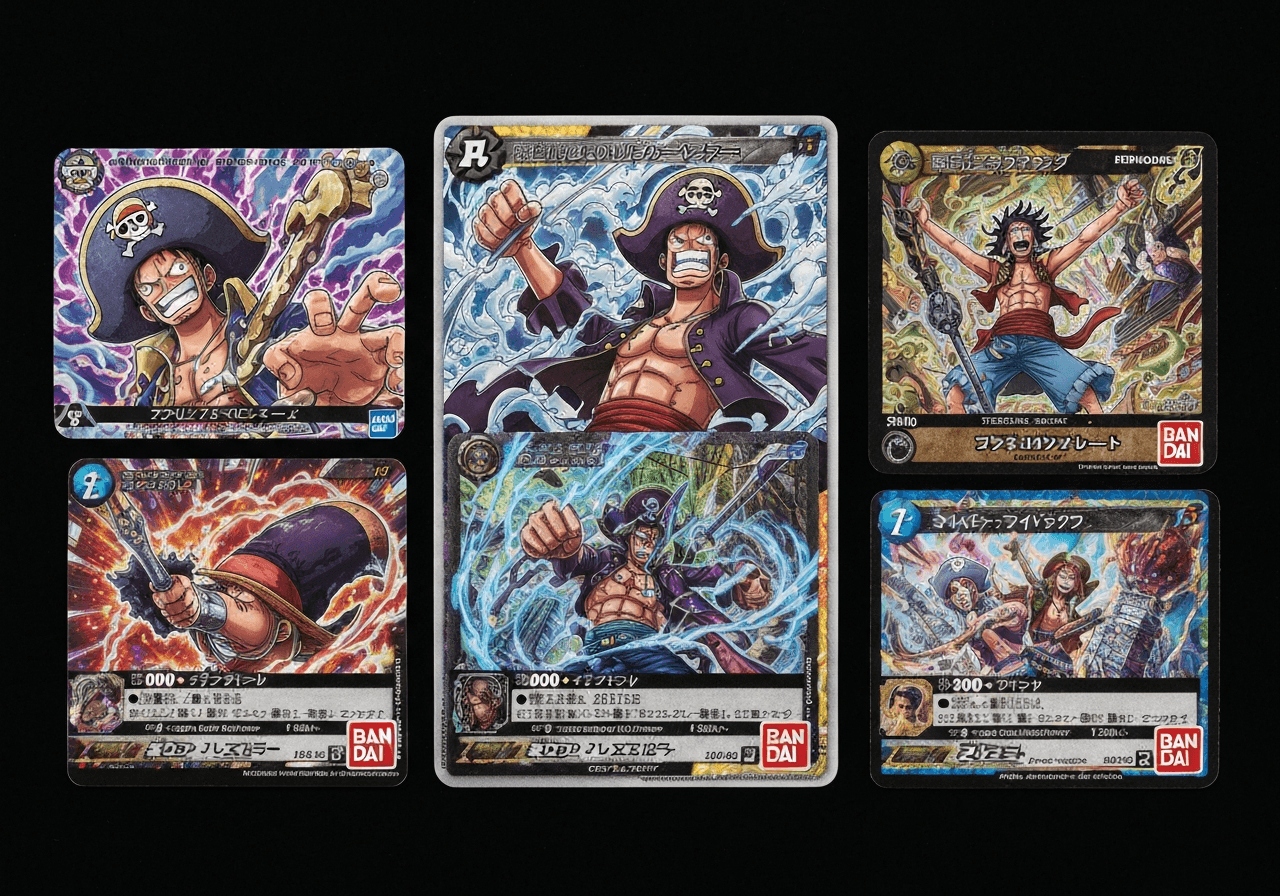
One Piece is the best-selling manga of all time (500+ million copies), and its card game has captured that massive fanbase. Premium cards like the Manga Art Luffy or Alternate Art Shanks have sold for $1,000-$5,000+. The game's popularity in Japan, where it launched first, means Japanese-language cards often command higher prices than English versions. Even common cards from early sets (OP01-OP03) have appreciated as those sets go out of print. The TCG market is still young and growing, making it an exciting time to check your collection's value.
Key Factors That Affect One Piece Cards Value
Understanding what drives the price of one piece cards helps you get the most accurate valuation.
Rarity Level
Common (C): $0.10-$0.50. Uncommon (UC): $0.25-$1. Rare (R): $0.50-$5. Super Rare (SR): $2-$30. Secret Rare (SEC): $10-$200+. Special Art / Alternate Art (SP/AA): $20-$2,000+. Manga Rare: $100-$5,000+. Promo cards: variable, $5-$500+.
Character Popularity
Cards featuring fan-favorite characters command premiums: Luffy (especially Gear 5), Shanks, Zoro, Ace, Yamato, Nami, and Boa Hancock are the most sought-after. Villain characters like Kaido and Doflamingo also have strong followings. The character depicted matters as much as rarity for pricing.
Art Version
Standard art vs Alternate Art vs Manga Art creates a hierarchy. Alternate Art cards (different illustration from standard) are worth 2-20x standard versions. Manga Art cards (featuring original manga panel artwork by Eiichiro Oda) are the most valuable chase cards in the game, worth $100-$5,000+.
Set & Availability
Early sets (OP01 Romance Dawn, OP02 Paramount War, OP03 Pillars of Strength) are going out of print, increasing prices for singles. Japanese-language cards from early sets are often more valuable than English equivalents. Promotional cards from events and tournaments can be extremely scarce.
Condition & Grade
Near Mint cards sell for full market value. Even minor edge whitening or surface scratches reduce value by 20-40%. PSA and CGC grading is becoming common for high-value One Piece cards. PSA 10 examples of chase cards command 2-5x over raw near-mint copies.
Tips for Valuing One Piece Cards
Get the most accurate valuation by following these tips when photographing your one piece cards.
Check the rarity symbol on the card. SEC (Secret Rare) and SP (Special Art) are most valuable
Japanese-language cards are often worth more than English versions for the same card
Photograph the full card front including the art and rarity markers
Keep valuable cards in sleeves immediately. Even minor edge wear reduces value significantly
One Piece Cards Market Insights
The One Piece Card Game market is one of the most dynamic in the TCG space. Growth has been driven by the anime's global popularity explosion (Netflix live-action series, Gear 5 anime arc), cross-collecting from manga/anime fans, and the game's excellent gameplay. The market is young enough that price discovery is still happening. Values can shift quickly as new sets release and chase cards emerge. Japanese product consistently sells at premium prices due to earlier release dates and collector preference. The game's organized play scene is growing, adding competitive demand alongside collector demand.
Find Out What Your One Piece Cards Are Worth
Upload a photo now and get a free AI-powered valuation in seconds. No sign-up required.
One Piece Cards Valuation FAQ
What are the most valuable One Piece cards?
The most valuable include Manga Art Luffy (Gear 5) from OP05 ($2,000-$5,000+), Alternate Art Shanks from OP01 ($500-$2,000+), and various Secret Rare and Special Art cards from early sets ($50-$1,000+). Promotional tournament cards and 1st Anniversary specials also command high prices.
Are Japanese or English One Piece cards worth more?
Japanese cards are generally worth more, especially for early sets and premium rarities. Japanese products launch 3-6 months before English, and the Japanese collector market is extremely active. However, some English-exclusive promos and variations can be worth more than their Japanese equivalents.
Is the One Piece Card Game still growing?
Yes. It's one of the fastest-growing TCGs in the world. New set releases consistently sell out, organized play is expanding, and the anime's continued popularity drives new collectors into the card game. The market has shown strong appreciation for early set cards as they go out of print.
Should I grade my One Piece cards?
For cards worth $100+ in raw near-mint condition, grading (PSA or CGC) is usually worthwhile. The premium for PSA 10 is significant. Typically 2-5x over raw. For cards under $50 raw, grading costs ($20-$40 per card) may not be justified unless you're building a personal graded collection.
Where can I sell One Piece cards?
TCGPlayer is the largest marketplace for TCG singles in the US. eBay has the broadest audience. Japanese-language cards sell well on Yahoo Japan Auctions and Mercari Japan. Facebook groups dedicated to One Piece TCG trading are also active. For high-value cards ($500+), eBay auction format typically achieves the best prices.
Similar Valuations
Value anything, anytime
Unlimited valuations, saved history and full reports in the free app.