Last updated: September 2026
How Much Are My Sports Cards Worth?
From vintage 1952 Topps Mickey Mantle cards and pre-war tobacco cards to modern Panini Prizm rookies and graded gem-mint singles, our AI identifies your sports cards by set, year, player, and condition to deliver accurate market valuations. Whether you found a shoebox of childhood cards or inherited a collection, discover their true worth instantly.
Get the free app for unlimited scans


Compare real prices
See what sports cards are listed for right now
Affiliate link: we earn a commission if you buy, at no extra cost to you.
What do you want to value?
Get the free app for unlimited scans
Why Knowing Your Sports Cards Value Matters
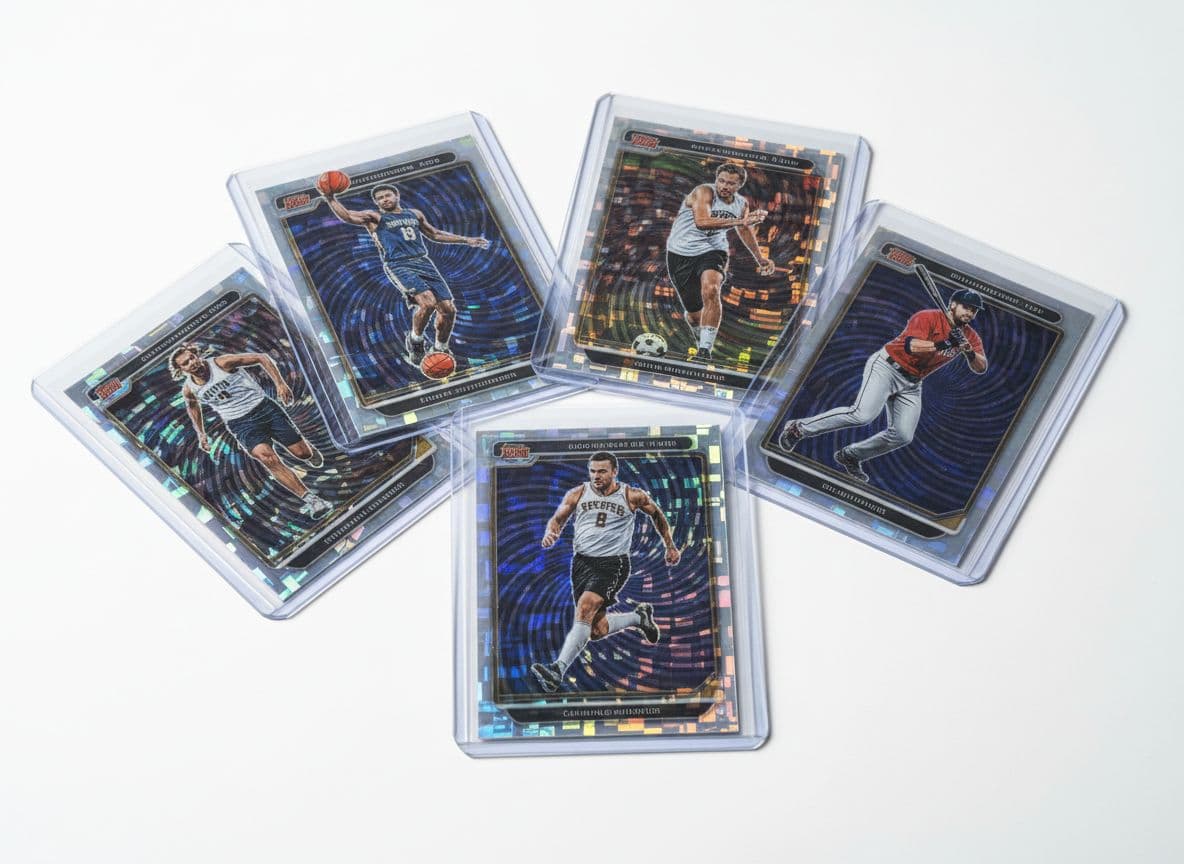
The sports card market has become a multi-billion dollar industry, with individual cards selling for millions at auction. A 1952 Topps Mickey Mantle PSA 9 sold for $12.6 million in 2022. But you don't need a Mantle to have valuable cards. Rookie cards of Hall of Famers from any era can be worth $100-$10,000+, and even common vintage cards from pre-1970 sets hold steady value. The market has expanded dramatically since 2020, with modern cards of young stars also commanding significant prices. Many people have boxes of cards in attics, basements, and closets without realizing that certain cards are worth hundreds or thousands of dollars.
Key Factors That Affect Sports Cards Value
Understanding what drives the price of sports cards helps you get the most accurate valuation.
Player & Rookie Status
Cards of Hall of Fame players and current superstars are the most valuable. Rookie cards (a player's first major-set card) command significant premiums over other years. Key rookies like Michael Jordan, Tom Brady, LeBron James, and Mike Trout are the market's blue chips.
Year & Set
Vintage cards (pre-1980) are generally more valuable due to scarcity. Key sets include 1952 Topps baseball, 1986 Fleer basketball, 1958 Topps football, and pre-war tobacco cards. Modern valuable sets include Panini Prizm, Topps Chrome, and National Treasures.
Condition & Grading
Condition is paramount in sports cards. Professional grading by PSA, BGS, or SGC assigns a grade from 1-10. A PSA 10 can be worth 10-100x more than the same card ungraded or in lower grades. Centering, corners, edges, and surface are all evaluated.
Parallel & Insert Status
Modern cards feature numerous parallels (refractors, prizms, color variations) and numbered inserts. Lower-numbered cards (serial numbered /25, /10, /1) are far more valuable than base cards. Autograph and memorabilia (patch) cards add significant value.
Market Demand & Player Performance
Active player card values fluctuate with on-field performance. A breakout season can double or triple a player's card values. Championship wins, award recognition, and Hall of Fame induction are major value catalysts. Retired players' cards tend to have more stable values.
Tips for Valuing Sports Cards
Get the most accurate valuation by following these tips when photographing your sports cards.
Photograph the card front and back clearly, showing all text, borders, and condition
Handle cards by the edges and use a plain background for clear photos
For graded cards, photograph the entire slab showing the grade and certification number
Note any visible flaws like creases, stains, off-centering, or corner wear
Sports Cards Market Insights
The sports card market experienced a massive boom from 2020-2022, driven by pandemic collecting, celebrity involvement, and mainstream media attention. While prices have corrected 30-50% from peak levels for many modern cards, the market remains well above pre-2020 levels. Vintage cards (pre-1980) have shown the most resilience, with classic rookie cards maintaining strong values. The basketball card market has grown to rival baseball in terms of values and demand. Football cards have surged in popularity. The grading industry has been a major market driver, with PSA, BGS, and SGC processing millions of cards. The market for modern rookie cards is volatile but offers potential upside for star players. Investment in sports cards has become mainstream, with fractional ownership platforms allowing anyone to invest in high-value singles.
Notable Sports Cards Values
Real-world examples of what specific sports cards have sold for, so you can benchmark your own.
| Sports Card | Condition | Typical Value |
|---|---|---|
| 1952 Topps Mickey Mantle #311 | PSA 8 (NM-MT) | $500,000 - $2,000,000+ |
| 1986-87 Fleer Michael Jordan Rookie #57 | PSA 10 (Gem Mint) | $40,000 - $150,000+ |
| 1986-87 Fleer Michael Jordan Rookie #57 | Raw / Ungraded | $800 - $3,000 |
| 2000 Bowman Chrome Tom Brady Rookie #236 | PSA 9 (Mint) | $3,000 - $8,000 |
| 2003-04 Upper Deck Exquisite LeBron James Rookie Patch Auto | Graded BGS 9+ | $50,000 - $200,000+ |
| 1979-80 O-Pee-Chee Wayne Gretzky Rookie #18 | PSA 8 (NM-MT) | $5,000 - $20,000 |
| 1993 SP Derek Jeter Rookie #279 | PSA 9 (Mint) | $800 - $2,500 |
| Common 1980s-90s Baseball Star (e.g., Cal Ripken Jr. base Topps) | Near Mint, Raw | $1 - $15 |
| 2018 Topps Chrome Shohei Ohtani Rookie Auto | PSA 9 (Mint) | $400 - $1,200 |
Based on eBay sold listings, PSA Population Report auction records, and major auction house results (Heritage, PWCC, Goldin).
Find Out What Your Sports Cards Are Worth
Upload a photo now and get a free AI-powered valuation in seconds. No sign-up required.
Sports Cards Valuation FAQ
Are my old baseball cards worth anything?
Cards from the 1950s-60s are often quite valuable, especially stars and rookies. Cards from the 1970s have moderate values for stars. The 1987-1994 era produced massive overprinting, and most common cards from this period are worth pennies. However, key rookie cards from any era can have value. Our AI can quickly identify valuable cards in your collection.
Should I get my sports cards graded?
Grading is worthwhile for cards valued at $50+ in raw condition that appear to be in near-mint or better condition. Grading costs $20-$150+ per card depending on service level. For vintage stars and key rookies, grading almost always increases value. For common cards worth under $20, the grading fee isn't justified.
What are the most valuable sports cards?
The most valuable include the T206 Honus Wagner ($7.25 million), 1952 Topps Mickey Mantle ($12.6 million), and 2003 LeBron James Exquisite RPA ($5.8 million). More accessible valuable cards include vintage Hall of Famer rookies ($100-$10,000), graded modern rookies of star players ($50-$5,000), and pre-war tobacco and candy cards ($50-$5,000).
Are 1990s sports cards worthless?
Most common 1990s cards are worth very little due to massive overproduction. However, key rookie cards from the era still have significant value: 1993 SP Foil Derek Jeter ($200-$5,000+), 1996 Topps Chrome Kobe Bryant ($200-$10,000+), and 1998 Peyton Manning rookies ($50-$500+). Insert cards, parallels, and autographs from 1990s sets can also be valuable.
How do I store my valuable cards properly?
Use penny sleeves inside top-loaders for individual valuable cards. Store in a cool, dry environment away from sunlight. Never use rubber bands, which cause damage. For long-term storage, acid-free boxes are ideal. Graded cards in PSA/BGS slabs are already well-protected. Avoid attics and basements where temperature and humidity fluctuate.
Sports Cards Price Guides
Similar Valuations
Value anything, anytime
Unlimited valuations, saved history and full reports in the free app.