Last updated: September 2026
How Much Are Garbage Pail Kids Worth?
Garbage Pail Kids, the iconic 1980s parody of Cabbage Patch Kids, have become serious collectibles. Original Series 1 (1985) cards are the most valuable, with rare variants and errors commanding thousands. Our AI identifies your GPK card's series, variation, and condition for an accurate valuation.
Get the free app for unlimited scans


Compare real prices
See what garbage pail kids are listed for right now
Affiliate link: we earn a commission if you buy, at no extra cost to you.
What do you want to value?
Get the free app for unlimited scans
Why Knowing Your Garbage Pail Kids Value Matters
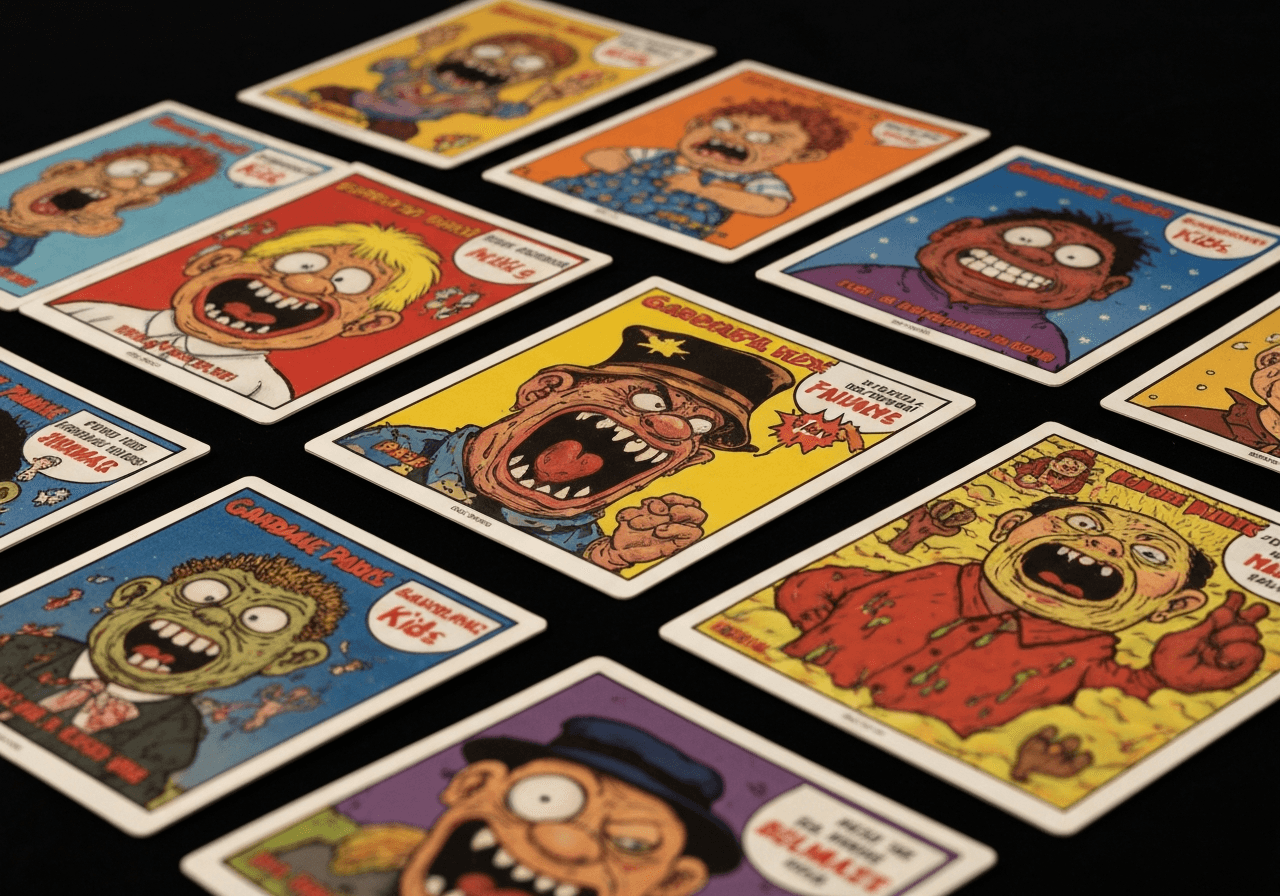
Garbage Pail Kids were a cultural phenomenon of the 1980s, and those childhood cards are now worth real money. Series 1 (1985) cards are the most valuable. An Adam Bomb #8a in PSA 10 can bring $5,000-$10,000+. Even common cards from early series (1-5) are worth $5-$30 each in good condition. The market is driven by 1980s nostalgia, with collectors in their 40s-50s seeking to recomplete childhood collections. Error cards, printing variations, and die-cut proofs add a treasure-hunting element that keeps collectors engaged.
Key Factors That Affect Garbage Pail Kids Value
Understanding what drives the price of garbage pail kids helps you get the most accurate valuation.
Series Number
Series 1 (1985): most valuable, $5-$10,000+ per card. Series 2-5: strong values, $2-$500+. Series 6-15: moderate values, $1-$50. OS (Original Series) cards are always more valuable than later 'All-New Series' (ANS) or modern releases. Series 1 'a' names (first print) are worth more than 'b' names.
Key Cards & Characters
Most valuable: Adam Bomb #8a ($500-$10,000+ in high grade), Nasty Nick #1a ($100-$2,000+), any Series 1 card in PSA 10 ($200-$5,000+). Matte back vs Glossy back variations in Series 1 create different values.
Errors & Variations
Printing errors, wrong backs, die-cut proofs, and color variations are highly sought after. Series 1 cards exist with different back types (Matte, Glossy, Checklist). Misprints and factory errors can be worth 5-20x normal versions.
Condition & Grade
GPK cards were heavily played with by kids, making mint condition examples scarce. PSA 10 examples of early series cards are genuinely rare. A common Series 1 card might be $5-$10 in Good condition but $200-$500 in PSA 10.
Complete Sets & Wrappers
Complete sets of early series in nice condition bring premiums over individual card values. Unopened wax packs: $20-$200+ depending on series. Original wax boxes: $200-$2,000+. Even wrappers from early series have modest value ($5-$20).
Tips for Valuing Garbage Pail Kids
Get the most accurate valuation by following these tips when photographing your garbage pail kids.
Check the series number on the card back. Lower series numbers are more valuable
Look for the 'a' and 'b' name variations. Series 1 'a' names are generally worth more
Examine the back for errors or unusual printing. Misprints add significant value
Store cards in penny sleeves. The glossy surface shows wear easily
Garbage Pail Kids Market Insights
The GPK market benefits from strong 1980s nostalgia and a dedicated collector community. Topps continues to produce new GPK series, keeping the brand alive and introducing it to new generations. The graded GPK market has grown significantly, with PSA and CGC submissions increasing annually. Original Series 1 cards in high grade have shown steady appreciation. The market is accessible. Most collectors can build nice sets for reasonable money while hunting for the elusive high-grade keys.
Find Out What Your Garbage Pail Kids Are Worth
Upload a photo now and get a free AI-powered valuation in seconds. No sign-up required.
Garbage Pail Kids Valuation FAQ
What Garbage Pail Kids cards are worth the most?
Adam Bomb #8a in PSA 10: $5,000-$10,000+. Nasty Nick #1a in PSA 10: $1,000-$3,000+. Any Series 1 card in PSA 10: $200-$5,000+. Error cards and printing variations from early series can also command hundreds to thousands.complete Series 1 sets in nice condition: $500-$2,000+.
Are 1980s Garbage Pail Kids valuable?
Yes. Original series cards from 1985-1988 (Series 1-15) all have collector value. Series 1-5 are the most valuable, with individual cards worth $2-$10,000+ depending on card, condition, and variations. Even common cards from these series are worth $1-$5 each.
How do I identify which series my GPK card is from?
Look at the card number on the back. Series 1 is #1-41 (a/b), Series 2 is #42-82, Series 3 is #83-123, etc. The card back design also changes between series. The year of production is also printed on the back.
Are modern Garbage Pail Kids worth collecting?
Modern GPK releases (2003-present) have a smaller but active collector base. Most individual cards are worth $0.50-$5, but limited variants, artist autographs, printing plates (1/1), and sketch cards can be worth $20-$500+. They're affordable to collect and maintain the classic GPK humor.
Should I get my GPK cards graded?
For Series 1-5 cards that appear to be in near-mint or better condition, grading is highly recommended. The premium for PSA 9-10 is significant. For later series cards or cards in played condition, grading usually isn't cost-effective. Focus grading budget on your highest-value cards.
Similar Valuations
Value anything, anytime
Unlimited valuations, saved history and full reports in the free app.