Last updated: September 2026
How Much Is a Walking Liberty Half Dollar Worth?
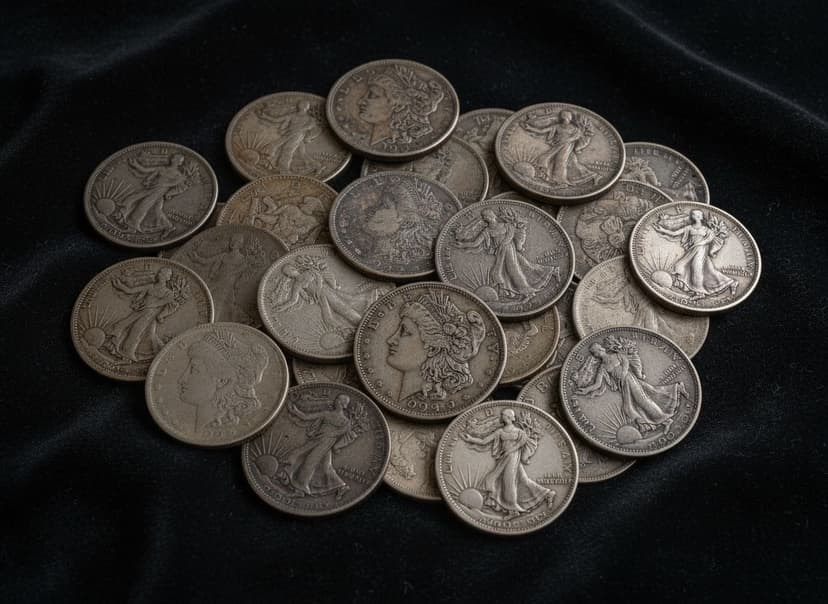
The Walking Liberty half dollar (1916-1947) is widely regarded as the most beautiful U.S. coin design ever created. Designed by Adolph A. Weinman, it features Lady Liberty striding confidently toward the sunrise. Every coin contains 90% silver (0.3617 troy oz), giving even common dates a melt value of $12-$15+. Key dates like the 1916-S and 1921 series can command $50-$10,000+ depending on condition.
Get the free app for unlimited scans


Compare real prices
See what walking liberty half dollar are listed for right now
Affiliate link: we earn a commission if you buy, at no extra cost to you.
What do you want to value?
Get the free app for unlimited scans
Why Knowing Your Walking Liberty Half Dollar Value Matters

The Walking Liberty half dollar holds a special place in American numismatics for both its artistic beauty and its silver content. The design was so admired that the U.S. Mint revived it in 1986 for the American Silver Eagle bullion coin, where it remains today. This enduring popularity ensures strong collector demand across all dates and grades. The series spans 31 years of American history, from World War I through the end of World War II. Early dates (1916-1921) tend to be the most valuable due to lower mintages and the difficulty of finding well-struck examples. The series includes several key dates: 1916-S ($50-$3,000+), 1917-S obverse mint mark ($30-$1,500+), 1919-D ($25-$1,000+), 1919-S ($20-$2,000+), 1921 ($40-$5,000+), 1921-D ($80-$10,000+), and 1921-S ($10-$3,000+).common dates from the 1940s are abundant and trade near silver melt value in circulated grades. Strike quality is a uniquely important factor for this series. The high-relief design, particularly Liberty's hand and head details, was notoriously difficult to strike properly. Many coins show weakness in these areas even in uncirculated condition. Fully struck examples with complete hand and head detail command significant premiums. 50-200% over standard examples of the same grade.
Key Factors That Affect Walking Liberty Half Dollar Value
Understanding what drives the price of walking liberty half dollar helps you get the most accurate valuation.
Silver Melt Value
Every Walking Liberty half dollar contains 0.3617 troy ounces of 90% silver, providing a price floor based on the silver market. At $28/oz silver: melt value ≈ $10.13. At $32/oz: ≈ $11.57.common dates in circulated condition (1940s) typically sell for a modest premium over melt. $12-$18 depending on the silver market. A roll of 20 Walking Liberty halves contains 7.23 troy oz of silver, worth $200-$230+ at current prices.
Date, Mint Mark & Rarity
Key dates with approximate circulated values: 1916-S ($50-$3,000+), 1917-S obverse ($30-$1,500+), 1919-D ($25-$1,000+), 1919-S ($20-$2,000+), 1921 ($40-$5,000+), 1921-D ($80-$10,000+), 1921-S ($10-$3,000+). Semi-keys: 1916 ($20-$500+), 1917-D obverse ($15-$400+), 1918-S ($15-$300+).common dates (1934-1947): $12-$25 circulated. Mint marks are on the obverse (1916-1917) or reverse (1917-1947).
Condition & Grade
Walking Liberty halves are graded on the standard scale with particular attention to Liberty's hand, head, and skirt details. Good (G4): full outline visible, major details flat. $12-$20 for common dates. Very Fine (VF30): partial skirt lines, some hand detail. $15-$30. Extremely Fine (EF45): nearly complete details. $18-$50. Uncirculated (MS63): $40-$100 common dates. MS65: $100-$400. MS66: $300-$2,000+. MS67: $2,000-$15,000+ (very scarce).
Strike Quality
The Walking Liberty design is one of the most difficult to fully strike in U.S. coinage. Key areas to examine: Liberty's left hand (should show all fingers clearly), the head and headband detail, the central skirt lines, and the eagle's breast feathers on the reverse. Fully struck examples are designated 'Full Strike' by some grading services and command 50-200% premiums. A common-date MS65 might sell for $150, but the same date in MS65 with a full strike could bring $300-$500.
Toning & Eye Appeal
Walking Liberty half dollars are particularly prized for attractive natural toning. Rainbow, crescent, or target toning patterns on uncirculated examples can add 25-200%+ to the coin's value. The large surface area of the half dollar provides an excellent canvas for toning. Conversely, dark or uneven toning, spotting, or evidence of cleaning reduces value. Original white (untoned) examples in high grades are also desirable. Eye appeal is subjective but can mean the difference between a $200 and a $600 coin at the same certified grade.
Tips for Valuing Walking Liberty Half Dollar
Get the most accurate valuation by following these tips when photographing your walking liberty half dollar.
Check the mint mark location. On 1916-1917 coins it is on the obverse (below IN GOD WE TRUST), and on 1917-1947 coins it is on the reverse (near the branch below the eagle).
Examine Liberty's left hand with magnification. Fully detailed fingers indicate a strong strike, which adds significant premium over weakly struck examples.
Photograph both sides with attention to the obverse central area (skirt lines, hand, head) and the reverse breast feathers. These are the primary grading and strike-quality zones.
Keep all Walking Liberty half dollars separate from other coins. Even the most common dates have $12+ in silver value and should not be spent at face value.
Look for the 1916-S (first year, San Francisco mint). it has the lowest mintage in the series at just 508,000 and is worth $50+ even in heavily worn condition.
Walking Liberty Half Dollar Market Insights
The Walking Liberty half dollar market is robust and well-established. At the melt-value level, these coins trade actively as 'junk silver' and track silver spot prices. The numismatic market for key dates and high-grade examples is one of the strongest in all of U.S. coinage, driven by the design's enduring popularity and the coin's association with the American Silver Eagle. Registry set collecting (competing for the highest-graded sets at PCGS and NGC) drives premium prices for MS66+ examples. Key dates like the 1921-D consistently perform well at auction. The series appeals to both type collectors (who buy one nice example of the design) and date collectors (who pursue every year and mint mark), ensuring broad demand across the market.
Notable Walking Liberty Half Dollar Values
Real-world examples of what specific walking liberty half dollar have sold for, so you can benchmark your own.
| Walking Liberty Half Dollar | Condition | Typical Value |
|---|---|---|
| 1916-S Walking Liberty Half Dollar | Fine (F-12) | $800 - $2,500 |
| 1921 Walking Liberty Half Dollar | Very Fine (VF-20) | $400 - $1,200 |
| 1921-D Walking Liberty Half Dollar | Very Fine (VF-20) | $350 - $900 |
| 1938-D Walking Liberty Half Dollar | Mint State (MS-63) | $200 - $500 |
| Walking Liberty Half Dollar (Common Date, 1941-1947) | Circulated (G-VG) | $15 - $22 |
| Walking Liberty Half Dollar (Common Date, 1941-1947) | Mint State (MS-63) | $45 - $90 |
| 1916 Walking Liberty Half Dollar (Philadelphia) | Fine (F-12) | $150 - $400 |
| Walking Liberty Half Dollar PCGS/NGC MS-65 | Graded Gem (MS-65) | $150 - $600 |
| 1921-S Walking Liberty Half Dollar | Very Fine (VF-20) | $500 - $1,500 |
Based on PCGS Price Guide, NGC Price Guide, and recent eBay sold listings and Heritage Auction records.
Find Out What Your Walking Liberty Half Dollar Are Worth
Upload a photo now and get a free AI-powered valuation in seconds. No sign-up required.
Walking Liberty Half Dollar Valuation FAQ
How much is a Walking Liberty half dollar worth?
Minimum value for any Walking Liberty half dollar is approximately $12-$15 based on silver content (0.3617 troy oz of 90% silver).common dates (1940s) in circulated grades: $12-$25. Semi-key dates: $20-$100+. Key dates: 1916-S ($50-$3,000+), 1921 ($40-$5,000+), 1921-D ($80-$10,000+). Uncirculated common dates (MS63-65): $40-$400. Gem examples (MS66+): $300-$15,000+. The most valuable example sold at auction was a 1916 MS68 that brought over $100,000.
What is the most valuable Walking Liberty half dollar?
The key dates: 1921-D ($80-$10,000+. mintage of only 208,000), 1921 ($40-$5,000+), 1921-S ($10-$3,000+), 1916-S ($50-$3,000+), 1919-S ($20-$2,000+), 1919-D ($25-$1,000+). At the gem level, virtually any date in MS67+ is worth $2,000-$15,000+ because the design was so difficult to strike well and preserve. The overall most expensive Walking Liberty half dollar sold at auction was a 1916 in MS68, bringing over $100,000. Even a 'common' date can be extraordinarily valuable in superb condition.
Are all Walking Liberty half dollars silver?
Yes, every Walking Liberty half dollar (1916-1947) is composed of 90% silver and 10% copper, weighing 12.50 grams and containing 0.3617 troy ounces of pure silver. There are no clad or base-metal versions. This means every coin in the series has a minimum value of $12-$15+ based on silver content alone, well above the 50-cent face value. The Walking Liberty design was later used on the American Silver Eagle (1986-present), which contains one full troy ounce of .999 fine silver.
Where is the mint mark on a Walking Liberty half dollar?
The mint mark location changed during the series: 1916-1917: on the obverse (front), below the motto IN GOD WE TRUST, near the 7 o'clock position. 1917 (second type)-1947: on the reverse (back), near the 8 o'clock position below the branch held by the eagle. Note that 1917 coins exist with both mint mark positions (obverse and reverse). Philadelphia-minted coins have no mint mark. D = Denver, S = San Francisco. The 1917-S with obverse mint mark is scarcer and more valuable than the reverse mint mark variety.
How do I store Walking Liberty half dollars?
Proper storage protects both numismatic and silver value. For raw (uncertified) coins: use 2x2 cardboard flips, Saflips (non-PVC plastic), or Air-Tite capsules. Never use PVC-containing flips (soft, flexible plastic), which cause green, corrosive residue over time. Store in a cool, dry environment with low humidity. For certified (PCGS/NGC slabs): store in boxes designed for slabs. For bulk junk silver: canvas bags or plastic tubes are acceptable for common-date circulated coins where numismatic preservation is less important. Regardless of method, avoid handling coins by the surface. Hold by the edges only to prevent fingerprints that can etch the surface over time.
Walking Liberty Half Dollar Price Guides
Walking Liberty Half Dollar Guides & Articles
Value anything, anytime
Unlimited valuations, saved history and full reports in the free app.