Last updated: September 2026
How Much Are Error Coins Worth?
Coin minting errors are among the most exciting finds in numismatics. From dramatic off-center strikes to subtle doubled dies, error coins can be worth anywhere from a few dollars to hundreds of thousands. Our AI analyzes your coin's error type, severity, denomination, and condition to estimate its market value. Whether you found an odd-looking coin in your pocket change or inherited a collection, find out if your error coin is a valuable rarity.
Get the free app for unlimited scans


Compare real prices
See what error coins are listed for right now
Affiliate link: we earn a commission if you buy, at no extra cost to you.
What do you want to value?
Get the free app for unlimited scans
Why Knowing Your Error Coins Value Matters
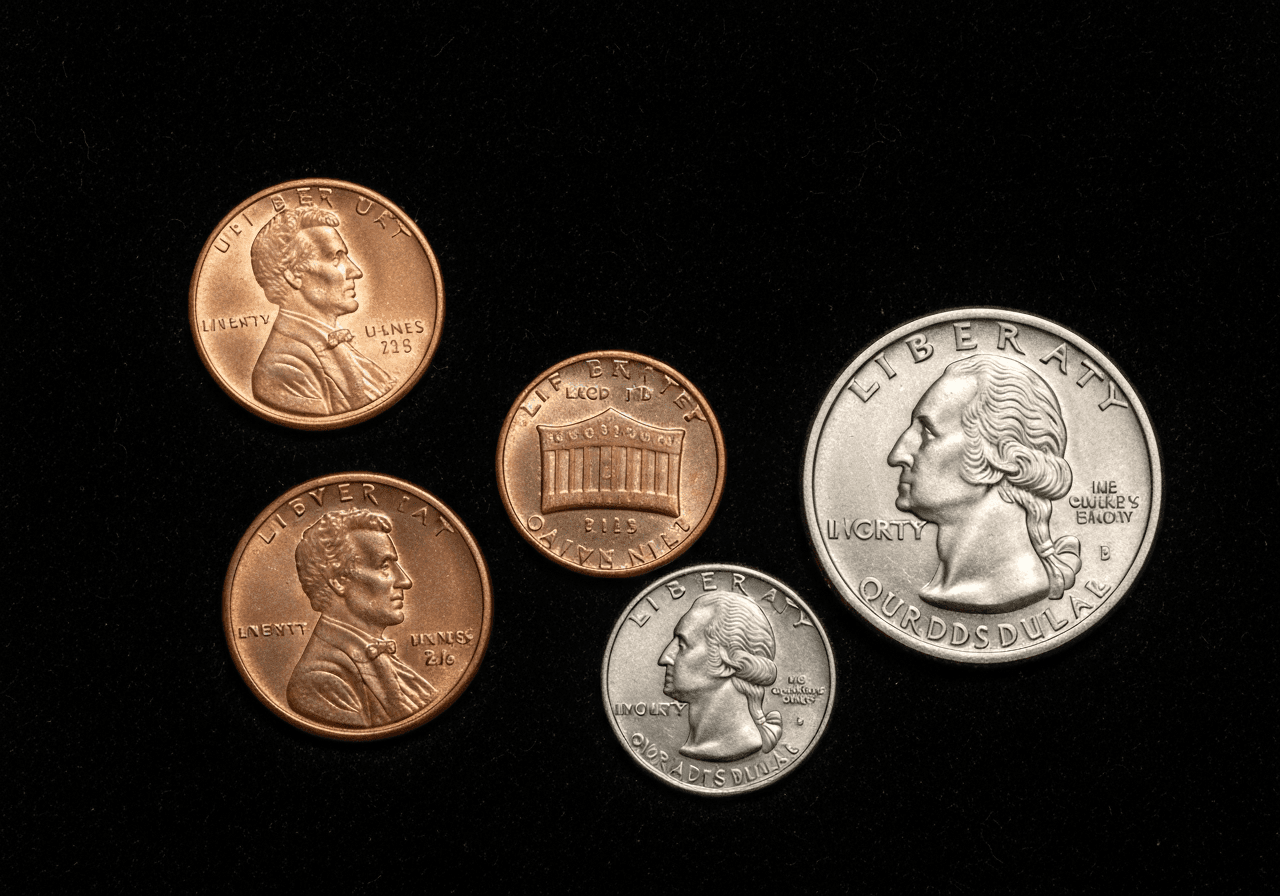
Error coins are created when something goes wrong during the minting process, and the US Mint's quality control misses the defective coin. While the Mint catches most errors, thousands slip into circulation every year. Some errors are common and worth modest premiums ($5-$50), while others are spectacularly rare and valuable. The 1955 doubled die penny sells for $1,000-$2,000, a 1943 copper penny is worth $100,000+, and a 2000 Sacagawea dollar struck on a quarter planchet sold for $144,000. Even modern coins have valuable errors. A 1999 wide AM penny is worth $500+. The key to error coin value is understanding the error type, its severity, and how many examples are known to exist.
Key Factors That Affect Error Coins Value
Understanding what drives the price of error coins helps you get the most accurate valuation.
Error Type
Off-center strikes: $5-$500+ depending on percentage and denomination. Doubled dies: $25-$100,000+ depending on prominence and die. Wrong planchet errors: $100-$100,000+ (a coin struck on a blank meant for a different denomination). Broadstrikes: $10-$100. Clipped planchets: $5-$75. Die cracks and cuds: $5-$200.
Severity of Error
More dramatic errors are worth more. A 5% off-center strike might be worth $5, but a 50% off-center with a full date is worth $50-$200+. A minor doubled die might bring $25, while a dramatic doubled die like the 1955 or 1972 brings $1,000+. For wrong planchets, the more different the intended and actual planchet, the more valuable.
Date & Denomination
Errors on older coins or unusual denominations command higher prices. A wrong planchet error on a Sacagawea dollar is worth more than the same error on a cent. Errors on key dates (1909-S VDB, 1955, 1972) add the error premium on top of the already-high base coin value.
Condition & Grade
Better-condition error coins are worth more. An uncirculated off-center cent is worth significantly more than a worn one. For errors found in circulation, 'as found' condition is expected and acceptable. But coins in original uncirculated condition from bank rolls command the highest premiums.
Authentication & Known Population
Many supposed errors are actually post-mint damage (PMD). Genuine mint errors show characteristics consistent with the minting process. PCGS and NGC authenticate and grade error coins, adding significant market confidence and value. The fewer known examples of an error, the higher the value.
Tips for Valuing Error Coins
Get the most accurate valuation by following these tips when photographing your error coins.
Photograph the error clearly. Good photos are essential for AI identification
Include a photo of both sides of the coin, even if the error is only on one side
Compare your coin to known error types. Our AI helps with this identification
Be cautious of post-mint damage (PMD) that can mimic errors. Scratches, vice marks, and acid damage are not mint errors
Error Coins Market Insights
The error coin market has grown substantially as social media and YouTube have increased public awareness. TikTok and YouTube 'coin hunting' videos drive regular spikes in interest for specific error types. Modern error coins (post-2000) have a growing collector base of younger numismatists. Heritage Auctions and GreatCollections regularly sell error coins at strong prices. The market values dramatic, eye-catching errors most highly. Coins where you can immediately see something is wrong tend to bring the strongest premiums.
Find Out What Your Error Coins Are Worth
Upload a photo now and get a free AI-powered valuation in seconds. No sign-up required.
Error Coins Valuation FAQ
What are the most valuable error coins?
The most valuable US error coins include: 1943 copper penny ($100,000+), 1944 steel penny ($75,000+), 1955 doubled die penny ($1,000-$2,000), 2000 Sacagawea dollar on quarter planchet ($144,000), 1937-D 3-legged buffalo nickel ($500-$5,000), and the 1972 doubled die penny ($300-$600). Modern errors like wrong planchet coins and dramatic off-center strikes regularly sell for hundreds to thousands.
How do I know if my coin has a real error or is just damaged?
Genuine mint errors show consistent characteristics from the minting process: off-center strikes have a uniform blank area, doubled dies show precise doubling in one direction, wrong planchets show the complete design on an obviously wrong-sized blank. Post-mint damage (PMD) typically shows irregular scratches, dents, or discoloration from contact with other objects after leaving the mint.
What types of coin errors exist?
Major categories include: off-center strikes, doubled dies, wrong planchet errors, broadstrikes (struck without the collar), clipped planchets, die cracks and cuds, repunched mint marks, brockage errors, mated pairs, and transitional errors (wrong metal composition for the year). Each type ranges from common to extremely rare.
Can modern coins have valuable errors?
Yes. Modern errors can be very valuable. The 1999 wide AM cent is worth $500+, the 2004 Wisconsin extra leaf quarter is worth $100-$300, and various wrong planchet errors from the 2000s have sold for thousands. Check your pocket change. The next valuable error could be hiding in plain sight.
Should I get my error coin graded?
If our AI estimates your error coin is worth $100+, professional grading (PCGS or NGC) is strongly recommended. Grading authenticates the error as genuine, encapsulates the coin for protection, and adds market confidence that significantly increases resale value. Error coins with PCGS/NGC certification routinely sell for 30-50% more than ungraded examples.
Value anything, anytime
Unlimited valuations, saved history and full reports in the free app.