Last updated: September 2026
How Much Are Silver Dimes Worth?
Silver dimes. Roosevelt (1946-1964), Mercury (1916-1945), and Barber (1892-1916). are 90% silver coins that always have precious metal value. Our AI identifies your dime's type, date, mint mark, and condition to determine if it's worth more than just its silver content.
Get the free app for unlimited scans


Compare real prices
See what silver dimes are listed for right now
Affiliate link: we earn a commission if you buy, at no extra cost to you.
What do you want to value?
Get the free app for unlimited scans
Why Knowing Your Silver Dimes Value Matters
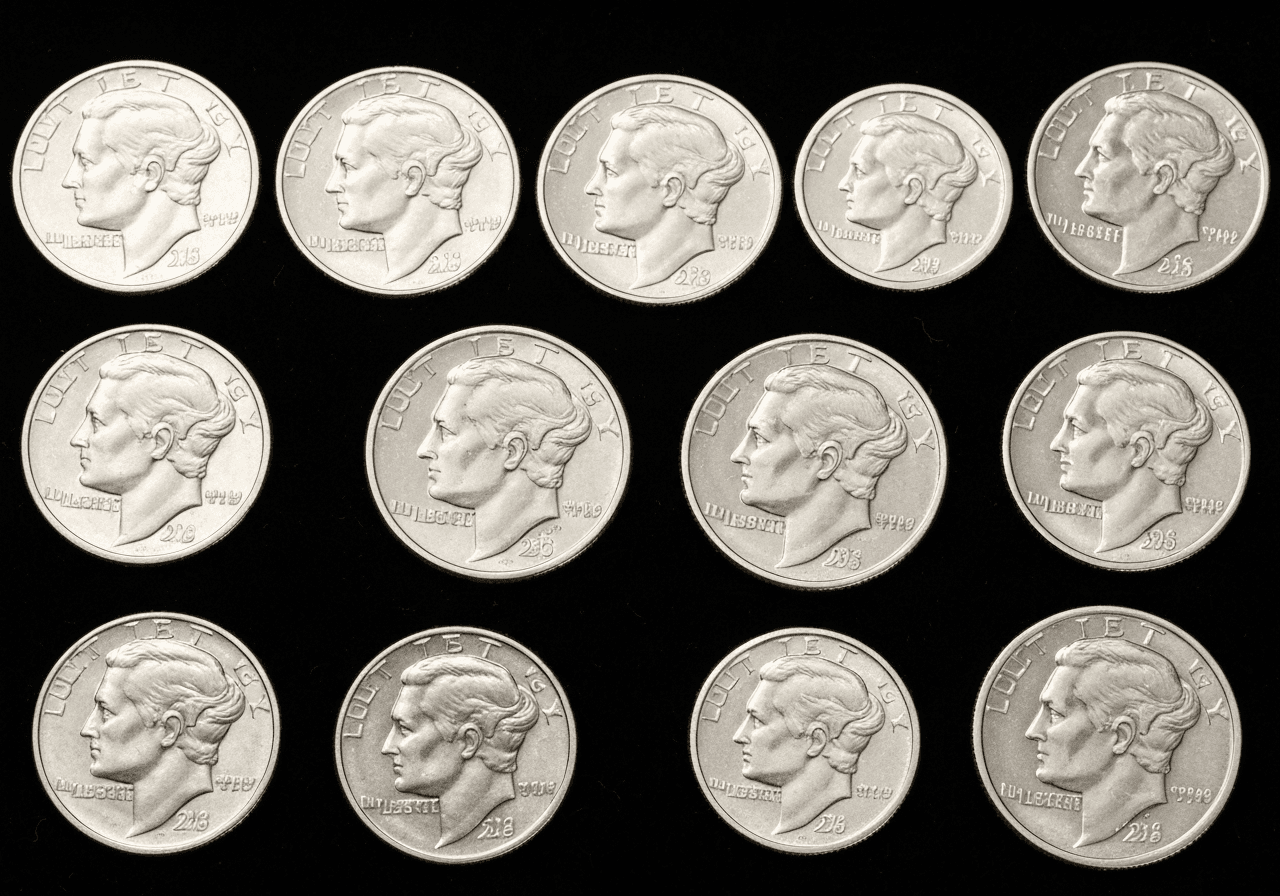
Every US dime minted before 1965 contains 0.0723 troy ounces of 90% silver, giving them a base melt value of approximately $2-$3. But many silver dimes are worth significantly more. A 1916-D Mercury dime is worth $1,000-$30,000+ depending on grade. Key-date Roosevelt dimes bring $10-$100+. Even common silver dimes are worth saving. At $2-$3 each, a roll of 50 is worth $100-$150. Many people spend silver dimes at face value without realizing they're worth 20-30x that amount.
Key Factors That Affect Silver Dimes Value
Understanding what drives the price of silver dimes helps you get the most accurate valuation.
Type
Barber (1892-1916): $3-$500+ depending on date. Mercury (1916-1945): $2-$30,000+ depending on date. Roosevelt (1946-1964): $2-$50+ depending on date. All types have the same silver content; value differences are numismatic.
Key Dates
1916-D Mercury: $1,000-$30,000+ (most valuable dime). 1921/1921-D Mercury: $50-$300+. 1942/1 Mercury (overdate): $300-$2,000+. 1894-S Barber: $100,000+ (24 minted). 1949-S Roosevelt: $5-$20+. 1950-S Roosevelt: $5-$15+.
Silver Content
Each pre-1965 dime contains 0.0723 troy ounces of 90% silver. At current silver prices: approximately $2-$3 per coin. This is the minimum value. No silver dime is worth less than melt. A $5 face value roll (50 dimes) contains 3.6 troy ounces of silver.
Condition
For common dates: melt value regardless of condition. For semi-key and key dates: condition dramatically impacts value. A 1916-D Mercury in Good: $1,000. In MS-65: $25,000+. Full Bands (FB) designation on Mercury and Roosevelt dimes adds 2-5x premium.
Full Bands (FB)
Mercury dimes with fully separated horizontal bands on the fasces reverse receive the Full Bands designation. FB Mercury dimes are worth 2-5x non-FB in the same grade. This applies mainly to uncirculated coins but adds moderate premiums to high-grade circulated pieces too.
Tips for Valuing Silver Dimes
Get the most accurate valuation by following these tips when photographing your silver dimes.
Any dime dated 1964 or earlier is silver. Check dates on all dimes you encounter
Look at the edge. Silver dimes show solid gray, clad dimes show copper
For Mercury dimes, check the date and D/S mint mark on reverse
The 1916-D Mercury dime has a tiny D mint mark on the reverse. Check all 1916 Mercury dimes carefully
Silver Dimes Market Insights
Silver dimes are the most accessible silver coins. They're found in pocket change, coin rolls, and inherited collections. The market has dual demand: silver investors buy common dates at melt, while numismatists pay premiums for key dates and high grades. Mercury dimes are the most actively collected series, with the 1916-D being one of the most famous US coins. The coin roll hunting community regularly searches bank rolls for silver dimes, keeping awareness high.
Find Out What Your Silver Dimes Are Worth
Upload a photo now and get a free AI-powered valuation in seconds. No sign-up required.
Silver Dimes Valuation FAQ
How can I tell if a dime is silver?
Check the date. 1964 and earlier = silver. Also check the edge: silver dimes have a solid gray edge, while clad dimes (1965+) show a copper core stripe. Mercury dimes (winged Liberty head) and Barber dimes are always silver since they predate 1965.
What is the most valuable silver dime?
The 1894-S Barber dime ($100,000+, only 24 minted). For commonly encountered dimes: 1916-D Mercury ($1,000-$30,000+), 1921/1921-D Mercury ($50-$300+), 1942/1 overdate ($300-$2,000+).
How much is a Mercury dime worth?
Common Mercury dimes: $2-$3 (silver melt value). Better dates: $5-$20. Semi-keys: $20-$100. Key dates (1916-D, 1921): $50-$30,000+. All Mercury dimes are worth at least silver melt, so none are worth just $0.10.
Should I save silver dimes?
Yes. Silver dimes are an excellent way to accumulate silver at low premiums over spot. At $2-$3 each, they're the most affordable US silver coins. They're highly liquid and easy to sell. Even common dates will track silver prices upward.
Where can I find silver dimes?
Coin roll hunting (searching bank rolls) is the most common method. Check pocket change. Silver dimes still occasionally circulate. Estate sales, inherited collections, and old jars/piggy banks are excellent sources. Coin shops sell common silver dimes at modest premiums over melt.
Silver Dimes Guides & Articles
Value anything, anytime
Unlimited valuations, saved history and full reports in the free app.