Last updated: September 2026
Rare Pennies Worth Money
Most pennies are worth one cent, but certain rare pennies can be worth a fortune. From the 1909-S VDB ($1,000+) to the 1943 copper penny ($100,000+), the Lincoln cent series contains some of the most valuable coins in American numismatics. Even pennies from the 1960s-1990s can be worth hundreds if they have the right errors or varieties. Upload a photo and let our AI tell you if your penny is one of the valuable ones.
Get the free app for unlimited scans


Compare real prices
See what rare pennies are listed for right now
Affiliate link: we earn a commission if you buy, at no extra cost to you.
What do you want to value?
Get the free app for unlimited scans
Why Knowing Your Rare Pennies Value Matters
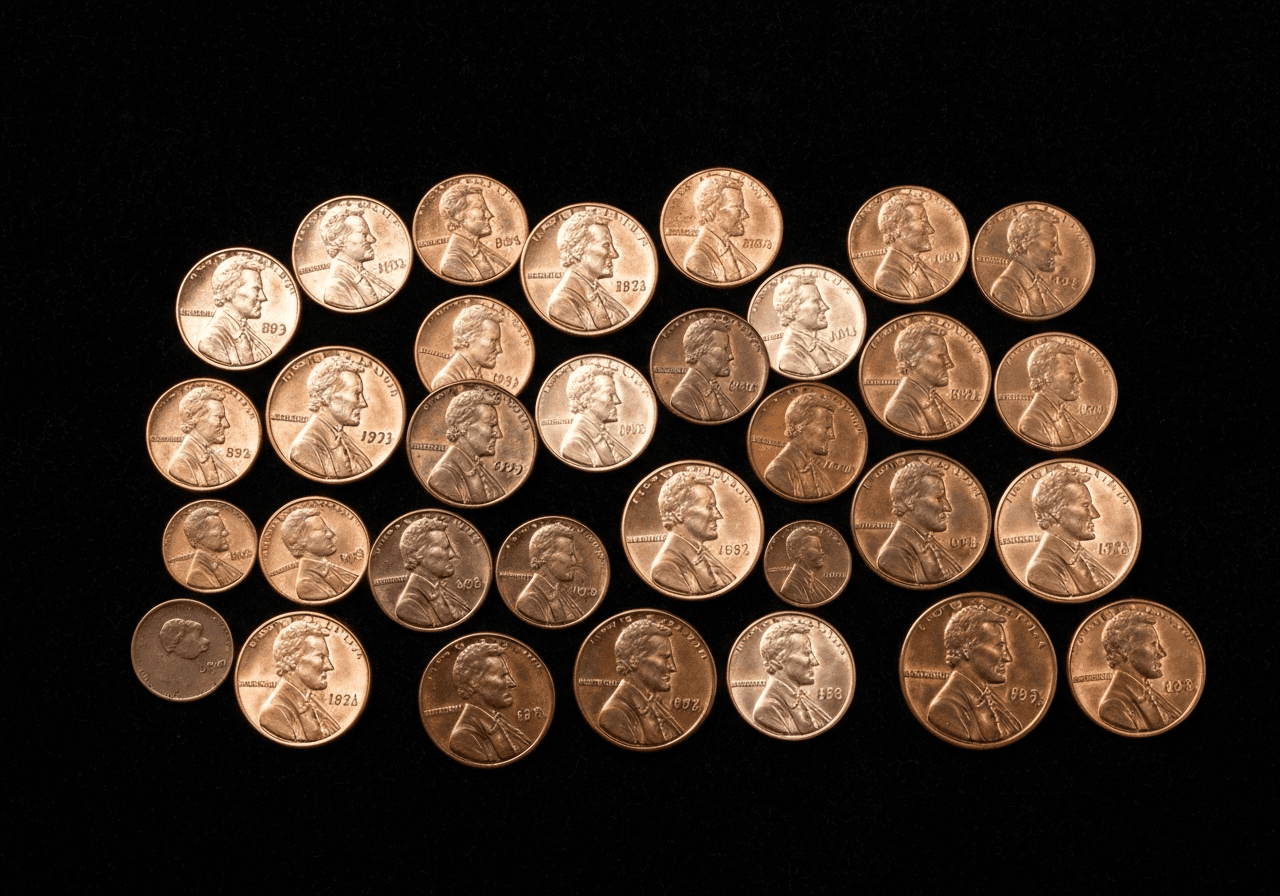
Americans handle pennies every day without realizing some are worth thousands of dollars. The Lincoln cent, minted since 1909, is the longest-running US coin series and contains dozens of key dates, varieties, and errors that collectors pay premium prices for. Wheat pennies (1909-1958) are the most commonly collected, with key dates worth $50-$100,000+. But even modern Memorial cents (1959-2008) have valuable varieties like the 1969-S doubled die ($50,000+) and the 1999 wide AM ($500+). The penny you pulled from your pocket change today could be the find of a lifetime. But you'll never know unless you check.
Key Factors That Affect Rare Pennies Value
Understanding what drives the price of rare pennies helps you get the most accurate valuation.
Key Dates to Watch For
The most valuable Lincoln pennies by date: 1909-S VDB ($1,000-$100,000), 1909-S ($100-$500), 1914-D ($200-$5,000), 1922 no-D ($500-$20,000), 1931-S ($75-$200), 1943 copper ($100,000+), 1944 steel ($75,000+), 1955 doubled die ($1,000-$2,000), 1969-S doubled die ($50,000+), 1972 doubled die ($300-$600).
Wheat vs Memorial vs Shield
Wheat pennies (1909-1958) with wheat stalks on the reverse are the most collected. Any wheat penny is worth at least $0.03-$0.10. Memorial cents (1959-2008) with the Lincoln Memorial are mostly worth face value except for errors and varieties. Shield cents (2010-present) are too new for significant premiums.
Errors and Varieties
Doubled dies, off-center strikes, repunched mint marks, and wrong planchet errors can make any penny worth $25 to $50,000+. The 1955 doubled die is the most famous, but dozens of other doubled die varieties exist across the series. Modern pennies with close AM or wide AM varieties (1992-2000) are worth $25-$500.
Condition & Grade
A common wheat penny in average condition is worth $0.03-$0.15. The same coin in uncirculated condition might be worth $1-$10. Key dates see exponential value increases with grade. A 1914-D in Good is $200, but in MS-65 Red it's $10,000+.
Copper vs Zinc Composition
Pre-1982 pennies are 95% copper and have a base metal value of about $0.02. 1982 pennies exist in both copper and zinc. Copper versions weigh 3.1g, zinc versions weigh 2.5g. Post-1982 pennies are copper-plated zinc. Older copper pennies have inherently more collector interest.
Tips for Valuing Rare Pennies
Get the most accurate valuation by following these tips when photographing your rare pennies.
Always check the date first. Pre-1960 pennies deserve closer inspection
Use a magnet to test 1943 pennies (copper ones don't stick and are worth $100,000+)
Look at the date and lettering with magnification for doubled die varieties
Check the area between AM in AMERICA on 1992-2000 pennies for wide/close AM varieties
Rare Pennies Market Insights
Penny collecting is the most popular entry point into numismatics, with millions of active collectors worldwide. The hobby has been reinvigorated by social media, with TikTok and YouTube creators showing audiences how to find valuable pennies in everyday change. This has increased demand for key dates and error coins, pushing prices higher. Coin roll hunting. Searching through bank rolls for valuable pennies. Has become a popular hobby that regularly yields finds worth $5-$100+. The market for high-grade key dates remains extremely strong at auction.
Find Out What Your Rare Pennies Are Worth
Upload a photo now and get a free AI-powered valuation in seconds. No sign-up required.
Rare Pennies Valuation FAQ
What pennies should I look for in my change?
Check for: any wheat penny (1909-1958, worth $0.03-$100,000), 1943 pennies (test with a magnet. Copper ones are worth a fortune), 1955 and 1972 doubled dies (check lettering with magnification), 1982-D small date copper penny (rare variety worth $10,000+), 1992-2000 pennies with wide AM spacing, and any penny that looks 'off'. it could be a valuable error.
Are wheat pennies rare?
Most wheat pennies (1909-1958) are common and worth $0.03-$0.15. However, certain dates are genuinely rare: 1909-S VDB ($1,000+), 1914-D ($200+), 1922 plain ($500+), and 1931-S ($75+). Even common wheat pennies are worth saving. They're at least 65+ years old and contain 95% copper.
How can I tell if my penny is valuable?
Start by checking the date and mint mark. Look up key dates for the Lincoln cent series. Then examine the coin under magnification for doubled dies, repunched mint marks, and other varieties. Finally, assess the condition. Uncirculated coins are worth significantly more. Our AI does all of this from a photo.
What is the most expensive penny ever sold?
The 1792 Birch Cent sold for $2.6 million. For Lincoln cents, a 1943-D copper penny sold for $1.7 million in 2010. A 1958 doubled die obverse sold for $336,000. Even 'affordable' key dates like the 1909-S VDB routinely sell for $1,000-$100,000 depending on grade.
Are 1982 pennies special?
Yes. 1982 was a transition year. The Mint switched from 95% copper to copper-plated zinc, and also changed from large date to small date. This created 7 different varieties. The 1982-D small date copper penny is extremely rare, with confirmed examples selling for $10,000+. Weigh your 1982 pennies: 3.1g = copper, 2.5g = zinc.
Value anything, anytime
Unlimited valuations, saved history and full reports in the free app.