Last updated: March 2026
How Much Is Your Coin Collection Worth?
Whether you inherited a coin collection, built one over decades, or found a box of old coins, knowing the total value is essential before selling, insuring, or dividing among family members. Our AI helps you evaluate individual coins within your collection, identifying key dates, silver content, and rare varieties that make up the bulk of most collections' value.
Get the free app for unlimited scans


What do you want to value?
Get the free app for unlimited scans
Why Knowing Your Coin Collections Value Matters
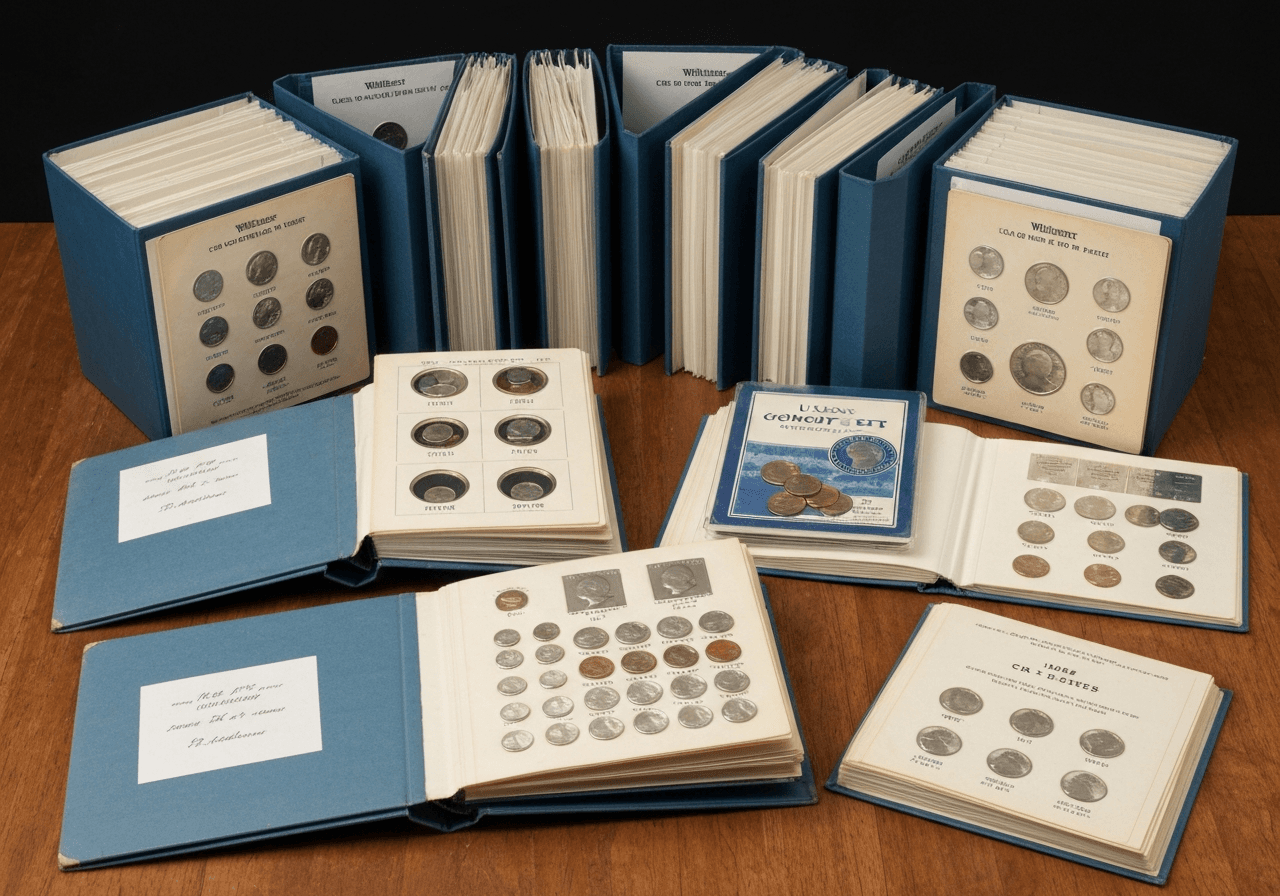
Most coin collections follow the 80/20 rule. 80% of the value is in 20% of the coins. A collection of 500 coins might have 450 common pieces worth $1-$5 each and 50 coins worth $20-$500+ each. The key coins. Key dates, silver/gold content, errors, and high-grade specimens. Are where the real money is. Many inherited collections are sold for a fraction of their value because the seller doesn't identify the key coins. Professional appraisals cost $50-$150+, but knowing which coins to look for can save you from underpricing your collection.
Key Factors That Affect Coin Collections Value
Understanding what drives the price of coin collections helps you get the most accurate valuation.
Silver & Gold Content
The fastest way to establish base value. Count silver coins: pre-1965 dimes ($2-$3 each), quarters ($5-$7), half dollars ($10-$12), dollars ($20-$30). Gold coins: $200-$2,000+ depending on denomination. This precious metal value is your collection's floor price.
Key Dates & Rarities
Check every coin against key date lists for its series. Even one key date coin can be worth more than all the common coins combined. Examples: 1909-S VDB penny ($1,000+), 1916-D Mercury dime ($1,000+), 1893-S Morgan dollar ($2,000+).
Completeness
Complete or near-complete sets are worth more than the same coins individually. A complete set of Mercury dimes in a folder is worth 10-20% more than the coins loose. Albums, folders, and organized collections show intention and care.
Condition Overview
Collections stored in albums/holders are typically in better condition than loose coins in jars. Higher overall condition = higher value. Look for uncirculated coins (no wear on high points). these are the most valuable pieces in most collections.
Proof Sets & Mint Sets
Many collections include government-issued proof and mint sets. Modern clad proof sets: $5-$15 each. Silver proof sets: $30-$80+. 1950s-60s proof sets: $15-$75+. Mint sets: $5-$30+ depending on year. These add up quickly in large collections.
Tips for Valuing Coin Collections
Get the most accurate valuation by following these tips when photographing your coin collections.
Start by separating silver and gold coins from base metal. These have guaranteed minimum value
Look up key dates for each series before selling anything
Don't clean any coins. Cleaning reduces collector value
Photograph the most valuable-looking coins individually for AI valuation
Coin Collections Market Insights
The coin collection market is well-established with multiple selling channels for different value levels. Auction houses handle high-value collections ($10,000+). eBay works for individual valuable coins. Local dealers provide convenience for mid-range collections. The market is transparent with published price guides (Red Book, Grey Sheet) and free online resources. The most common mistake is bulk-selling an entire collection without first identifying the key coins that should be sold individually for maximum return.
Find Out What Your Coin Collections Are Worth
Upload a photo now and get a free AI-powered valuation in seconds. No sign-up required.
Coin Collections Valuation FAQ
I inherited a coin collection. Where do I start?
Step 1: Separate gold, silver, and base metal coins. Step 2: Check dates against key date lists (our AI helps with this). Step 3: Calculate silver/gold melt value as a baseline. Step 4: Identify any coins that appear uncirculated or unusual. Step 5: For collections potentially worth $1,000+, consider a professional appraisal.
How do I know if my collection is valuable?
Quick indicators: any gold coins (always valuable), pre-1965 US silver coins (melt value), coins in original mint/proof set packaging, coins in albums organized by date (someone cared about this collection), and any coin that looks old, unusual, or in exceptional condition.
Should I sell my coin collection all at once or piece by piece?
Sell key coins (valuable individual pieces) separately for maximum return. Sell common coins in bulk for convenience. This hybrid approach typically yields 30-50% more than selling everything as one lot. A dealer buying the whole collection will pay wholesale for everything, including your $500 key dates.
What is a fair price for my coin collection?
Dealers typically pay 60-80% of retail for collections they buy outright. Auction houses take 10-20% commission but achieve retail prices. eBay takes ~13% in fees but reaches the most buyers. The 'right' venue depends on collection size and your time/effort tolerance.
Where should I sell a coin collection?
High-value ($10K+): Heritage Auctions, Stack's Bowers. Mid-range ($1K-$10K): sell key coins on eBay individually, bulk to local dealer. Small ($100-$1K): local coin shop or eBay lots. For any size: get at least 3 offers before accepting. Never sell to the first buyer who contacts you.
Value anything, anytime
Unlimited valuations, saved history and full reports in the free app.