Last updated: September 2026
How Much Are Gold Coins Worth?
Gold coins. From US Gold Eagles and pre-1933 Liberty and Indian gold to foreign sovereigns and ancient gold. Always have significant value. Every gold coin is worth at minimum its gold content, but many carry substantial numismatic premiums above melt. Our AI identifies your gold coin's type, denomination, date, and condition to provide a comprehensive valuation.
Get the free app for unlimited scans


Compare real prices
See what gold coins are listed for right now
Affiliate link: we earn a commission if you buy, at no extra cost to you.
What do you want to value?
Get the free app for unlimited scans
Why Knowing Your Gold Coins Value Matters
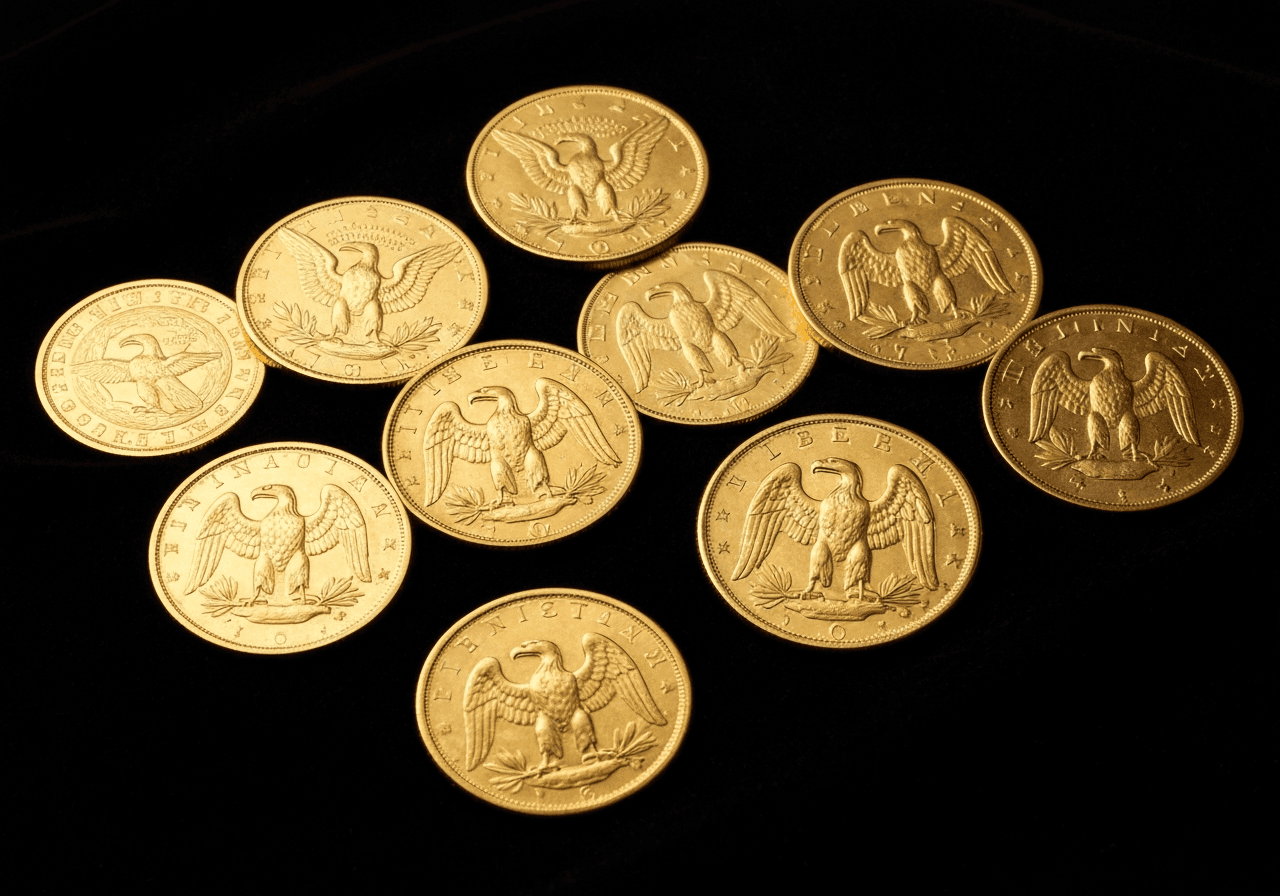
Gold coins are among the most valuable items people commonly own without proper valuation. A pre-1933 US $20 gold piece contains nearly 1 oz of gold ($2,000+ melt) but may be worth $2,500-$100,000+ numismatically. Modern Gold Eagles and Buffaloes trade near gold spot with modest premiums. Gold coins from other countries (British Sovereigns, South African Krugerrands, Canadian Maples) also carry premiums above melt. The difference between selling a gold coin at melt vs. numismatic value can be thousands of dollars.
Key Factors That Affect Gold Coins Value
Understanding what drives the price of gold coins helps you get the most accurate valuation.
Gold Content by Type
US Gold Eagle (1 oz): ~1 oz gold ($2,000+). US $20 Liberty/Saint-Gaudens: 0.9675 oz gold. US $10 Eagle: 0.4838 oz. US $5 Half Eagle: 0.2419 oz. US $2.50 Quarter Eagle: 0.1209 oz. British Sovereign: 0.2354 oz. Krugerrand: 1 oz. Gold content sets the minimum value.
Numismatic Premium
Common pre-1933 US gold coins: 10-30% over melt. Key dates: 2-100x melt value. The 1933 Saint-Gaudens Double Eagle sold for $18.9 million (most expensive coin ever). 1907 Ultra High Relief: $1M+. Even semi-key dates carry 50-200% premiums.
Type & Series
US Type coins: Liberty Head ($1, $2.50, $5, $10, $20), Indian ($2.50, $5, $10), Saint-Gaudens ($20). Modern bullion: American Gold Eagle, Gold Buffalo. World gold: Sovereigns, Krugerrands, Maples, Pandas, Philharmonics.
Condition
For bullion coins: melt value + small premium regardless of condition. For collectible dates: condition dramatically impacts value. A common-date $20 Liberty in VF: $2,200-$2,500. In MS-65: $4,000-$10,000+. Cleaned gold coins: 10-30% discount.
Authentication
Counterfeit gold coins are a serious concern. Tungsten-filled gold coins, cast counterfeits, and gold-plated base metal fakes exist. Weight and dimensions testing catches most fakes. For coins worth $1,000+, PCGS/NGC certification is strongly recommended.
Tips for Valuing Gold Coins
Get the most accurate valuation by following these tips when photographing your gold coins.
Never clean a gold coin. It reduces numismatic value
Weigh the coin precisely. Genuine gold coins have exact specified weights
Check the date. Pre-1933 US gold often has numismatic value above melt
Handle by edges only and store in protective holders
Gold Coins Market Insights
Gold coins benefit from both precious metal and numismatic demand. When gold prices rise, all gold coins appreciate. Pre-1933 US gold coins have shown strong long-term appreciation above gold's price, making them dual investments. The market is highly liquid. Gold coins can be bought and sold quickly at established dealers worldwide. With gold at record highs, even common gold coins represent significant value.
Find Out What Your Gold Coins Are Worth
Upload a photo now and get a free AI-powered valuation in seconds. No sign-up required.
Gold Coins Valuation FAQ
How much gold is in my coin?
US $20 gold: 0.9675 oz. US $10: 0.4838 oz. US $5: 0.2419 oz. US $2.50: 0.1209 oz. Modern Gold Eagle 1 oz: exactly 1 oz. British Sovereign: 0.2354 oz. Krugerrand: 1 oz. Multiply gold content × current spot price for minimum value.
Should I sell my gold coins for melt or collectible value?
Always check numismatic value first.common-date pre-1933 US gold brings 10-30% over melt. Key dates bring multiples of melt. Modern bullion coins (Eagles, Buffaloes, Krugerrands): sell at spot + small premium. Never sell a potentially rare gold coin at melt price without checking.
Are my gold coins real?
Test: weigh precisely (should match published specifications within 0.1g). Measure diameter and thickness. Genuine gold is not magnetic. A 'ping' test (sound when tapped) reveals gold's distinctive ring. For valuable coins ($1,000+), professional authentication (PCGS/NGC) is recommended.
Where can I sell gold coins?
For numismatic coins ($5,000+): Heritage Auctions, Stack's Bowers. For bullion: APMEX, JM Bullion (buy back at spot + premium), or local dealers (compare 3+ offers). For any gold coin: eBay reaches the most buyers but has ~13% fees. Never sell at a 'we buy gold' storefront without comparing options.
Is now a good time to sell gold coins?
With gold at historically high prices, the base metal value of gold coins is excellent. For bullion coins, selling into gold price strength is sensible. For numismatic coins, the decision involves both gold price and collector demand. Some coins are undervalued even with gold at record highs.
Value anything, anytime
Unlimited valuations, saved history and full reports in the free app.