Last updated: September 2026
How Much Is a 1944 Penny Worth?
The 1944 penny is one of the most interesting coins in US numismatics. While most 1944 pennies were struck on recycled brass shell casings and are worth just a few cents, the extremely rare 1944 steel penny. Struck on leftover 1943 steel planchets by mistake. Is one of the most valuable US coin errors ever, selling for $50,000 to over $100,000. Our AI analyzes your coin's composition, mint mark, and condition to give you an accurate value instantly.
Get the free app for unlimited scans


Compare real prices
See what 1944 pennies are listed for right now
Affiliate link: we earn a commission if you buy, at no extra cost to you.
What do you want to value?
Get the free app for unlimited scans
Why Knowing Your 1944 Pennies Value Matters
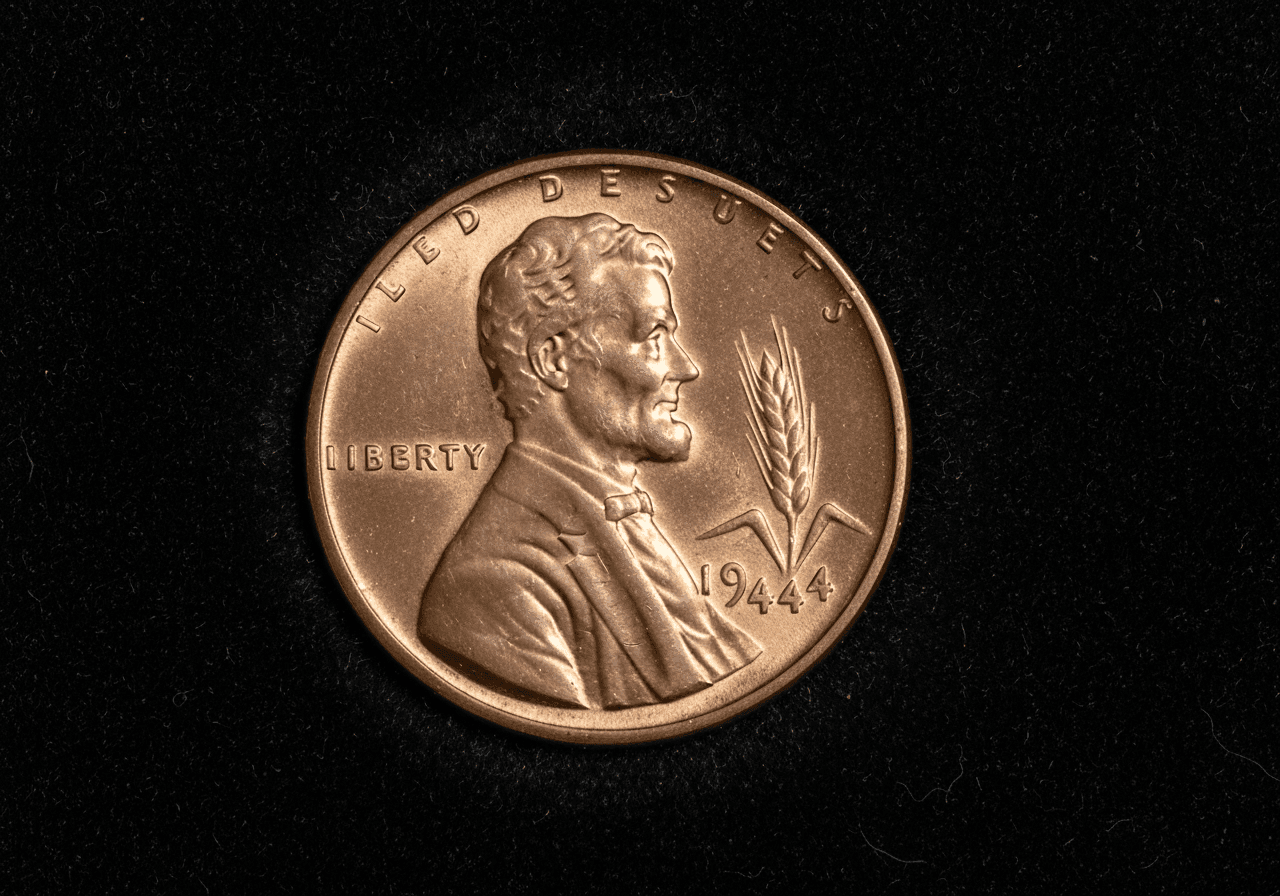
In 1943, pennies were made from zinc-coated steel because copper was needed for WWII ammunition. In 1944, the Mint switched back to copper. But a small number of 1944 pennies were accidentally struck on leftover steel planchets. These 1944 steel pennies are among the rarest US coins, with fewer than 30 known examples. A 1944 steel penny can be worth $75,000-$110,000 depending on condition. Even regular 1944 copper pennies have some value: the 1944-D/S overmintmark variety is worth $100-$500, and uncirculated examples of any 1944 penny bring $5-$30. Always check if your 1944 penny sticks to a magnet. If it does, you may have a small fortune.
Key Factors That Affect 1944 Pennies Value
Understanding what drives the price of 1944 pennies helps you get the most accurate valuation.
Steel vs Copper Composition
The critical first test: does your 1944 penny stick to a magnet? If yes, it may be an extremely rare 1944 steel penny worth $75,000-$110,000. If no, it's the normal copper composition worth $0.05-$30 depending on condition and mint mark. Be aware that many fakes exist. Genuine 1944 steel cents weigh 2.7g vs 3.1g for copper.
Mint Mark
1944 pennies were struck at three mints: Philadelphia (no mint mark, 1.44 billion struck), Denver (D, 430 million), and San Francisco (S, 282 million). The 1944-S is worth slightly more due to lower mintage. The 1944-D/S overmintmark variety (a D punched over an S) is worth $100-$500.
Condition & Grade
A circulated 1944 penny in average condition is worth $0.05-$0.15. In Extremely Fine condition: $0.25-$1. Uncirculated (MS-63): $5-$10. Gem uncirculated (MS-65 Red): $15-$30. Full red color specimens command the highest premiums.
Color Designation
Copper pennies are graded with color designations: Red (RD), Red-Brown (RB), and Brown (BN). Full Red coins that have retained their original copper luster are worth 2-5x more than Brown examples in the same grade. A 1944 MS-65 Red is worth $20-$30 vs $5-$8 for Brown.
Die Varieties & Errors
Beyond the famous steel error, look for the 1944-D/S overmintmark (worth $100-$500), repunched mint marks, doubled die varieties, and off-center strikes. Any dramatic error on a 1944 penny adds significant premium value.
Tips for Valuing 1944 Pennies
Get the most accurate valuation by following these tips when photographing your 1944 pennies.
Test with a magnet first. A 1944 penny that sticks could be worth $75,000+
Check below the date for a D or S mint mark. The 1944-D/S variety is valuable
Photograph both sides in natural light against a dark background
Do not clean the coin. Even a $100,000 steel cent loses value if cleaned
1944 Pennies Market Insights
The 1944 penny market is driven primarily by the legendary steel cent error. Every few years, a new 1944 steel penny surfaces and makes headlines, reigniting public interest. Regular 1944 copper pennies are among the most common wheat cents and are primarily collected as part of complete Lincoln cent sets. The D/S overmintmark variety has seen steady price appreciation as variety collecting grows in popularity. With billions minted, finding a 1944 penny in pocket change is still possible, making it an accessible entry point for new collectors wondering if their coins have value.
Find Out What Your 1944 Pennies Are Worth
Upload a photo now and get a free AI-powered valuation in seconds. No sign-up required.
1944 Pennies Valuation FAQ
How can I tell if my 1944 penny is steel?
The easiest test is a magnet. Steel pennies are magnetic, copper pennies are not. Steel 1944 pennies also appear silvery-gray rather than copper-colored, though some may be dark from age. Weight is another indicator: steel cents weigh 2.7 grams vs 3.1 grams for copper. If your penny sticks to a magnet, have it authenticated by PCGS or NGC before selling.
How much is a regular 1944 penny worth?
A normal copper 1944 penny is worth $0.05-$0.15 in circulated condition. Uncirculated examples bring $5-$30 depending on grade and color. While not individually valuable, they're popular with collectors completing Lincoln cent sets.
What is the 1944-D/S overmintmark penny?
Some 1944 Denver pennies were struck with a die that originally had an S mint mark which was then overpunched with a D. Under magnification, traces of the S are visible beneath the D. These sell for $100-$500 depending on the clarity of the overmintmark and the coin's grade.
Are 1944 pennies rare?
Regular 1944 copper pennies are extremely common. Over 2.1 billion were minted across three mints. However, the 1944 steel penny error is one of the rarest US coins with fewer than 30 known examples. The difference between a $0.10 coin and a $100,000 coin comes down to the metal composition.
Where should I sell a valuable 1944 penny?
If you believe you have a 1944 steel penny, first get it authenticated by PCGS or NGC ($30-$65 fee). Once certified, consign it to a major auction house like Heritage Auctions or Stack's Bowers. Never sell a potentially rare coin to a local dealer without certification. The difference in realized price can be tens of thousands of dollars.
Value anything, anytime
Unlimited valuations, saved history and full reports in the free app.