Last updated: September 2026
How Much Are Proof Coins Worth?
Proof coins are specially made by the US Mint using polished dies and planchets, creating coins with mirror-like fields and frosted design elements. Produced annually in sets since 1936, proof coins are the premium version of regular circulating coins. Our AI identifies your proof coin's year, denomination, and type (clad, silver, gold) to estimate its current market value.
Get the free app for unlimited scans


Compare real prices
See what proof coins are listed for right now
Affiliate link: we earn a commission if you buy, at no extra cost to you.
What do you want to value?
Get the free app for unlimited scans
Why Knowing Your Proof Coins Value Matters
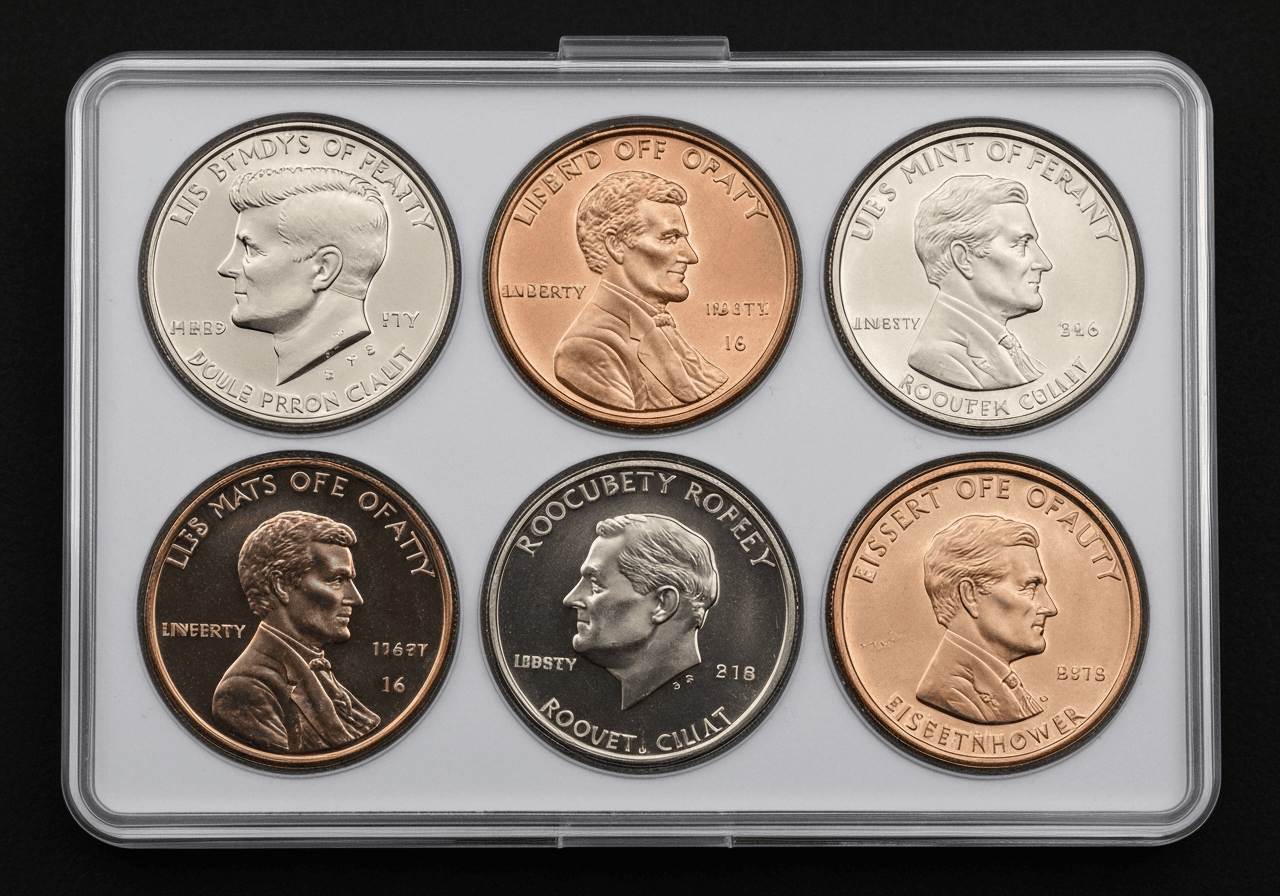
Millions of Americans own proof sets. They've been popular gifts and collectibles for decades. While many modern proof sets sell for modest premiums over face value ($10-$30 for clad sets), certain years and types are significantly more valuable. Silver proof sets from 1992-present contain 90% silver coins worth $30-$60+ for silver content alone. Older proof sets from the 1950s-1960s can bring $50-$500+. Individual proof coins in exceptional condition (PR-70 DCAM) command strong premiums. Knowing which of your proof sets are worth more than their typical value prevents underpricing when selling.
Key Factors That Affect Proof Coins Value
Understanding what drives the price of proof coins helps you get the most accurate valuation.
Era & Year
1936-1942 proof sets: $3,000-$10,000+. 1950-1955 proof sets: $100-$500+. 1956-1964 proof sets: $15-$75. 1968-1998 clad proof sets: $5-$15. 1992-present silver proof sets: $30-$80+. 1999-2008 State Quarter silver proof sets: $30-$60. Prestige proof sets (1983-1997): $15-$75.
Silver vs Clad
Silver proof sets contain 90% silver dimes, quarters, and half dollars. At current silver prices, the silver content alone is worth $25-$40. Silver proof sets are worth 2-5x their clad equivalents. The box/packaging identifies silver sets. They typically come in a different color case.
Cameo & Deep Cameo Designation
Proof coins with strong contrast between frosted devices and mirror fields receive Cameo (CAM) or Deep Cameo (DCAM) designations. DCAM coins command 2-10x premiums over non-cameo proofs. Pre-1970 DCAM proofs are particularly scarce and valuable because the frosting effect wore off the dies quickly.
Perfect Grade (PR-70)
A PR-70 DCAM coin is graded as absolutely perfect. No marks, no haze, no imperfections under 5x magnification. PR-70 modern proof coins bring $20-$200+ per coin depending on denomination. PR-70 silver eagles can bring $100-$500+.
Original Government Packaging
Proof sets in original, unopened government packaging (OGP) sell for 10-20% more than sets removed from packaging. The plastic cases protect the coins and provide authentication. Sets with original boxes, COAs, and outer shipping boxes command the highest premiums.
Tips for Valuing Proof Coins
Get the most accurate valuation by following these tips when photographing your proof coins.
Keep proof coins in their original government packaging. This preserves value
Never touch the surface of a proof coin with bare hands. Fingerprints cause permanent toning
Photograph through the case if possible to avoid damaging the coin
Check if your set is silver or clad. Silver sets are worth significantly more
Proof Coins Market Insights
The proof coin market is driven by collectors who appreciate the artistry of proof coinage and investors who buy silver proof sets as a precious metals play. Modern clad proof sets have modest market value due to high mintages, but silver proof sets maintain strong demand. The market for pre-1965 proof sets is solid, with steady appreciation for quality examples. PR-70 DCAM coins have become a collecting niche of their own, with complete date sets in PR-70 commanding strong premiums.
Find Out What Your Proof Coins Are Worth
Upload a photo now and get a free AI-powered valuation in seconds. No sign-up required.
Proof Coins Valuation FAQ
Are my proof sets worth anything?
Most modern clad proof sets (1968-present) are worth $5-$15. Silver proof sets (1992-present) are worth $30-$80+. Older proof sets are more valuable: 1950s sets ($100-$500+), 1960-1964 sets ($15-$75). The key is identifying whether yours are silver or clad, and the year.
What is the difference between proof and uncirculated coins?
Proof coins are struck with special polished dies on polished planchets, creating mirror-like fields. They're struck multiple times at lower speed for maximum detail. Uncirculated (mint state) coins are regular production coins that simply never entered circulation. Proofs have a distinctive mirror finish that's immediately recognizable.
Should I open my proof set to get coins graded?
Only for potentially high-value individual coins. If you have a pre-1965 proof set or a silver proof set containing a coin that might grade PR-70 DCAM, individual grading could significantly increase value. For standard modern clad sets, the set is worth more intact in OGP than as individual graded coins.
How do I store proof coins properly?
Keep them in original government packaging in a cool, dry environment. Avoid humidity, temperature extremes, and direct sunlight. Never store in PVC-containing holders (old green-tinted flips) as PVC damages coin surfaces over time. If removed from packaging, use non-PVC holders or capsules.
Are proof coins legal tender?
Yes, proof coins are legal US currency with full face value. However, selling them for face value would be extremely unwise. Even common modern proof coins are worth more than face value, and silver proofs contain $25-$40 worth of silver per set.
Value anything, anytime
Unlimited valuations, saved history and full reports in the free app.