January 4, 2026 · Updated March 2026
Silver Coins Worth Money: How to Spot Silver in Your Change
Why Silver Coins Are Worth More Than Face Value
Before 1965, United States dimes, quarters, and half dollars were minted with 90% silver content. A single pre-1965 quarter contains approximately 0.1808 troy ounces of pure silver. With silver prices around $25 to $30 per troy ounce in early 2026, that quarter is worth roughly $4.50 to $5.50 in silver melt value alone. Far more than its 25-cent face value.
Millions of these silver coins still circulate or sit in jars, drawers, and inherited collections across America. Knowing which coins contain silver and how to identify them quickly can turn a casual coin search into a profitable endeavor.
Which US Coins Contain Silver?
90% Silver Coins (Pre-1965)
These coins contain 90% silver and 10% copper. They are often called “junk silver” or “constitutional silver” in the coin market:
- Dimes (1946–1964, Roosevelt): Each contains 0.0723 troy ounces of silver. Melt value: approximately $1.80 to $2.20.
- Dimes (1916–1945, Mercury): Same silver content as Roosevelt dimes. Mercury dimes are also popular with collectors, with key dates worth $5 to $1,000+.
- Dimes (1892–1916, Barber): Same silver content. Barber dimes in good condition are worth $3 to $10.
- Quarters (1932–1964, Washington): Each contains 0.1808 troy ounces of silver. Melt value: approximately $4.50 to $5.50. Key dates include 1932-D and 1932-S ($100 to $500+).
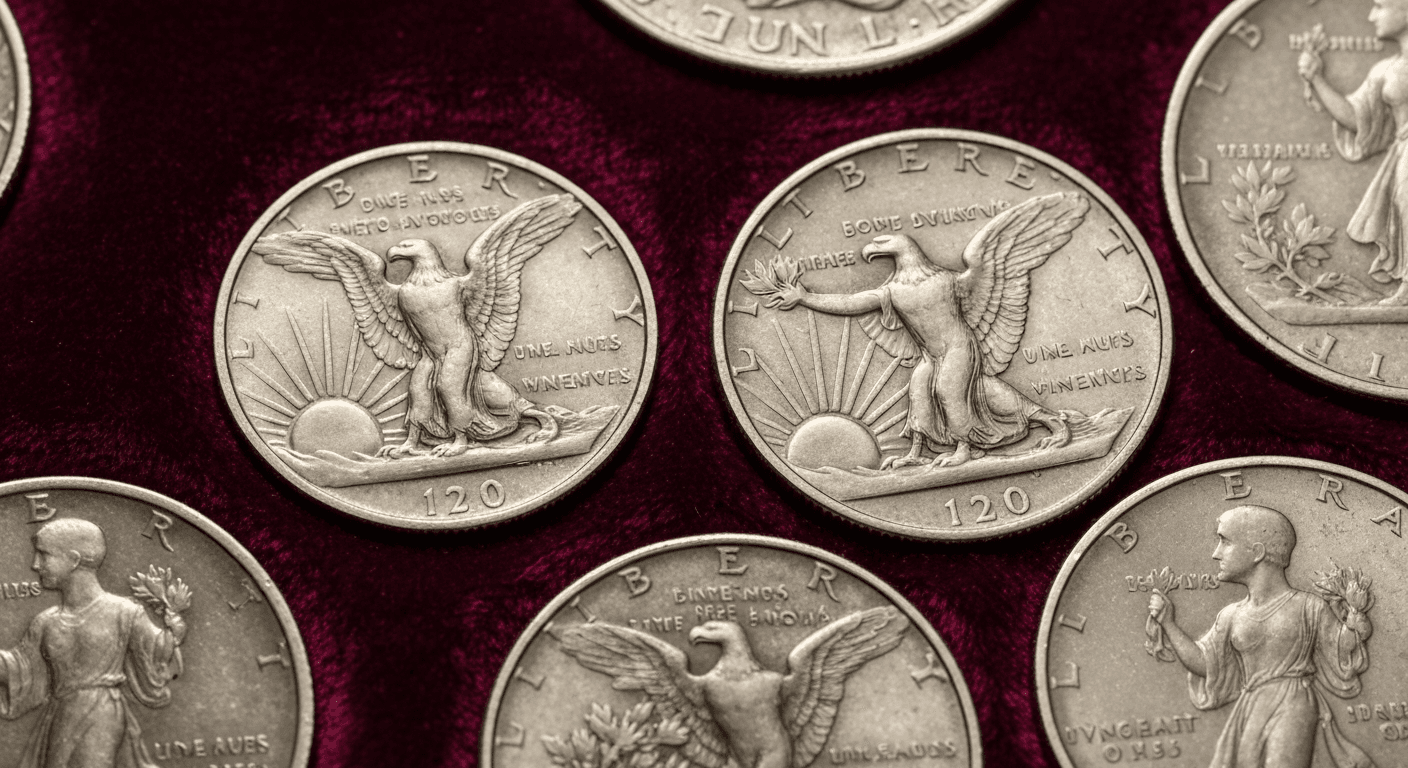
- Quarters (1916–1930, Standing Liberty): Same silver content. The 1916 Standing Liberty quarter is worth $3,000+ even in worn condition.
- Quarters (1892–1916, Barber): Same silver content.common dates are worth $5 to $15.
- Half Dollars (1948–1963, Franklin): Each contains 0.3617 troy ounces of silver. Melt value: approximately $9 to $11.
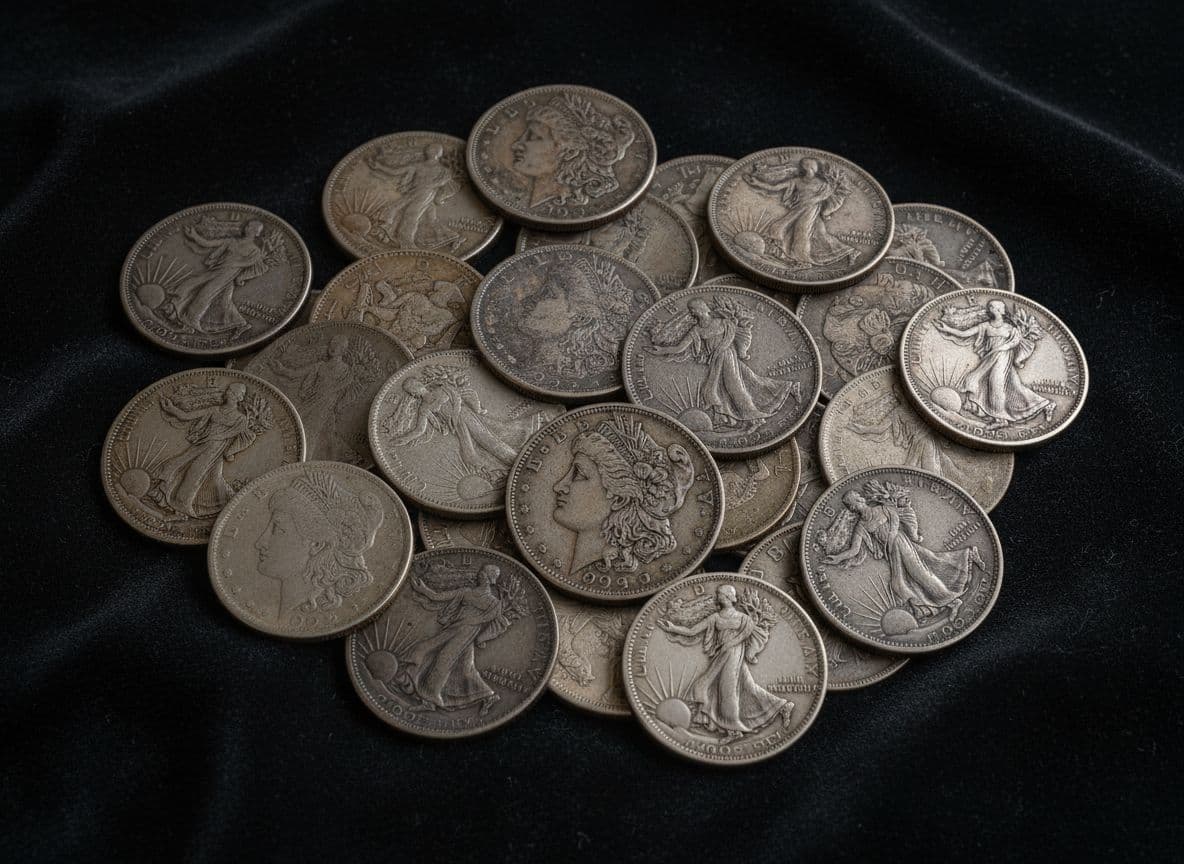
- Half Dollars (1916–1947, Walking Liberty): Same silver content. Key dates from the 1910s and 1920s can be worth $20 to $500+.
- Half Dollars (1892–1915, Barber): Same silver content.common dates are worth $10 to $30.
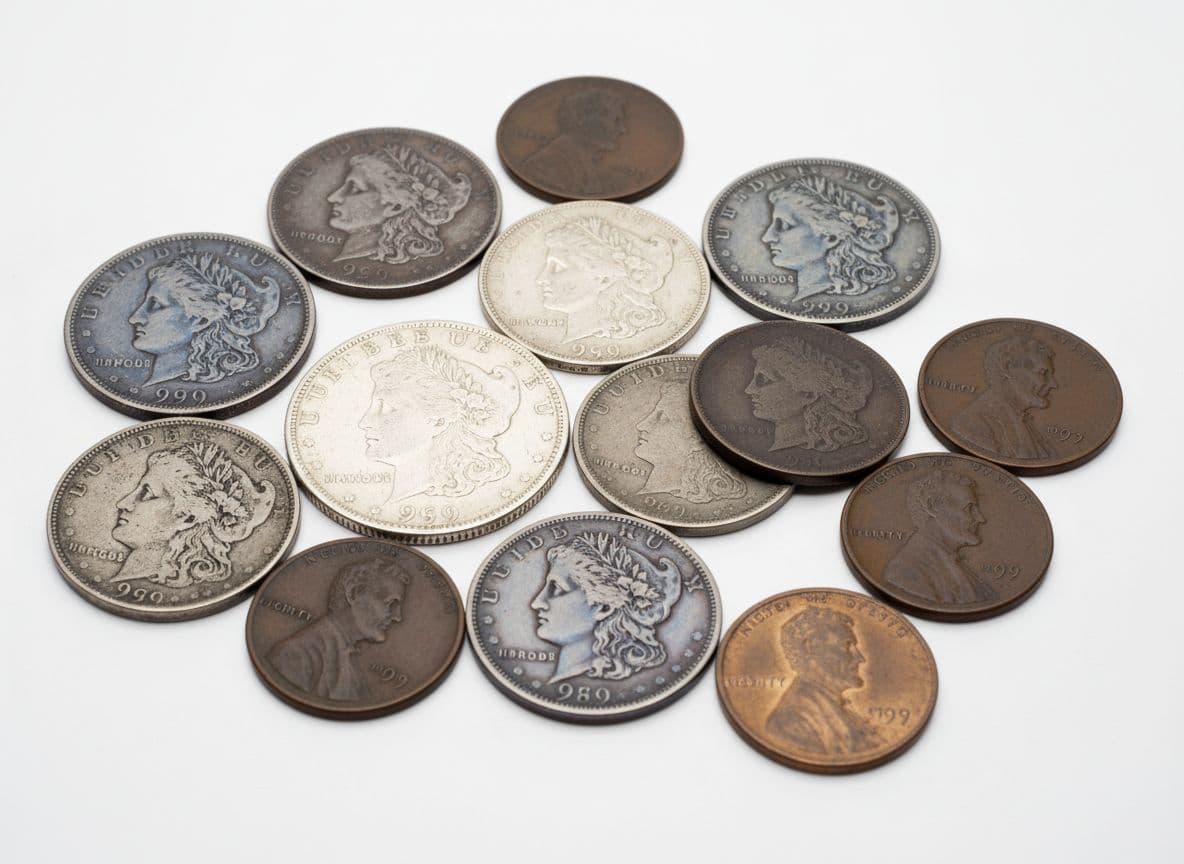
- Dollars (1878–1921, Morgan): Each contains 0.7734 troy ounces of silver.common dates are worth $25 to $40. Key dates can be worth $100 to $100,000+.
- Dollars (1921–1935, Peace): Same silver content as Morgan dollars.common dates are worth $25 to $35.
40% Silver Coins (1965–1970)
- Kennedy Half Dollars (1965–1970): These contain 40% silver (not 90%). Each contains 0.1479 troy ounces of silver. Melt value: approximately $3.70 to $4.50. The 1964 Kennedy half dollar contains 90% silver (0.3617 oz), making it worth more ($9 to $11 melt value).
War Nickels (1942–1945)
- Jefferson Nickels (1942-P, 1942-S, 1943–1945): These contain 35% silver (plus 56% copper and 9% manganese). Each contains 0.0563 troy ounces of silver. Melt value: approximately $1.40 to $1.70. Identified by the large mint mark (P, D, or S) above Monticello on the reverse. Not all 1942 nickels are silver. Only those with the large mint mark above the dome.
Silver Eagles (1986–Present)
- American Silver Eagles: Each contains exactly 1.000 troy ounce of .999 fine silver. These are not circulating coins but are minted by the US Mint as bullion coins. They trade at a premium above spot silver price, typically $3 to $8 above spot. Certain dates and varieties command significant numismatic premiums.
The Edge Test: How to Spot Silver Coins Quickly
The fastest way to identify silver coins is the edge test:
- Silver coins (pre-1965): The edge is a uniform silver-white color all the way through. There is no visible copper layer.
- Clad coins (1965+): The edge shows a visible copper-colored stripe sandwiched between two nickel layers. This copper stripe is the telltale sign of a modern clad coin.
When sorting through a jar of coins, simply tilt each coin to view the edge. Any coin without a copper stripe is likely silver and should be set aside for further examination.
Silver Coin Melt Value Calculator
To calculate the silver melt value of any US coin, use this formula:
Melt Value = Silver Content (in troy ounces) × Current Spot Price of Silver
| Coin Type | Silver Purity | Silver Content (oz) | Melt Value at $25/oz | Melt Value at $30/oz |
|---|---|---|---|---|
| Dime (pre-1965) | 90% | 0.0723 oz | $1.81 | $2.17 |
| Quarter (pre-1965) | 90% | 0.1808 oz | $4.52 | $5.42 |
| Half Dollar (pre-1965) | 90% | 0.3617 oz | $9.04 | $10.85 |
| Half Dollar (1965–1970) | 40% | 0.1479 oz | $3.70 | $4.44 |
| Morgan/Peace Dollar | 90% | 0.7734 oz | $19.34 | $23.20 |
| War Nickel (1942–1945) | 35% | 0.0563 oz | $1.41 | $1.69 |
| American Silver Eagle | 99.9% | 1.0000 oz | $25.00 | $30.00 |
Beyond Melt Value: Coins Worth More to Collectors
While melt value sets a floor price, many silver coins are worth far more to collectors based on their date, mint mark, condition, and rarity:
- 1916-D Mercury Dime: Only 264,000 minted. Worth $1,000+ even in Good condition.
- 1932-D Washington Quarter: Mintage of 436,800. Worth $100+ in Good condition.
- 1932-S Washington Quarter: Mintage of 408,000. Worth $100+ in Good condition.
- 1916 Standing Liberty Quarter: Only 52,000 minted. Worth $3,000+ in any condition.
- 1893-S Morgan Dollar: Key date worth $5,000+ in Good condition.
- 1895 Morgan Dollar (Proof only): Known as “King of Morgan Dollars.” Worth $30,000+ in any grade.
- Walking Liberty Half Dollars (1916–1921): Early dates in high grades can be worth $50 to $500+ above melt value.
Where to Sell Silver Coins
- Local coin shops: The most convenient option. Expect to receive 85% to 95% of melt value for common-date silver coins. Key dates should be priced individually.
- Online dealers (APMEX, JM Bullion, SD Bullion): These buy silver coins at competitive prices, typically 90% to 95% of melt. They also buy in bulk.
- eBay: You can often get above melt value on eBay, especially for key dates and coins in higher grades. Factor in 13%+ fees.
- Coin shows: Get multiple offers from competing dealers at regional and national shows.
- Precious metals refiners: For large quantities of common-date silver coins, refiners offer competitive prices based on total silver weight.
Tips for Finding Silver Coins
- Check coin rolls from banks. While increasingly rare, silver coins do occasionally appear in rolls purchased from banks. Half dollar rolls tend to be the most productive.
- Search inherited collections carefully. Sort every coin by date. Pre-1965 dimes, quarters, and halves are all silver.
- Look at estate sales and flea markets. Sellers may not know the silver content of their coins and may price them at face value.
- Check your pocket change. Silver coins occasionally enter circulation from inherited collections or coin jars that are spent at face value.
- Use the edge test consistently. Make it a habit to check the edge of every pre-1970 half dollar and pre-1965 dime and quarter you encounter.
Think you might have valuable silver coins? Upload a photo to our free AI valuation tool and get an instant estimate based on current silver prices and numismatic value.

Shop & Compare Prices
See current listings and recently sold items on eBay