Last updated: September 2026
How Much Are Wheat Pennies Worth?
Check current market values, learn what affects pricing, and get tips for buying and selling.
← All Coins valuationsWhat do you want to value?
Get the free app for unlimited scans


Wheat Pennies Price Guide
Current market values based on recent sales data and market trends.
| Item | Condition | Price Range |
|---|---|---|
| 1909-S VDB | VG-8 | $800 - $1,200 |
| 1914-D | VG-8 | $250 - $400 |
| 1922 No D (Plain) | VG-8 | $600 - $1,000 |
| 1931-S | VF-20 | $100 - $150 |
| 1943 Copper | VF-20 | $150,000 - $250,000 |
| 1944 Steel | VF-20 | $75,000 - $125,000 |
| 1955 Doubled Die Obverse | VF-20 | $1,200 - $1,800 |
| 1909 VDB | MS-63 RB | $15 - $25 |
| Common Date (1940s-50s) | Average Circulated | $0.03 - $0.10 |
| 1924-D | VF-20 | $35 - $55 |
What Determines Wheat Pennies Value
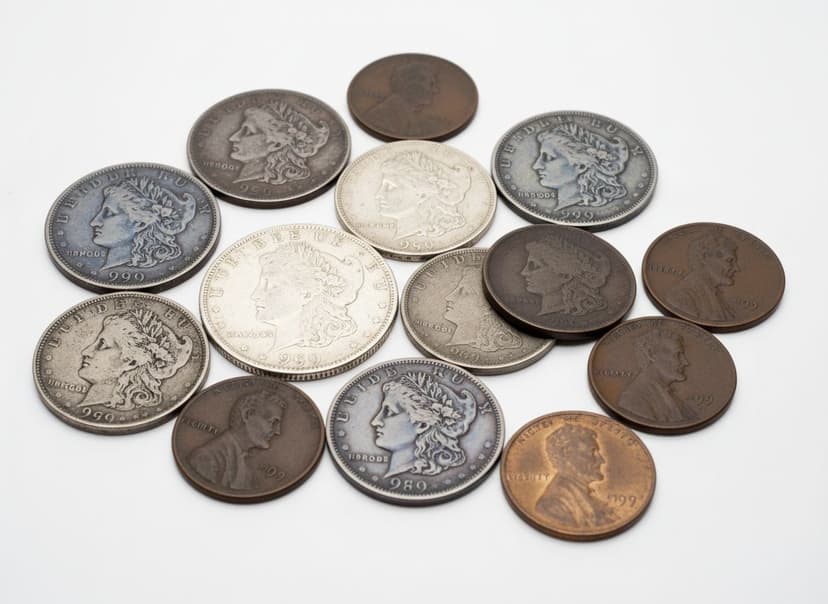
Lincoln wheat pennies were produced from 1909 to 1958, featuring Abraham Lincoln on the obverse and two wheat ears on the reverse. Designed by Victor David Brenner, these coins replaced the Indian Head cent and became one of the most beloved series in American numismatics. While most wheat pennies are worth only a few cents, key dates like the 1909-S VDB, 1914-D, and 1931-S can fetch hundreds or even thousands of dollars. The famous 1943 copper penny. A wartime error struck on the wrong planchet. Is among the most valuable US coins, with specimens selling for over $100,000.
Wheat penny values depend on the date and mint mark (S and D mint marks from low-mintage years carry large premiums), the grade or condition (circulated vs. uncirculated makes a huge difference), color designation for uncirculated coins (Red commands the highest premium, followed by Red-Brown and Brown), strike quality, and whether the coin has any errors or varieties such as doubled dies, repunched mint marks, or off-center strikes. The composition also matters: 1943 pennies are zinc-coated steel, while all other years are bronze (95% copper).
Buying & Selling Tips
Buying
Start with a good reference book like 'A Guide Book of Lincoln Cents' to learn key dates and varieties before spending money.
Be extremely cautious buying 1914-D and 1909-S VDB pennies. These are among the most frequently counterfeited US coins.
Look for wheat pennies in bank rolls and pocket change. They still occasionally turn up in circulation.
Buy problem-free coins rather than cleaned or damaged examples, even if it means spending more for a lower grade.
For error coins like the 1955 doubled die, always buy PCGS or NGC certified examples to guarantee authenticity.
Selling
Sort your wheat pennies by date and mint mark before selling. A few key dates mixed into a large lot can be worth more individually.
Common-date wheat pennies (1940s-50s) sell best in bulk lots of 100-5,000 coins on eBay at roughly 3-5 cents each.
Get any coin you suspect is a key date or error professionally graded before selling to maximize your return.
Take clear, well-lit photos of both sides for online sales. Buyers want to assess condition before bidding.
Sell rare dates through coin-specific auction houses rather than general marketplaces for the highest prices.
Wheat Pennies FAQ
How do I know if my 1943 penny is copper?
A genuine 1943 copper penny will NOT stick to a magnet (steel pennies are magnetic). It should weigh 3.1 grams (steel pennies weigh 2.7 grams). The color should be brown copper, not silver-gray. Be aware that many steel pennies have been copper-plated as fakes. Always have a suspected 1943 copper penny authenticated by PCGS or NGC.
Are wheat pennies worth collecting?
Absolutely. Wheat pennies are one of the most popular and accessible series in coin collecting. You can build a nearly complete date-and-mint set for a few hundred dollars, with only a handful of key dates being expensive. They also turn up in pocket change and bank rolls, making the hunt exciting.
What is a 1955 doubled die penny worth?
The 1955 doubled die obverse Lincoln cent is one of the most famous US coin errors. In circulated grades (VF-EF), they sell for $1,200 to $2,500. Uncirculated examples in MS-63 fetch $3,500 to $5,000, and gem MS-65 coins can exceed $10,000.
Why are some wheat pennies red and others brown?
Copper coins naturally darken from red to brown over time through oxidation. Uncirculated wheat pennies are graded as Red (RD), Red-Brown (RB), or Brown (BN) based on how much original luster remains. Red coins retain at least 95% of their original copper color and command the highest premiums. Often 2-5x more than brown examples of the same date and grade.
Got Wheat Pennies to Value?
Upload a photo and get a free AI-powered valuation in seconds. No sign-up required.