Last updated: September 2026
How Much Are Buffalo Nickels Worth?
Check current market values, learn what affects pricing, and get tips for buying and selling.
← All Coins valuationsWhat do you want to value?
Get the free app for unlimited scans


Buffalo Nickels Price Guide
Current market values based on recent sales data and market trends.
| Item | Condition | Price Range |
|---|---|---|
| 1913 Type 1 (Raised Mound) | MS-64 | $100 - $150 |
| 1913-S Type 2 | VF-20 | $100 - $150 |
| 1918/7-D Overdate | VG-8 | $1,200 - $2,000 |
| 1921-S | VF-20 | $125 - $200 |
| 1926-S | VF-20 | $200 - $350 |
| 1937-D Three-Legged | VF-20 | $700 - $1,100 |
| 1935 Philadelphia | MS-65 | $80 - $120 |
| Dateless Buffalo Nickel | No Date Visible | $0.50 - $1.00 |
What Determines Buffalo Nickels Value
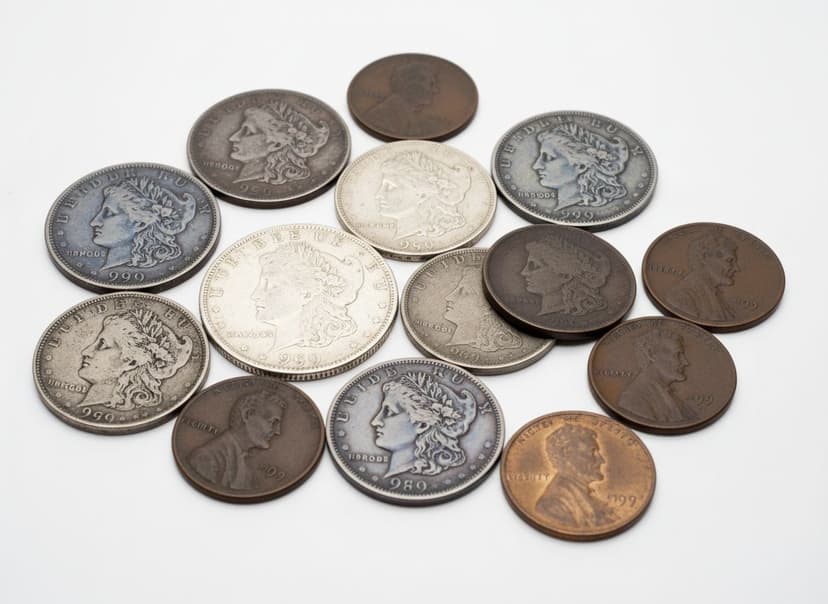
The Buffalo Nickel, also known as the Indian Head Nickel, was designed by James Earle Fraser and produced from 1913 to 1938. Featuring a composite portrait of a Native American on the obverse and an American bison on the reverse, it is considered one of the most artistically beautiful US coin designs. The series includes several rare key dates such as the 1918/7-D overdate, the 1937-D Three-Legged variety, and the low-mintage 1926-S. Many Buffalo nickels are found with worn-down dates, which significantly impacts their value.
Buffalo nickel values are driven by date visibility (dateless coins are nearly worthless at $0.50-$1.00 each), mint mark (S and D command premiums for many dates), strike sharpness (these coins are notorious for weak strikes, especially on the bison's horn and the Native American's hair), overall grade, and the presence of varieties or errors. Full horn detail on the reverse is a particularly important value factor. Coins certified as Full Horn (FH) by grading services can be worth 2-5x more than the same grade without the designation.
Buying & Selling Tips
Buying
Avoid dateless Buffalo nickels unless buying for melt value. They have almost no collector premium.
Check for Full Horn designation on mint state coins, as this significantly increases value and collectibility.
The 1937-D Three-Legged variety has many counterfeits. Only buy PCGS or NGC certified examples.
Look at the strike quality carefully; weakly struck coins are common in this series and trade at a discount.
Build your collection by starting with the common dates of the 1930s, which are affordable even in mint state.
Selling
Use a nic-a-date solution to reveal dates on worn Buffalo nickels before selling, but be aware this damages the surface and reduces numismatic value.
Group common dates together for bulk sales and separate out any key dates or high-grade pieces.
Photograph the bison's horn area clearly.Full Horn coins sell for significantly more.
Sell key dates like the 1918/7-D and 1937-D Three-Legged through specialty coin auctions for the best return.
Include a close-up of the date and mint mark in listings to build buyer confidence.
Buffalo Nickels FAQ
What is a Three-Legged Buffalo Nickel?
The 1937-D Three-Legged Buffalo Nickel is a famous die error where excessive die polishing at the Denver mint accidentally removed most of the bison's front right leg. Genuine examples show a smooth area where the leg should be and often have a distinctive 'moth-eaten' appearance on the back leg. Prices start around $500 in Good condition and can exceed $5,000 in mint state.
How can I read the date on a worn Buffalo Nickel?
You can use a date-revealing acid product called 'Nic-a-Date' which reacts with the nickel to show the faint date. However, this permanently stains and damages the coin's surface. If you suspect you have a key date, it may be worth having the coin examined by a professional rather than using acid.
Are Buffalo Nickels silver?
No, Buffalo nickels are made of 75% copper and 25% nickel. The same composition as modern nickels. They contain no silver despite their sometimes silvery appearance. Their value is purely numismatic, not based on precious metal content.
What does Full Horn mean on a Buffalo Nickel?
Full Horn (FH) is a designation given by grading services to Buffalo nickels that show complete, unbroken detail on the bison's horn. Because this area is the highest point on the reverse and wore quickly, full horn detail indicates a well-struck coin that saw minimal wear. FH coins typically command 50-200% premiums over non-FH examples.
Got Buffalo Nickels to Value?
Upload a photo and get a free AI-powered valuation in seconds. No sign-up required.