March 2, 2026 · Updated March 2026
Valuable Coins Still in Circulation: What to Look For
Your Pocket Change Could Be Worth More Than You Think
Most people barely glance at the coins in their pocket before spending them. But hidden among ordinary pocket change are coins worth $5, $50, $500, or even thousands of dollars. Silver coins still circulate. Error coins escape from the Mint. Limited-edition releases get spent at face value by people who do not realize what they have.
The hobby of searching through circulating coins for valuable finds is called "coin roll hunting" (CRH). Thousands of enthusiasts across the country buy rolls and boxes of coins from banks, sort through them, and return the common coins. It costs nothing beyond the time investment, and the rewards can be surprising.
Here is a comprehensive guide to what you should be looking for in your everyday change.
Silver Coins Still in Circulation
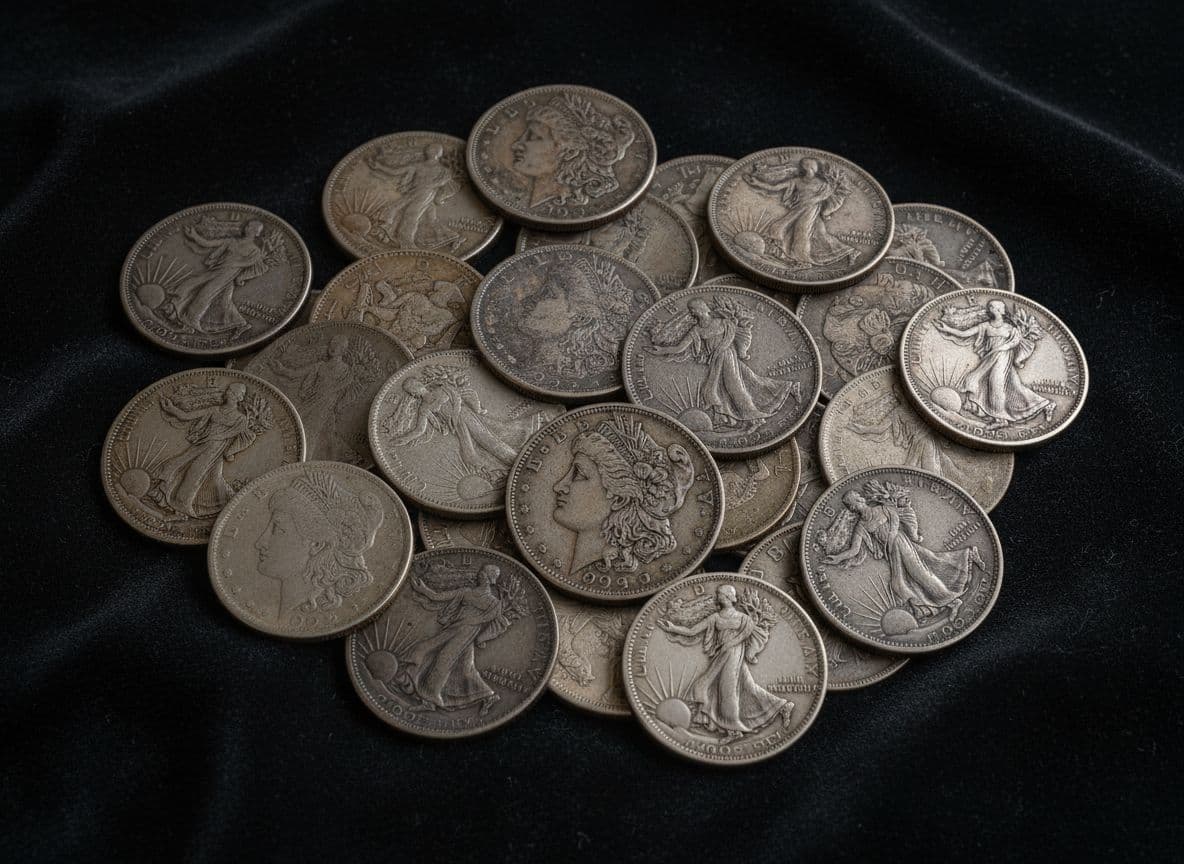
You might be surprised to learn that pre-1965 silver coins still turn up in circulation, usually because someone emptied an old jar or piggy bank and spent the coins at face value.
Silver Dimes (Pre-1965)
Roosevelt dimes dated 1964 or earlier are made of 90% silver. Each one contains approximately 0.0723 troy ounces of silver, giving them a melt value of about $1.80 at $25/oz silver. Mercury dimes (1916-1945) found in circulation are worth $2 to $5 or more, depending on the date. Key dates like the 1916-D Mercury dime are worth $500 or more even in heavily worn condition.
Silver Quarters (Pre-1965)
Silver quarters dated 1964 or earlier contain 0.1808 troy ounces of silver, worth approximately $4.50 at current silver prices. They are identified by their edge: silver quarters have a solid silver edge, while clad quarters show a copper stripe. These are among the most common valuable coins found in circulation.
Silver Half Dollars (1964 and Earlier. 90% Silver; 1965-1970. 40% Silver)
Kennedy half dollars from 1964 are 90% silver (melt value approximately $9). Half dollars from 1965 through 1970 are 40% silver (melt value approximately $3.50). These frequently appear in bank rolls because many people do not realize the 1965-1970 coins contain silver at all.
Error Coins Worth Money
The U.S. Mint produces billions of coins each year, and mistakes happen. Error coins that escape quality control can be worth substantial premiums.
Doubled Die Coins
Doubled die errors occur when the die that strikes the coin receives a doubled impression during manufacturing. The result is visible doubling on the date, lettering, or design elements. Notable doubled dies still potentially findable include:
- 1995 Doubled Die Lincoln Cent: Clear doubling on "LIBERTY" and "IN GOD WE TRUST." Worth $20 to $75 in uncirculated condition.
- 1972 Doubled Die Lincoln Cent: Dramatic doubling visible to the naked eye. Worth $100 to $500 depending on grade.
- State quarter doubled dies: Various state quarter errors with doubled lettering or design elements can be worth $25 to $200.
Off-Center Strikes
When a planchet (coin blank) is not properly centered in the press, part of the design is missing. The value depends on how far off-center the strike is and whether the date is still visible:
- 5-10% off-center: $3 to $10 for modern coins
- 25-50% off-center (with full date): $50 to $200
- 50%+ off-center (with full date): $100 to $500+
Wrong Planchet Errors
Occasionally, a coin is struck on a planchet intended for a different denomination or even a foreign coin. A quarter design struck on a nickel planchet, for example, can be worth $500 to $2,000. A Sacagawea dollar struck on a state quarter planchet sold for over $10,000.
Die Cracks and Cuds
When a die develops a crack, it leaves a raised line on the coins it strikes. A major die crack or "cud" (a large chunk missing from the die) can add $5 to $100 to a coin's value.
W Mint Mark Quarters (2019-Present)
Starting in 2019, the U.S. Mint began releasing limited quantities of quarters struck at the West Point Mint (with a "W" mint mark) directly into general circulation. Only about 2 million of each design were produced, compared to hundreds of millions from Philadelphia and Denver. These W quarters can be found in everyday change and sell for $8 to $25 each.
Look for the "W" mint mark on the obverse, just to the right of the "IG" in "IN GOD WE TRUST" or below the date. The W mint mark quarters include designs from the America the Beautiful series (2019-2020) and the American Women series (2022-present).
Notable Coins by Denomination
Pennies to Watch For
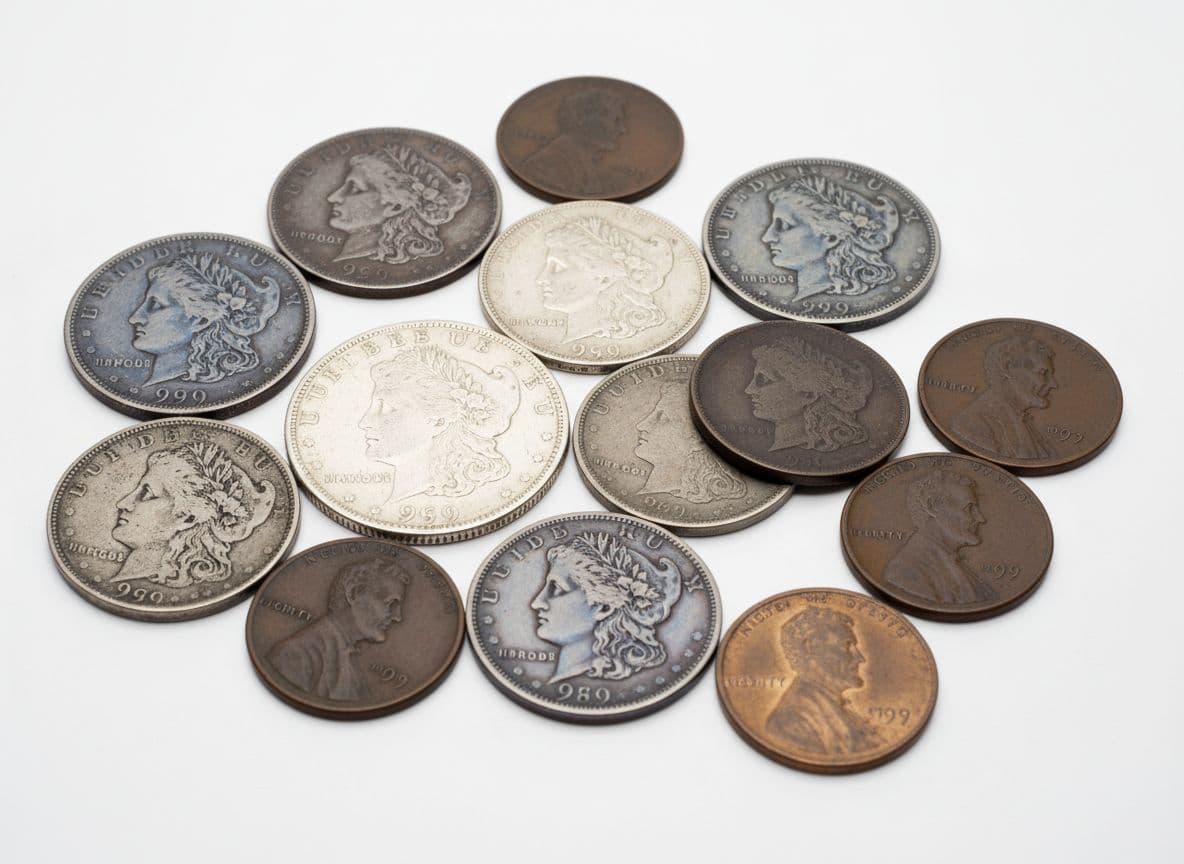
- Wheat pennies (1909-1958): Worth $0.05 to $5 for common dates; key dates worth much more
- 1982 copper vs. zinc: In 1982, the Mint transitioned from copper to zinc pennies. The copper 1982 small date is somewhat scarce
- 2009 Lincoln Bicentennial pennies: Four different designs were issued; complete sets in uncirculated condition sell for $2 to $5
Nickels to Watch For
- 1942-1945 War Nickels: Contain 35% silver (large "P," "D," or "S" mint mark above Monticello). Melt value approximately $1.25. These are relatively common finds.
- 2005 Speared Bison error: A die gouge creates the appearance of a spear through the bison on the reverse. Worth $5 to $50.
Half Dollars to Watch For
- 1964 Kennedy (90% silver): Worth approximately $9 in silver melt value
- 1965-1970 Kennedy (40% silver): Worth approximately $3.50 in silver melt value
- 1974 Doubled Die Obverse: Worth $10 to $50
Dollar Coins to Watch For
- 2000-P Sacagawea/Quarter Mule: A famous error where a Sacagawea dollar obverse was paired with a state quarter reverse die. Only about a dozen are known. Worth $50,000+.
- Smooth-edge Presidential dollars: Some Presidential dollar coins were released without the edge lettering (date, mint mark, motto). These "godless dollars" sell for $20 to $100.
Quick-Reference: What to Look For
| What to Check | What to Look For | Potential Value |
|---|---|---|
| Quarter edges | Silver (no copper stripe) | $4–$6+ |
| Quarter mint marks | "W" (West Point) | $8–$25 |
| Penny dates | Wheat reverse (pre-1959) | $0.05–$5+ |
| Nickel dates | 1942–1945 (large mint mark) | $1.25+ (silver) |
| Half dollar dates | 1964 or 1965–1970 | $3.50–$9 (silver) |
| Any coin | Doubling on date/letters | $5–$500+ |
| Any coin | Off-center strike | $5–$500+ |
| Dollar coins | Missing edge lettering | $20–$100 |
How to Get Started Coin Roll Hunting
- Visit your bank. Ask for rolls of coins in the denomination you want to search. Halves and pennies tend to yield the most finds.
- Use a magnifying glass. A 5x to 10x loupe helps spot errors and doubled dies.
- Keep a reference guide handy. Know the key dates, error types, and silver coin years for each denomination.
- Return searched coins to a different bank. This is good etiquette and avoids re-searching your own returns.
- Be patient. You might search 10 rolls before finding anything. Or you might find silver in your first roll. The thrill is in the hunt.
Think you might have valuable coins? Upload a photo to our free AI valuation tool and get an instant estimate.