Last updated: September 2026
How Much Are Morgan Silver Dollars Worth?
Check current market values, learn what affects pricing, and get tips for buying and selling.
← All Coins valuationsWhat do you want to value?
Get the free app for unlimited scans


Morgan Silver Dollars Price Guide
Current market values based on recent sales data and market trends.
| Item | Condition | Price Range |
|---|---|---|
| 1878 8 Tail Feathers | VF-20 | $55 - $75 |
| 1879-S | MS-63 | $55 - $80 |
| 1881-S | MS-65 | $200 - $300 |
| 1884-CC | MS-63 | $250 - $350 |
| 1889-CC | VF-20 | $1,500 - $2,500 |
| 1893-S | VG-8 | $5,000 - $7,500 |
| 1895 Proof | PR-63 | $40,000 - $60,000 |
| 1921 Morgan | MS-63 | $45 - $65 |
| 1878-CC | MS-64 | $400 - $600 |
| 1890-O | AU-50 | $45 - $65 |
What Determines Morgan Silver Dollars Value
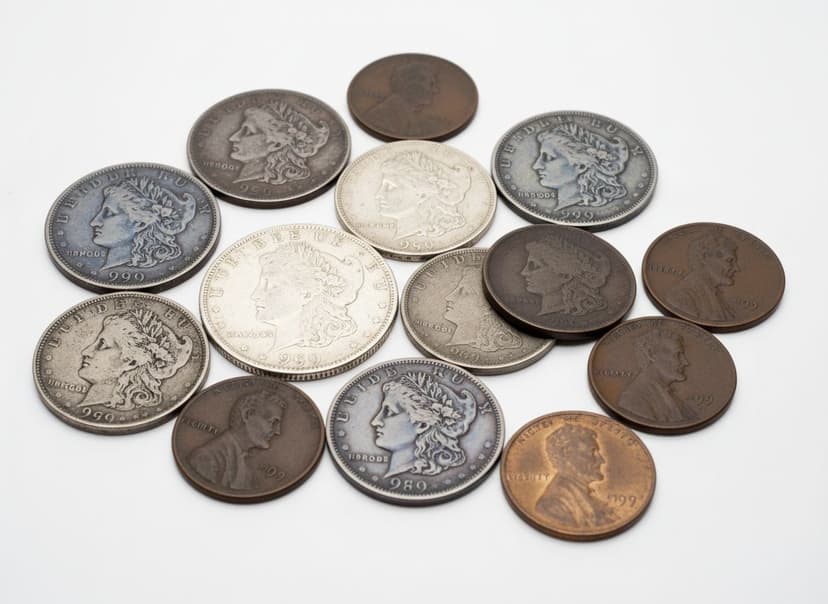
Morgan Silver Dollars are among the most widely collected coins in American numismatics. Minted from 1878 to 1904 and again in 1921, these large silver coins feature Lady Liberty on the obverse and an eagle on the reverse, designed by George T. Morgan. With a composition of 90% silver and 10% copper, every Morgan dollar carries substantial precious metal value in addition to its numismatic premium. Key dates like the 1893-S, 1889-CC, and 1895 proof command extraordinary prices, while common dates in circulated condition remain accessible to new collectors. Understanding mint marks (Philadelphia, San Francisco, New Orleans, Carson City, and Denver) is critical, as the same year can range from $30 to $300,000 depending on the mint.
The value of a Morgan Silver Dollar depends on five key factors: year and mint mark (Carson City coins carry the highest premiums), condition or grade (the jump from MS-64 to MS-65 can double or triple the price), strike quality (sharply struck coins are preferred), original toning (naturally toned coins in attractive colors can sell for multiples of their base price), and current silver spot price (each coin contains 0.7734 troy ounces of silver). VAM varieties. Die variations cataloged by Van Allen and Mallis. Also affect value for certain dates.
Buying & Selling Tips
Buying
Always buy from reputable dealers or auction houses, and insist on coins graded by PCGS or NGC for any purchase over $100.
Be cautious of cleaned or polished Morgan dollars. They may look shiny but are worth significantly less than original, uncleaned coins.
Carson City (CC) mint marks command a premium but verify authenticity, as counterfeits are common for key CC dates.
For investment purposes, focus on MS-64 and MS-65 common dates, which offer good value and strong liquidity.
Check the coin's rim carefully. Edge damage is common on these large, heavy coins and significantly impacts grade.
Selling
Have valuable Morgan dollars graded by PCGS or NGC before selling. The grading fee often pays for itself many times over.
Sell key dates and high-grade coins through major auction houses like Heritage or Stack's Bowers for the best prices.
Group common-date circulated Morgans into lots to sell more efficiently on eBay or to dealers.
Time your sales when silver prices are high if your coins are common dates valued primarily for metal content.
Never clean your Morgan dollars before selling. Collectors pay premiums for original surfaces.
Morgan Silver Dollars FAQ
What is the most valuable Morgan Silver Dollar?
The 1893-S Morgan Silver Dollar is considered the 'King of Morgans' with only 100,000 minted. In MS-65 condition, it can sell for over $500,000. The 1895 proof-only issue is also extremely valuable, with prices starting around $40,000 for lower proof grades.
How can I tell if my Morgan dollar is real?
Genuine Morgan dollars weigh 26.73 grams, have a diameter of 38.1mm, and are made of 90% silver. They should have reeded edges and a specific ring when dropped on a hard surface. For valuable dates, always get the coin authenticated by PCGS or NGC.
What does the mint mark on a Morgan dollar mean?
The mint mark appears on the reverse above the 'DO' in DOLLAR. 'CC' means Carson City (most valuable), 'S' is San Francisco, 'O' is New Orleans, 'D' is Denver (1921 only), and no mint mark means Philadelphia. Carson City coins are the most sought after due to lower mintages and Old West history.
Are all Morgan Silver Dollars worth more than their silver content?
Most Morgan dollars in any condition are worth at least $30-$40, which is above their silver melt value of roughly $20-$25 (depending on silver spot price). Even heavily worn common dates carry a numismatic premium. However, damaged or cleaned coins may trade near melt value.
What are GSA Morgan dollars?
GSA (General Services Administration) Morgans are coins from a massive US Treasury hoard discovered in the 1960s and sold to the public in the 1970s-80s. They come in special hard plastic holders with a GSA box and certificate. Most are Carson City mint coins, and the GSA holder adds a 10-30% premium over the same coin in a standard holder.
Got Morgan Silver Dollars to Value?
Upload a photo and get a free AI-powered valuation in seconds. No sign-up required.