Last updated: September 2026
How Much Are Peace Silver Dollars Worth?
Check current market values, learn what affects pricing, and get tips for buying and selling.
← All Coins valuationsWhat do you want to value?
Get the free app for unlimited scans


Peace Dollars Price Guide
Current market values based on recent sales data and market trends.
| Item | Condition | Price Range |
|---|---|---|
| 1921 High Relief | MS-63 | $250 - $400 |
| 1922 Philadelphia | MS-63 | $35 - $50 |
| 1923 Philadelphia | MS-64 | $40 - $60 |
| 1924-S | VF-20 | $30 - $50 |
| 1925-S | VF-20 | $30 - $45 |
| 1927-D | VF-20 | $35 - $55 |
| 1928 Philadelphia | VF-20 | $300 - $450 |
| 1934-S | VF-20 | $80 - $130 |
| 1935 Philadelphia | MS-63 | $50 - $80 |
What Determines Peace Dollars Value
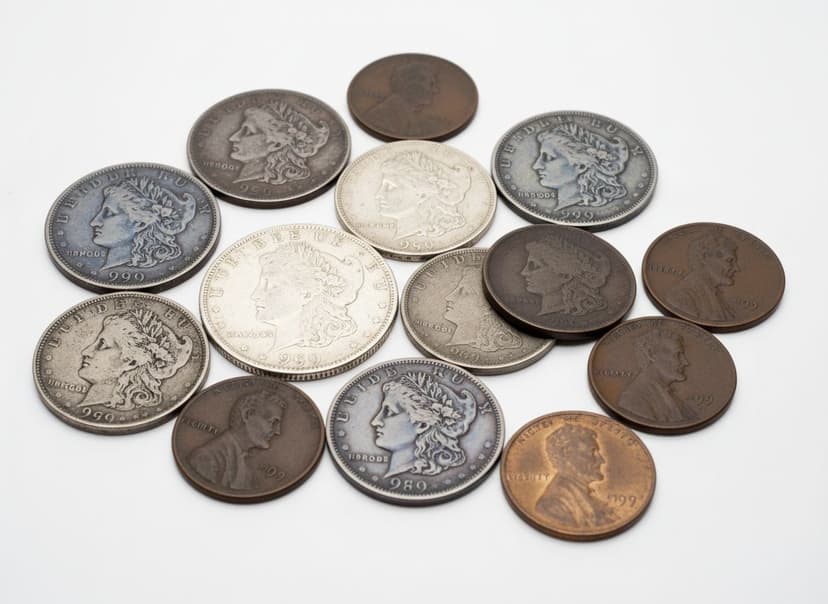
Peace Silver Dollars were minted from 1921 to 1928, and again in 1934-1935, to commemorate the end of World War I. Designed by Anthony de Francisci, the coin features a youthful Lady Liberty on the obverse and a bald eagle perched on a rock with the word PEACE on the reverse. Like Morgan dollars, Peace dollars are 90% silver and contain 0.7734 troy ounces of pure silver. The 1921 High Relief Peace Dollar is the most distinctive coin in the series, while the 1928 Philadelphia issue is the key date with only 360,649 struck. Peace dollars tend to come weakly struck, making fully detailed examples particularly desirable.
Peace dollar values are influenced by the date and mint mark (the 1928 Philadelphia is the clear key date), coin grade (most trade in VF to AU grades since many saw heavy circulation), strike quality (weak strikes plague many dates, especially Denver and San Francisco issues), luster and eye appeal, and silver spot price. Unlike Morgans, the Peace dollar series has fewer extreme rarities, making a complete set achievable for most serious collectors. High relief 1921 coins are particularly popular due to their dramatic, medallic appearance.
Buying & Selling Tips
Buying
Start with a common 1922 or 1923 in mint state as an affordable introduction to the series.
Be wary of cleaned Peace dollars. Their large flat surfaces show cleaning marks easily under magnification.
The 1928 Philadelphia is the key date; always buy it certified by PCGS or NGC since it has been counterfeited.
Look for coins with strong hair detail above Liberty's ear. This is the first area to show weakness.
Consider the 1921 High Relief for its unique design, but be prepared for typically softer strikes.
Selling
Complete or near-complete date-and-mint sets sell for a premium over the sum of individual coins.
Common dates (1922, 1923, 1925) sell best in bulk or rolls at modest premiums over silver melt value.
Highlight any unusual toning in your listings. Attractively toned Peace dollars can command strong premiums.
Get the 1928, 1934-S, and 1921 High Relief graded before selling to maximize value.
Sell through coin-specific venues rather than general marketplaces for better informed buyers.
Peace Dollars FAQ
What is the most valuable Peace Dollar?
The 1928 Philadelphia Peace Dollar is the key date with only 360,649 minted. In MS-65, it can sell for $5,000 to $8,000. The 1921 High Relief is also highly valued, especially in gem condition. A few 1964-D Peace dollars were reportedly struck but never officially released and would be worth millions if they surfaced.
What is the difference between a high relief and low relief Peace Dollar?
The 1921 Peace Dollar was struck in high relief with deeply sculpted features. Starting in 1922, the relief was lowered to improve die life and production speed. High relief coins show more three-dimensional detail and have a distinctive medallic look. They also tend to show contact marks more readily due to the raised design elements.
Are Peace Dollars a good investment?
Peace dollars offer a combination of silver bullion value and numismatic potential.common dates track closely with silver prices, providing a metal value floor. Key dates like the 1928 and 1921 High Relief have shown consistent appreciation over time. They are less widely collected than Morgans, which keeps prices more affordable.
How can I tell what mint made my Peace Dollar?
The mint mark is located on the reverse, near the eagle's tail feathers just above the word ONE. An 'S' indicates San Francisco and 'D' indicates Denver. No mint mark means the coin was struck at the Philadelphia mint. Use a magnifying glass as the mint mark can be small and faint on some issues.
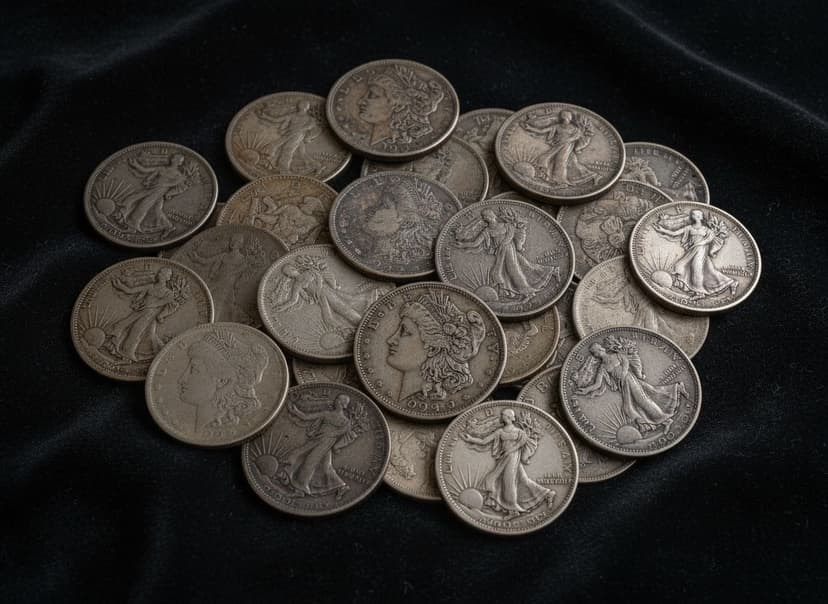
Got Peace Dollars to Value?
Upload a photo and get a free AI-powered valuation in seconds. No sign-up required.