Last updated: September 2026
How Much Is a Silver Certificate Worth?
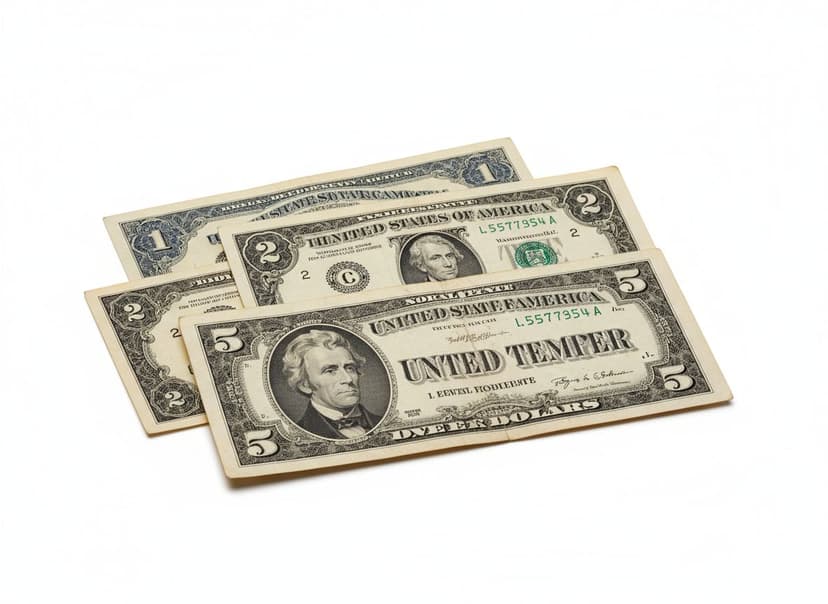
Silver certificates are U.S. paper currency that were once redeemable for silver coin or bullion. Issued primarily as $1 and $5 denominations from 1928 to 1957, they are identified by their distinctive blue seal and serial numbers. Most circulated $1 silver certificates are worth $2-$15, but scarce series, star notes, and uncirculated examples can bring $50-$5,000+. The earlier large-size silver certificates (1886-1923) are worth $100-$10,000+.
Get the free app for unlimited scans


Compare real prices
See what silver certificate are listed for right now
Affiliate link: we earn a commission if you buy, at no extra cost to you.
What do you want to value?
Get the free app for unlimited scans
Why Knowing Your Silver Certificate Value Matters

Silver certificates hold a unique place in U.S. monetary history. They represent the last direct link between paper currency and precious metal. From their introduction in 1878 until redemption ended in 1968, holders could exchange these bills for actual silver at the U.S. Treasury. Today, silver certificates are collectible currency notes valued by both paper money enthusiasts and silver investors. The small-size silver certificates (1928-1957) are the most commonly encountered. The $1 denomination was produced in several series: 1928, 1934, 1935, and 1957, each with multiple sub-series (A, B, C, etc.). Most circulated examples from the 1935 and 1957 series are worth $2-$5. A modest premium over face value. However, the 1928 series commands higher prices ($15-$100+ depending on sub-series and condition), and certain rare varieties like the 1928-E $1 star note can bring $500-$5,000+. The $5 silver certificates (1934 and 1953 series) are less common than the $1 denomination and generally worth $6-$25 in circulated condition. The large-size silver certificates issued before 1929 are a separate collecting category entirely. These oversized notes featuring ornate designs and famous portraits can be worth $100-$10,000+ depending on denomination, series, and condition. The 1899 $1 'Black Eagle' and the 1896 $1 'Educational' notes are particularly famous and desirable.
Key Factors That Affect Silver Certificate Value
Understanding what drives the price of silver certificate helps you get the most accurate valuation.
Series & Denomination
$1 Silver Certificates: 1957/1935 series (most common): $2-$5 circulated, $5-$12 uncirculated. 1934 series: $5-$15 circulated, $12-$30 uncirculated. 1928 series: $15-$50 circulated, $40-$150 uncirculated. Rare 1928 sub-series (C, D, E): $50-$500+. $5 Silver Certificates: 1953 series: $6-$12 circulated, $15-$30 uncirculated. 1934 series: $7-$20 circulated, $20-$50 uncirculated. $10 Silver Certificates: 1934/1953 series: $12-$25 circulated, $30-$75+ uncirculated.
Star Notes & Serial Numbers
Star notes (serial number begins or ends with a star ★) are replacement notes worth 2-5x more than standard notes of the same series. 1957 $1 star: $3-$8 circulated, $8-$20 uncirculated. 1935 $1 star: $4-$12 circulated, $10-$30 uncirculated. 1928 $1 star: $50-$500+ depending on sub-series. Fancy serial numbers add value regardless of series: low numbers, solid digits, ladders, and radar numbers can add $20-$500+ to any silver certificate.
Condition & Grading
Paper money condition ranges from Poor to Superb Gem Uncirculated (PMG 68+). For silver certificates, condition dramatically affects value: a 1935 $1 in Very Fine: $3-$4. In Choice Uncirculated (PMG 64): $8-$15. In Gem (PMG 66+): $25-$75+. Crisp, original notes with sharp corners, full embossing, and bright paper are worth multiples of limp, folded, soiled examples. Professional grading by PMG ($15-$30) is recommended for notes you believe are worth $50+.
Large-Size Notes (Pre-1929)
Large-size silver certificates (1878-1923) are in a different value category: 1899 $1 'Black Eagle': $50-$300+ depending on condition. 1896 $1 'Educational': $150-$3,000+ (famous artistic design). 1899 $5 'Chief': $200-$3,000+ (featuring Running Antelope). 1886-1891 $1 (Martha Washington portrait): $100-$1,500+. Higher denominations ($10, $20, $50, $100, $500, $1000) are rare and valuable: $500-$100,000+.
Block Letters & Print Runs
Silver certificates have block letters (small letters near the serial number) that identify the print run. Some block letter combinations are scarce and carry premiums. For the 1935 and 1957 series, most block letters are common. However, late or experimental blocks can be worth $10-$50+ over common examples. Hawaii and North Africa overprint varieties from WWII are especially valuable: HAWAII overprint $1: $15-$75 circulated, $50-$300 uncirculated. Yellow Seal North Africa $1: $15-$100 circulated, $50-$400 uncirculated.
Tips for Valuing Silver Certificate
Get the most accurate valuation by following these tips when photographing your silver certificate.
Check the seal color. Silver certificates have a BLUE seal and serial numbers. Red seals are United States Notes, and green seals are Federal Reserve Notes (not silver certificates).
Look for the series year printed on the front of the note. 1928 series are worth the most among small-size issues ($15-$500+).
Check for star notes (★ in the serial number). these replacement notes are worth 2-5x more than standard notes across all silver certificate series.
Photograph the full front and back, including the serial number, series year, and seal clearly visible. All details affect valuation.
Handle notes by the edges only and store in currency sleeves. Fingerprints and oils from handling degrade paper money over time and reduce value.
Silver Certificate Market Insights
The silver certificate market is mature and well-documented, with published price guides and active dealer networks.common 1935 and 1957 $1 silver certificates are abundant. Millions survive in all conditions. Keeping prices modest at $2-$12 for typical examples. The collector market is strongest for 1928 series notes, star notes from all series, and large-size pre-1929 issues. The WWII Hawaii and North Africa overprint varieties have a dedicated collecting base and consistent demand. Online sales dominate for common notes, while rare varieties and high-grade examples find their best prices at Heritage Auctions and specialized currency shows. The PMG-graded market has grown significantly, with certified notes commanding clear premiums over raw examples in all series.
Notable Silver Certificate Values
Real-world examples of what specific silver certificate have sold for, so you can benchmark your own.
| Silver Certificate | Condition | Typical Value |
|---|---|---|
| 1935-A $1 Silver Certificate (common circulated) | Fine | $2 - $5 |
| 1957-B $1 Silver Certificate | Uncirculated | $8 - $20 |
| 1935-A $1 Silver Certificate Star Note | Very Fine | $25 - $75 |
| 1928 $1 Silver Certificate (Tate-Mellon) | Very Fine | $60 - $175 |
| 1928-B $1 Silver Certificate (Woods-Mellon) | Fine | $40 - $120 |
| 1934 $5 Silver Certificate (Julian-Morgenthau) | Extremely Fine | $50 - $150 |
| 1899 $5 Silver Certificate 'Onepapa' Chief Note | Very Fine | $400 - $900 |
| 1878 $10 Silver Certificate (large size) | Fine | $800 - $2,500 |
| 1957 $1 Silver Certificate Star Note (low serial run) | Gem Uncirculated | $75 - $300 |
Based on eBay sold listings, Heritage Auctions records, and standard U.S. paper money price guides (Friedberg).
Find Out What Your Silver Certificate Are Worth
Upload a photo now and get a free AI-powered valuation in seconds. No sign-up required.
Silver Certificate Valuation FAQ
How much is a silver certificate worth?
Most small-size $1 silver certificates (1935-1957 series) in circulated condition are worth $2-$5. Better values: 1928 series: $15-$150+. Star notes: $3-$500+ depending on series. Uncirculated 1935/1957: $5-$12. WWII Hawaii overprint: $15-$300. North Africa yellow seal: $15-$400. $5 silver certificates: $6-$50. Large-size (pre-1929): $50-$10,000+. The most valuable silver certificate is the 1891 $1,000 'Marcy' note, worth $500,000+.
Can I still redeem a silver certificate for silver?
No. The U.S. Treasury stopped redeeming silver certificates for silver bullion on June 24, 1968. Before that date, holders could exchange certificates for silver at the Treasury at the rate of $1.29 per troy ounce. Today, silver certificates are legal tender worth their face value ($1, $5, or $10) if spent, but their collector value always exceeds face value. You can still spend a silver certificate at any business, though spending a collectible note worth $3-$5+ is not recommended.
What is the difference between silver certificates and regular dollar bills?
Three key differences: (1) Seal color. Silver certificates have a BLUE Treasury seal and serial numbers, while modern Federal Reserve Notes have a GREEN seal. (2) The wording. Silver certificates state 'ONE DOLLAR IN SILVER PAYABLE TO THE BEARER ON DEMAND' (1928-1934) or 'ONE DOLLAR IN SILVER' (1935-1957). Federal Reserve Notes say 'THIS NOTE IS LEGAL TENDER FOR ALL DEBTS, PUBLIC AND PRIVATE.' (3) Age. The last silver certificates were printed in 1957 (series 1957B), making even the newest ones over 65 years old. Federal Reserve Notes replaced silver certificates as the standard $1 bill.
What is the rarest silver certificate?
Among small-size notes: the 1928-E $1 star note is one of the rarest, with very few known examples worth $2,000-$5,000+. The 1928-E standard note is also scarce at $200-$500+. Among large-size notes: the 1891 $1,000 Marcy note is the most valuable, with examples selling for $500,000+. The 1880 $1,000 and 1891 $1,000 are both extremely rare. More accessible rarities include the 1928-C and 1928-D $1 star notes ($100-$1,000+) and WWII special issues in high grades.
How do I identify a silver certificate?
Look for these features: (1) Blue seal and serial numbers. This is the most distinctive feature. (2) The words 'SILVER CERTIFICATE' printed prominently on the face. (3) A promise to pay in silver. The specific wording varies by series. (4) Series year on the front, typically 1928, 1934, 1935, or 1957 with possible letter suffixes (A, B, C, etc.). (5) Small-size notes (1928-1957) are the same size as modern bills. Large-size notes (pre-1929) are approximately 50% larger. Any bill with a blue seal is a silver certificate, regardless of denomination or series.
Silver Certificate Price Guides
Silver Certificate Guides & Articles
Value anything, anytime
Unlimited valuations, saved history and full reports in the free app.