Last updated: September 2026
How Much Is My Pocket Watch Worth?
From fine Swiss repeaters and American railroad-grade watches to antique gold hunting case timepieces and vintage Elgin and Waltham movements, our AI identifies your pocket watch's maker, movement grade, case material, and condition to provide accurate market valuations. Whether you inherited a family heirloom or discovered one at a flea market, get a reliable estimate instantly.
Get the free app for unlimited scans


Compare real prices
See what pocket watches are listed for right now
Affiliate link: we earn a commission if you buy, at no extra cost to you.
What do you want to value?
Get the free app for unlimited scans
Why Knowing Your Pocket Watches Value Matters
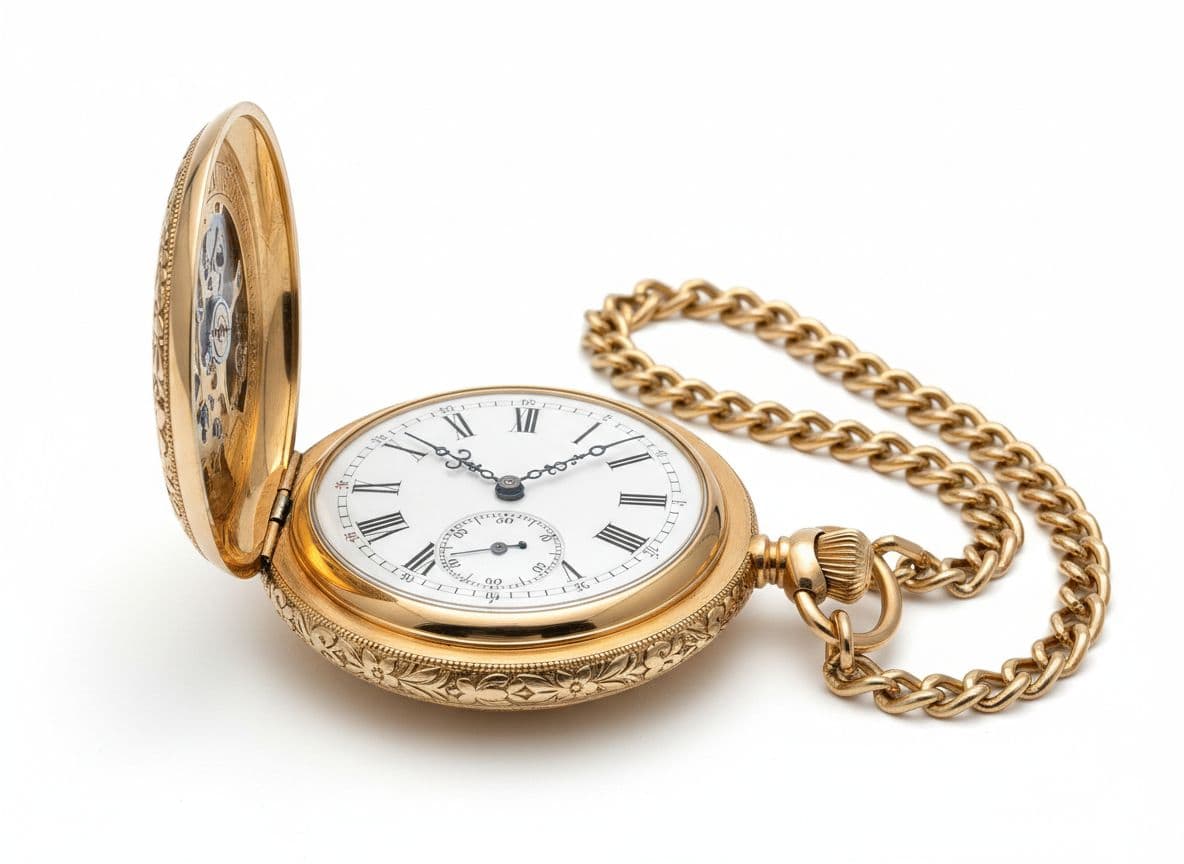
Pocket watches were the pinnacle of portable timekeeping for over 400 years, and many represent extraordinary mechanical craftsmanship. A Patek Philippe pocket watch sold for $31 million at auction, making it one of the most expensive portable objects ever sold. While most pocket watches aren't worth millions, many have significant value that owners don't realize. Gold cases contain precious metal worth $200-$2,000+ in melt value alone, and the watches themselves can be worth considerably more to collectors. Railroad-grade watches from American companies like Hamilton, Waltham, and Illinois have dedicated collectors. Even modest silver-cased watches from the 1800s hold steady value.
Key Factors That Affect Pocket Watches Value
Understanding what drives the price of pocket watches helps you get the most accurate valuation.
Maker & Movement Grade
Swiss luxury makers (Patek Philippe, Vacheron Constantin, Audemars Piguet) command the highest prices. American railroad-grade watches from Hamilton, Waltham, Elgin, and Illinois have strong collector markets. Within each maker, movement quality varies - a Hamilton 950B railroad movement is worth far more than a basic Hamilton 910.
Case Material
Solid gold cases (14K, 18K) have substantial melt value and collector appeal. Gold-filled cases have some gold content but less intrinsic value. Silver cases are valued both for metal content and collectibility. Base metal (nickel, silveroid) cases have the least intrinsic value but the watch movement may still be valuable.
Complications
Watches with additional functions beyond basic timekeeping are more valuable. Repeaters (which chime the time), chronographs, moon phases, calendars, and tourbillons all add significant value. A simple time-only watch might be worth $200, while a repeater from the same maker could be worth $5,000+.
Condition & Originality
Original dial, hands, crystal, and case are essential for maximum value. Refinished or replaced dials reduce value by 40-70%. The movement should be clean and running (or capable of running with proper servicing). Case wear, dents, and scratches reduce value proportionally to severity.
Railroad Grade & Certification
Pocket watches certified for railroad use (meeting strict accuracy standards) are highly collected. They typically feature 21-23 jewel movements, adjusted to 5-6 positions, and specific dial configurations. Railroad-grade watches from Hamilton, Waltham, and Illinois in original railroad cases are particularly sought after.
Tips for Valuing Pocket Watches
Get the most accurate valuation by following these tips when photographing your pocket watches.
Photograph the dial face clearly showing any text, numbers, and the maker's name
Open the case back to photograph the movement, showing jewels and engravings
Include photos of any case markings, hallmarks, or serial numbers
Note whether the watch runs, keeps time, and if all functions work
Pocket Watches Market Insights
The pocket watch market is well-established and relatively stable. Swiss luxury pocket watches from Patek Philippe and other prestige makers continue to appreciate and perform well at major auction houses. American railroad-grade watches have a dedicated collector community with active online forums and shows. The market for common 7-15 jewel watches in gold-filled cases has softened somewhat, but solid gold cases maintain floor values based on melt prices.complicated watches (repeaters, chronographs) have seen increasing interest from wristwatch collectors exploring horological history. The market for keywind and earlier watches is smaller but serves serious horological collectors. Well-documented watches with provenance perform best.
Notable Pocket Watches Values
Real-world examples of what specific pocket watches have sold for, so you can benchmark your own.
| Pocket Watche | Condition | Typical Value |
|---|---|---|
| Elgin Grade 571 21-Jewel Railroad Pocket Watch (16s) | Used, Running | $80 - $300 |
| Hamilton 992B Railroad Pocket Watch (16s, 21J) | Used, Running | $150 - $500 |
| Waltham Crescent St. 21J Railroad Grade (16s) | Used, Running | $100 - $400 |
| Illinois Bunn Special 21J or 23J Pocket Watch (16s) | Used, Running | $200 - $800 |
| Patek Philippe 18k Gold Hunter-Case Pocket Watch (antique, 19th c.) | Authenticated | $4,000 - $25,000+ |
| Vacheron Constantin Gold Pocket Watch (vintage, 18k) | Authenticated | $2,000 - $15,000+ |
| Waltham 7-Jewel Base Metal Pocket Watch (open-face, common grade) | Used | $20 - $75 |
| Howard Miller (Seth Thomas) Pocket Watch Replica / Novelty | Used | $10 - $40 |
| Swiss-Made 18k Gold Dress Pocket Watch (unsigned, c.1900-1940) | Used | $300 - $1,500 |
Based on eBay sold listings, Heritage Auctions records, and Chrono24 market data for pocket watches.
Find Out What Your Pocket Watches Are Worth
Upload a photo now and get a free AI-powered valuation in seconds. No sign-up required.
Pocket Watches Valuation FAQ
How do I open my pocket watch to identify it?
Most pocket watches have a case back that unscrews, snaps off, or has a small lip you can pry with a fingernail or case knife. Some have screw-off bezels (fronts) instead. Inside, you'll find the movement with the maker's name, serial number, and jewel count engraved. Never force a case open - if it doesn't open easily, a jeweler can help. Our AI can often identify watches from the dial alone.
Is my gold pocket watch worth a lot?
Solid gold pocket watches have a minimum value based on their gold content - typically $300-$2,000+ depending on weight and karat. The watch itself may be worth more than melt value to collectors. However, many 'gold' watches are actually gold-filled (a thick layer of gold over base metal), which has much less intrinsic value. Look for markings like '14K,' '18K' (solid gold) vs. 'Gold Filled' or 'GF' inside the case.
What is a railroad pocket watch?
Railroad-grade watches met strict accuracy standards required by American railroads after the 1891 Great Kipton Train Wreck. They typically have 21-23 jewels, are adjusted to 5-6 positions for temperature, and feature specific dial configurations. Major makers include Hamilton (grades 950, 992B), Waltham (Vanguard), and Illinois (Bunn Special). Railroad watches are actively collected and typically sell for $200-$2,000+.
Should I have my pocket watch cleaned or repaired before selling?
A professional servicing by a qualified watchmaker can increase value if the watch is not currently running. However, never attempt to clean or repair the movement yourself, and avoid general jewelers who may not specialize in antique watches. For common watches, the servicing cost ($150-$400) may not be justified. For valuable pieces, professional restoration is worthwhile.
Pocket Watches Price Guides
Pocket Watches Guides & Articles
Value anything, anytime
Unlimited valuations, saved history and full reports in the free app.