Last updated: September 2026
How Much Is My Engagement Ring Worth?
Whether you are selling an engagement ring after a breakup, evaluating an inherited ring, or simply curious about its current market value, our AI analyzes your ring's center stone, accent stones, metal type, and setting style to provide an accurate estimate. Get a realistic resale value in seconds.
Get the free app for unlimited scans


Compare real prices
See what engagement rings are listed for right now
Affiliate link: we earn a commission if you buy, at no extra cost to you.
What do you want to value?
Get the free app for unlimited scans
Why Knowing Your Engagement Rings Value Matters
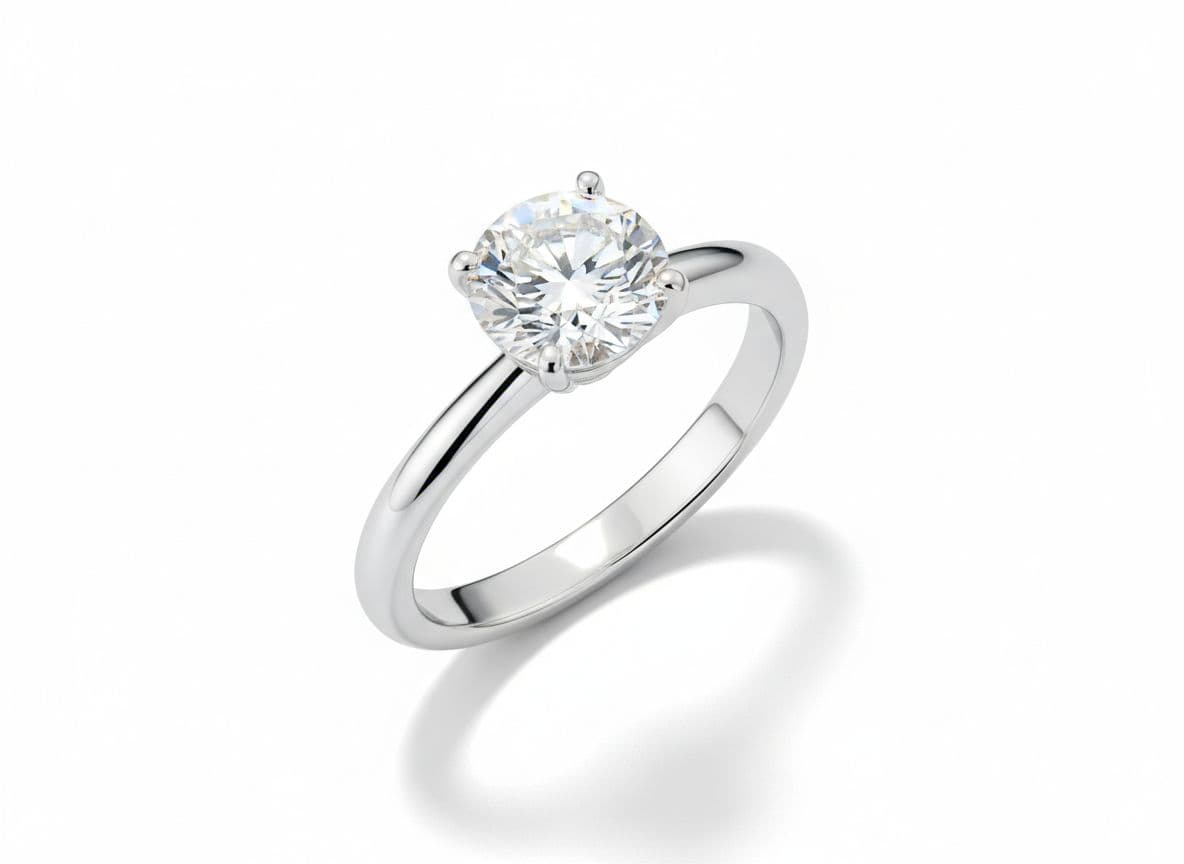
Engagement rings are one of the most emotionally and financially significant purchases most people make, yet their resale value is often a fraction of the original price. Understanding what your ring is truly worth on the secondary market is essential during life transitions like divorce, estate settlement, or upgrading. Many people are shocked to learn that a ring purchased for $8,000 might only resell for $2,000-$4,000. Insurance appraisals are not market values. They reflect inflated replacement costs. Knowing the real value helps you set realistic expectations, choose the best selling channel, and avoid being taken advantage of by opportunistic buyers.
Key Factors That Affect Engagement Rings Value
Understanding what drives the price of engagement rings helps you get the most accurate valuation.
Center Stone Quality
The center diamond or gemstone accounts for 70-90% of most engagement rings' value. Its carat weight, cut, color, clarity, and certification (GIA preferred) are the primary value drivers. A 1ct GIA-certified diamond in a ring holds value far better than an uncertified stone.
Metal Type & Weight
Platinum rings carry the highest metal value, followed by 18k gold, 14k gold, and 10k gold. The weight of the metal contributes to the ring's intrinsic melt value. A heavy platinum setting can add $500-$1,500 in metal value alone.
Designer Brand
Rings from prestigious brands like Tiffany & Co., Cartier, Harry Winston, and Van Cleef & Arpels command 20-50% premiums over comparable non-branded rings. Original boxes, certificates, and receipts significantly increase branded ring values.
Setting Style & Craftsmanship
Halo settings with accent diamonds, pave bands, and intricate vintage-style settings add value through additional diamond weight and craftsmanship. Simple solitaire settings contribute less to overall value but are timeless in appeal.
Condition & Wear
Rings in excellent condition with no loose prongs, scratched metal, or chipped stones are worth more. A professional cleaning and polishing before selling can improve appearance, but avoid re-plating rhodium on white gold as buyers may suspect hidden wear.
Tips for Valuing Engagement Rings
Get the most accurate valuation by following these tips when photographing your engagement rings.
Photograph the ring from directly above and from the side on a white background with soft natural light
Include a photo of any brand engravings inside the band (e.g., Tiffany & Co., 750, PT950)
If you have the original GIA certificate, receipt, or box, photograph those alongside the ring
Remove any dirt or lotion buildup with mild soap and warm water before photographing for accurate results
Engagement Rings Market Insights
The engagement ring resale market is robust, with platforms like Worthy, The RealReal, Louped, and I Do Now I Don't providing transparent selling options. On average, pre-owned engagement rings sell for 30-50% of their original retail price, though branded pieces from Tiffany or Cartier can retain 50-70% of value. The rise of lab-grown diamonds has put additional downward pressure on natural diamond ring resale values in the lower carat ranges. Vintage and antique engagement rings (Art Deco, Edwardian, Victorian) have actually increased in value as buyers seek unique, sustainable options. Current trends favor oval and emerald-cut center stones, which may fetch slightly higher resale premiums.
Notable Engagement Rings Values
Real-world examples of what specific engagement rings have sold for, so you can benchmark your own.
| Engagement Ring | Condition | Typical Value |
|---|---|---|
| Tiffany & Co. Round Brilliant Solitaire (1ct, Platinum) | Pre-owned, Authenticated | $4,000 - $9,000 |
| Cartier Destinée Solitaire (0.5ct, Platinum) | Pre-owned, Authenticated | $2,500 - $5,500 |
| Diamond Solitaire, Round Brilliant (1ct, G/VS2, Platinum, Non-Brand) | Used, No Cert | $2,000 - $4,500 |
| Diamond Solitaire, Round Brilliant (1ct, GIA Certified, G/VS2, Non-Brand) | Used, GIA Certified | $3,500 - $6,500 |
| Halo Diamond Ring (1ct Total Weight, 14K White Gold, Non-Brand) | Pre-owned | $800 - $2,500 |
| Moissanite Solitaire (1ct Equivalent, 14K Gold) | Pre-owned | $150 - $600 |
| Lab-Grown Diamond Solitaire (1ct, IGI Certified, 14K Gold) | Pre-owned, IGI Certified | $300 - $1,200 |
| Vintage Art Deco Diamond Ring (0.5ct, Platinum, circa 1920s-30s) | Estate, Authenticated | $1,500 - $5,000 |
| Simple Gold Band with Small Diamond Accent (under 0.25ct, 10K-14K) | Used | $80 - $350 |
Based on eBay sold listings, Chrono24 estate jewelry data, WP Diamonds resale guides, and auction records from Worthy.com and I Do Now I Don't.
Find Out What Your Engagement Rings Are Worth
Upload a photo now and get a free AI-powered valuation in seconds. No sign-up required.
Engagement Rings Valuation FAQ
How much is my engagement ring worth after divorce?
Expect to receive 25-50% of the original retail price when selling a pre-owned engagement ring. The exact amount depends on the center stone quality, brand, and current market conditions. Rings with GIA-certified diamonds over 1 carat and those from luxury brands like Tiffany retain value best. Online auction platforms typically yield 20-40% more than selling to local jewelers or pawn shops.
Should I sell the ring whole or remove the diamond?
In most cases, selling the ring intact yields better results because buyers can visualize wearing it. However, for high-value center stones (over 2ct), selling the diamond separately and the setting separately can sometimes yield more total value. Branded rings (Tiffany, Cartier) should always be sold intact as the brand premium is significant.
Where is the best place to sell my engagement ring?
Online platforms like Worthy (auction to professional buyers), The RealReal (luxury consignment), and Loupe Troop (peer-to-peer for enthusiasts) typically offer the best returns. Local options include estate jewelers and consignment shops. Avoid pawn shops, which typically offer only 10-20% of retail value. For rings worth over $20,000, consider a major auction house.
Does my engagement ring appraisal reflect what I can sell it for?
No. Insurance appraisals are inflated replacement values, typically 50-100% higher than what you could actually sell the ring for. They are designed to ensure adequate insurance coverage, not to reflect market resale value. A ring appraised at $15,000 for insurance might realistically sell for $5,000-$8,000 on the secondary market.
How can I tell if my engagement ring diamond is real?
Check for a GIA laser inscription on the diamond's girdle using a jeweler's loupe. Real diamonds also exhibit strong brilliance and fire (rainbow flashes). Moissanite, a common substitute, shows stronger rainbow dispersion than diamond. The most reliable test is visiting a jeweler who can use a diamond tester. Our AI can also help identify common diamond simulants from photos.
Engagement Rings Price Guides
Engagement Rings Guides & Articles
Value anything, anytime
Unlimited valuations, saved history and full reports in the free app.