Last updated: September 2026
How Much Is Your Gold Ring Worth?
Whether you're looking to sell an old wedding band, evaluate an inherited ring, or check the value of your jewelry collection, knowing your gold ring's worth is essential. Our AI analyzes your ring's apparent karat, style, gemstones, and condition to provide a market estimate. From plain gold bands worth their melt value to designer pieces and antique rings worth far more, we help you understand your ring's true value.
Get the free app for unlimited scans


Compare real prices
See what gold rings are listed for right now
Affiliate link: we earn a commission if you buy, at no extra cost to you.
What do you want to value?
Get the free app for unlimited scans
Why Knowing Your Gold Rings Value Matters
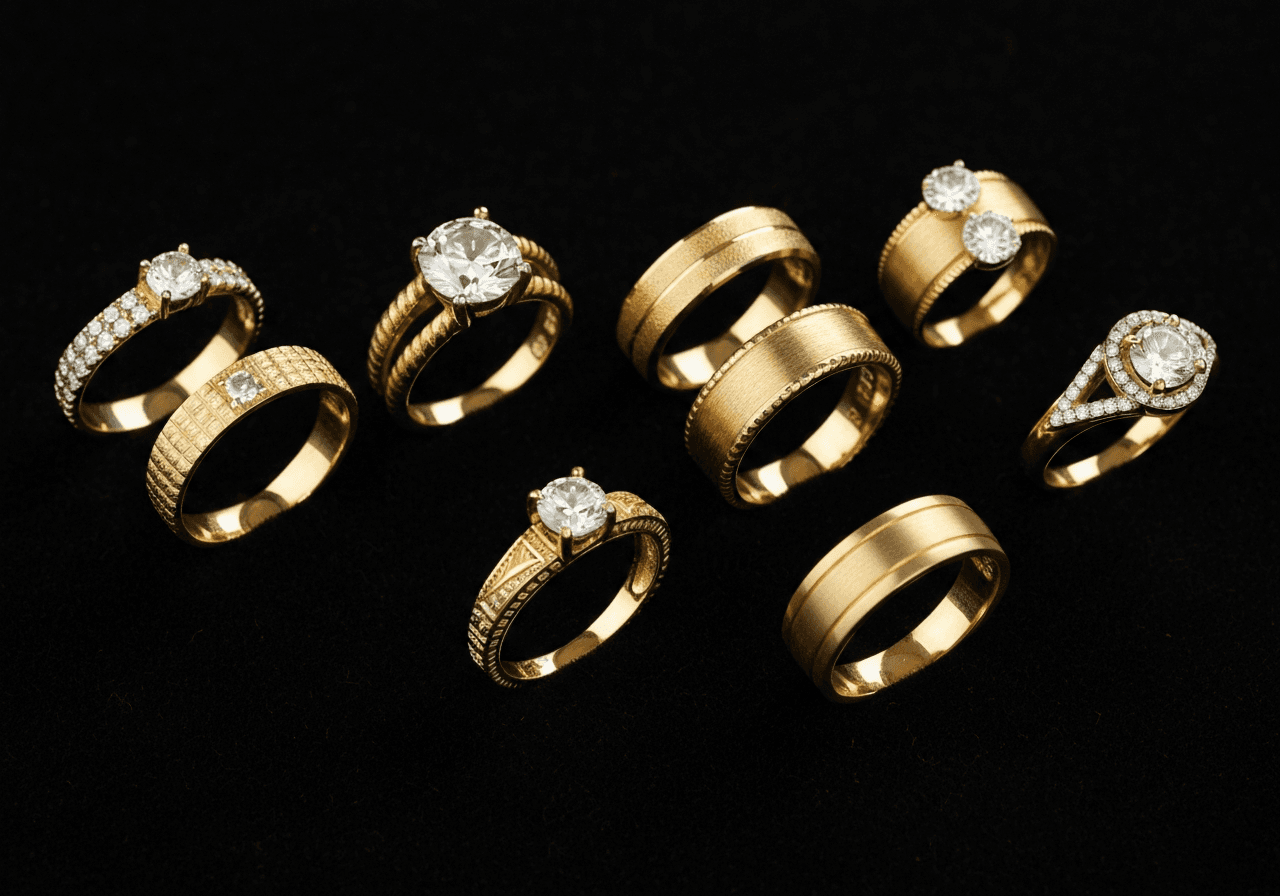
Gold rings are the most commonly sold jewelry item, and values vary enormously based on factors many people don't consider. A plain 14k gold wedding band might be worth $100-$300 for its gold content alone, but a vintage Art Deco ring in the same weight could be worth $1,000-$5,000 for its design and craftsmanship. Designer rings from Tiffany, Cartier, and Van Cleef & Arpels carry brand premiums of 2-5x over generic equivalents. The difference between selling to a 'we buy gold' shop and selling properly can be hundreds to thousands of dollars.
Key Factors That Affect Gold Rings Value
Understanding what drives the price of gold rings helps you get the most accurate valuation.
Gold Karat & Weight
Gold content determines minimum value. 24k (99.9% pure): highest value per gram. 18k (75% gold): ~75% of 24k value per gram. 14k (58.3% gold): ~58% of 24k value per gram. 10k (41.7% gold): ~42% of 24k value per gram. Current gold spot price determines exact melt value. A typical 14k men's wedding band (5-8 grams) has $150-$300 in gold content.
Gemstones
Diamonds, rubies, sapphires, and emeralds add significant value above gold melt. A 1-carat diamond solitaire in a 14k ring might be worth $2,000-$10,000+ for the diamond alone. Quality matters: diamond value depends on the 4 Cs (cut, color, clarity, carat). Colored gemstone value varies enormously. Lab-created stones are worth much less than natural.
Designer & Brand
Rings from luxury brands command premiums: Tiffany & Co. (2-3x generic value), Cartier (2-5x), Van Cleef & Arpels (3-5x), Harry Winston (3-5x), Bulgari (2-3x). Even lesser-known designer marks can add value. Check inside the band for brand stamps.
Age & Style
Antique rings (pre-1940): collector premiums for Art Deco, Art Nouveau, Edwardian, Victorian styles. Vintage (1940-1980): some style premiums. Modern: primarily material value unless designer. Estate jewelry buyers and antique dealers pay more for period pieces than 'we buy gold' shops.
Condition
Perfect condition: full value. Worn/thin shanks: reduced, may need repair. Missing stones: significant reduction. Resized (visible solder line): minor reduction. Bent or damaged: reduced but gold content still has value. Even damaged gold rings have melt value.
Tips for Valuing Gold Rings
Get the most accurate valuation by following these tips when photographing your gold rings.
Look inside the band for karat stamps. 10k, 14k, 18k, 24k, 585, 750 are common marks
Check for designer marks. Tiffany, Cartier, and other brand stamps significantly increase value
Photograph any gemstones clearly. They may be worth more than the gold
Don't sell to the first 'we buy gold' offer. Get multiple quotes or check melt value calculators online
Gold Rings Market Insights
The gold ring market is driven by two forces: gold's commodity price (melt value) and collector/retail demand for desirable designs. When gold prices are high, even plain bands have meaningful melt value. The estate jewelry market has grown significantly with online platforms making it easier to sell. Designer and antique rings consistently outperform melt value. The 'we buy gold' industry typically pays 50-70% of melt value, while private sales and auction achieve closer to full value. Knowing your ring's karat, weight, and any special characteristics prevents underselling.
Find Out What Your Gold Rings Are Worth
Upload a photo now and get a free AI-powered valuation in seconds. No sign-up required.
Gold Rings Valuation FAQ
How do I know what karat my gold ring is?
Look inside the band for stamps.common US stamps: 10k, 14k, 18k, 24k. European stamps: 585 (14k), 750 (18k), 916 (22k), 999 (24k). If there's no stamp, the ring may not be solid gold. It could be gold-plated or gold-filled. A jeweler can test the karat with acid testing or X-ray fluorescence.
What is the difference between gold melt value and retail value?
Melt value is the raw gold content. What a refiner would pay. Retail value includes the craftsmanship, design, brand, and gemstones. A 14k Tiffany ring might have $200 in melt value but sell for $800-$1,500 retail. Always check if your ring has value beyond melt before selling to a gold buyer.
Where should I sell my gold ring?
For designer/antique rings: estate jewelry dealers, auction houses (Heritage, Sotheby's for high-end), or platforms like Worthy.com. For generic gold bands: compare offers from multiple 'we buy gold' shops, or sell on eBay for close to melt value. Pawn shops typically offer the least. Always know your ring's melt value as a baseline before negotiating.
Is gold-plated jewelry worth anything?
Gold-plated jewelry has minimal gold content and is worth very little for its metal ($0.50-$2 typically). However, designer gold-plated pieces may have brand value. The key distinction: 'gold-plated' or 'gold-filled' is worth much less than solid gold (10k-24k). Check stamps carefully. 'GF' (gold-filled) and 'GP' (gold-plated) indicate non-solid gold.
Should I remove gemstones before selling a gold ring?
No. Never remove stones yourself. A jeweler should evaluate whether the stones add value. Quality diamonds and precious gems are often worth more than the gold setting. Selling a ring complete is usually better than selling components separately unless you have a very valuable loose stone in a low-quality setting.
Value anything, anytime
Unlimited valuations, saved history and full reports in the free app.