Last updated: September 2026
How Much Is My Jade Worth?
Jade encompasses two minerals. Jadeite and nephrite. With vastly different values. Fine imperial jadeite can reach $10,000+/carat, while common nephrite jade is worth $2-$20/carat. Our AI analyzes color, translucency, and type to estimate your jade's value. Upload a photo for an instant appraisal.
Get the free app for unlimited scans


Compare real prices
See what jade are listed for right now
Affiliate link: we earn a commission if you buy, at no extra cost to you.
What do you want to value?
Get the free app for unlimited scans
Why Knowing Your Jade Value Matters
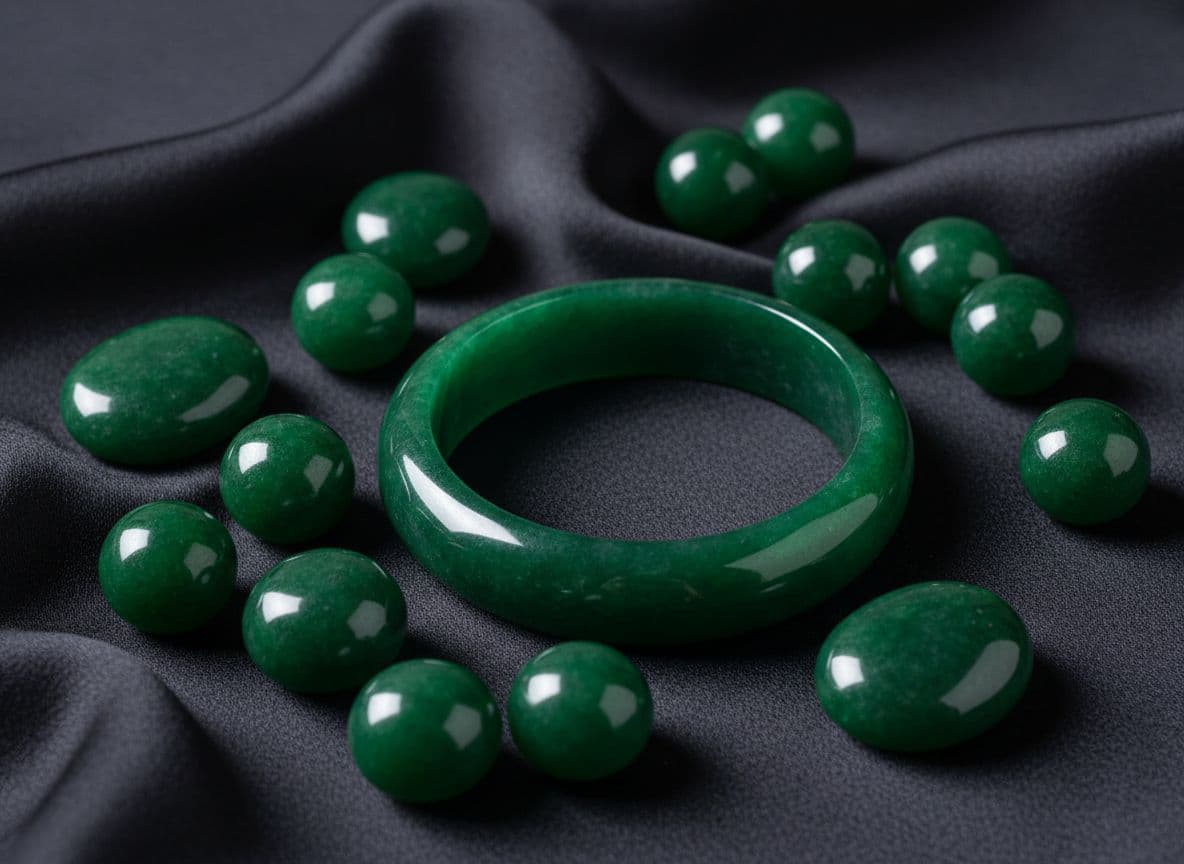
Jade is one of the most culturally significant gemstones in the world, particularly in Chinese, Mesoamerican, and Maori cultures. The value range is staggering. A nephrite pendant might be worth $20, while an imperial jadeite bangle could be worth $1 million+. The 2014 Sotheby's auction of a Hutton-Mdivani jadeite necklace set a record at $27.4 million. Many people own jade jewelry without knowing whether they have valuable jadeite or common nephrite. A quick identification can reveal whether your piece is a casual accessory or a serious asset.
Key Factors That Affect Jade Value
Understanding what drives the price of jade helps you get the most accurate valuation.
Jadeite vs Nephrite
Jadeite (the rarer mineral) is worth 10-1,000x more than nephrite. Imperial jadeite: $1,000-$100,000+/carat.commercial jadeite: $5-$500/carat. Nephrite: $2-$20/carat. Knowing which type you have is the single most important value factor.
Color
Imperial green (vivid, saturated emerald green) is the most valuable jadeite color. Lavender jadeite is the second most valuable. White/icy jadeite with high translucency commands strong prices. For nephrite, deep spinach green and rare white ('mutton fat') are most prized.
Translucency
Higher translucency dramatically increases jadeite value. Semi-transparent imperial green jadeite is the pinnacle. Opaque jade of any color is worth far less. Hold jade up to light. If light passes through, it's more valuable than if it's completely opaque.
Treatment Status
Type A jade (natural, untreated) is the most valuable. Type B (bleached and impregnated with polymer) is worth 50-90% less. Type C (dyed) is worth very little. Most jade on the market is treated, making verification essential for accurate valuation.
Form & Craftsmanship
Jade bangles command the highest per-gram prices due to material waste in production. Well-carved figurines and intricate pendants by known artists add craftsmanship premiums. Cabochons and beads are priced primarily on material quality. Antique carvings with provenance can be extraordinarily valuable.
Tips for Valuing Jade
Get the most accurate valuation by following these tips when photographing your jade.
Photograph the jade in natural light showing color and any translucency
Hold it up to a light source to show how much light passes through
Include any certificates, appraisals, or provenance documentation
Show the full piece and any carved details for accurate assessment
Jade Market Insights
The jade market is heavily influenced by Chinese buyer demand. Fine jadeite prices have increased significantly as Chinese wealth has grown. Hong Kong remains the primary auction center for high-end jadeite. The market is challenging for non-experts due to widespread treatment and imitation. Lab certification from reputable gemological labs (GIA, Gübelin) is essential for any serious jadeite transaction. Nephrite jade, while less valuable, has strong demand in New Zealand (pounamu) and Chinese markets.
Notable Jade Values
Real-world examples of what specific jade have sold for, so you can benchmark your own.
| Jade | Condition | Typical Value |
|---|---|---|
| Raw nephrite jade (Wyoming/B.C. greenstone) | Raw / Unpolished | $5 - $50 |
| Nephrite jade bangle bracelet (translucent green) | Polished, Unmarked | $30 - $300 |
| Jadeite jade cabochon (pale lavender, commercial grade) | Polished, Unset | $100 - $800 |
| Antique Chinese nephrite 'mutton fat' white jade pendant | Authenticated Antique | $500 - $5,000 |
| Jadeite jade bangle (A-grade, medium green, GIA certified) | GIA Certified | $2,000 - $20,000 |
| Imperial jadeite jade ring (vivid emerald green, Type A) | Lab Certified, Gem Quality | $10,000 - $150,000+ |
| Sotheby's/Christie's imperial jadeite necklace (multi-strand) | Auction House Certified | $500,000 - $10,000,000+ |
| Chinese carved jade figurine (20th century, nephrite) | Good, Signed Workshop | $200 - $3,000 |
| Burmese jadeite jade small carving or toggle (untreated) | Authenticated, Untreated | $300 - $8,000 |
Based on major auction house records (Sotheby's, Christie's), eBay sold listings, and GIA/GRS gem lab market references.
Find Out What Your Jade Are Worth
Upload a photo now and get a free AI-powered valuation in seconds. No sign-up required.
Jade Valuation FAQ
How can I tell if my jade is jadeite or nephrite?
Without lab testing, density is the best clue. Jadeite (3.3 g/cm³) is slightly heavier than nephrite (3.0 g/cm³). Jadeite can be more vitreous (glassy) in luster, while nephrite tends to be more waxy. For certain identification, a gemological lab test is needed. Our AI can provide an initial assessment.
How much is a jade bangle worth?
Nephrite bangles: $20-$500.commercial jadeite bangles: $100-$5,000. Fine jadeite bangles: $5,000-$500,000+. Imperial green jadeite bangles: $100,000-$10,000,000+. The value depends entirely on whether it's jadeite or nephrite, color, and translucency.
Is green jade always the most valuable?
Imperial green jadeite is the most valuable color, but lavender jadeite and icy white jadeite are also highly prized. For nephrite, white 'mutton fat' jade is extremely valuable in Chinese culture. Color alone doesn't determine value. Translucency and treatment status are equally important.
How do I know if my jade has been treated?
Treated jade (Type B/C) often has a waxy or plastic feel, may show surface pitting under magnification, and can appear 'too perfect' in color. Dyed jade (Type C) may show color concentrations in cracks. Only a gemological lab can definitively determine treatment status using infrared spectroscopy.
Where can I sell valuable jade?
For jadeite worth $1,000+, auction houses like Sotheby's, Christie's, and Bonhams Hong Kong are best. For mid-range pieces, specialized jade dealers and Asian jewelry markets offer fair prices. eBay and Etsy work for lower-value pieces. Always get a lab certificate before selling valuable jadeite.
Jade Price Guides
Jade Guides & Articles
Value anything, anytime
Unlimited valuations, saved history and full reports in the free app.