Last updated: September 2026
How Much Is My Opal Worth?
Opal values range dramatically. From $1/carat for common white opal to $10,000+/carat for fine black opal with vivid play of color. Our AI analyzes your opal's color play, pattern, body tone, and transparency to estimate its per-carat value. Upload a photo for an instant appraisal.
Get the free app for unlimited scans


Compare real prices
See what opals are listed for right now
Affiliate link: we earn a commission if you buy, at no extra cost to you.
What do you want to value?
Get the free app for unlimited scans
Why Knowing Your Opals Value Matters
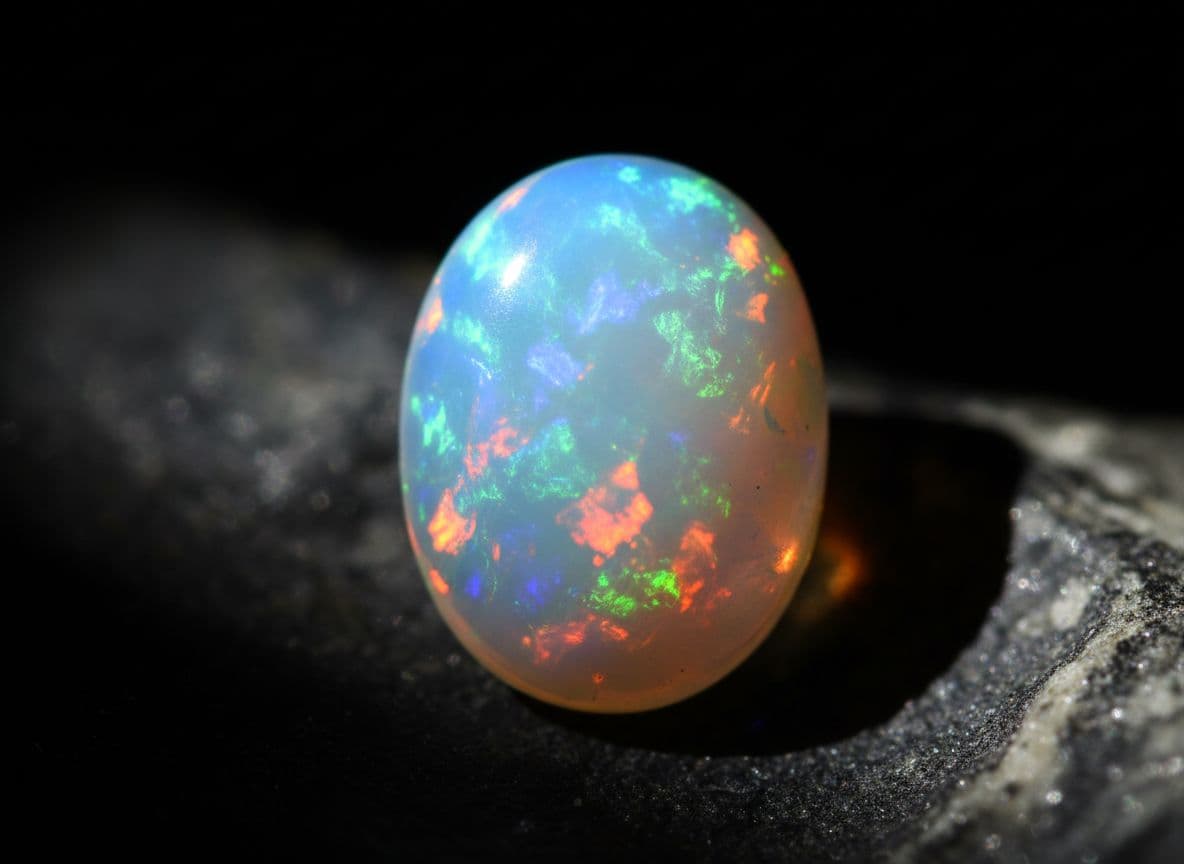
Opals are one of the most variable gemstones in terms of value. A 5-carat opal could be worth $5 or $50,000 depending on type, color play, and origin. Black opals from Lightning Ridge, Australia are the most valuable, while Ethiopian opals and common white opals are more affordable. Many people inherit or find opals without understanding the enormous value range. A quick AI analysis can tell you whether you have a common decorative stone or a serious gemstone investment.
Key Factors That Affect Opals Value
Understanding what drives the price of opals helps you get the most accurate valuation.
Type of Opal
Black opal (dark body tone): $50-$10,000+/carat. The most valuable. Boulder opal: $10-$3,000/carat. Crystal/transparent opal: $10-$2,000/carat. White/light opal: $1-$200/carat. Fire opal (Mexican): $5-$300/carat. Ethiopian opal: $5-$500/carat.
Play of Color
The flashing spectral colors are what make opals valuable. Red is the rarest and most valuable color. Broad flash and harlequin patterns command the highest premiums. Pinfire (tiny specks) is less valuable. The brightness, coverage, and color variety all matter enormously.
Body Tone & Transparency
Darker body tones make play of color more vivid and are more valuable. Black opals (N1-N4 body tone) are the most prized. Crystal opals (transparent) showcase color play beautifully. White opals (N7-N9) are the most common and least valuable.
Origin
Lightning Ridge (Australia) produces the finest black opals and commands the highest prices. Coober Pedy (Australia) is known for white and crystal opals. Ethiopian opals are beautiful but sell for less due to hydrophane properties. Mexican fire opals have their own market segment.
Carat Weight & Cut
Larger opals with uniform play of color are exponentially more valuable than smaller ones. Well-cut opals that maximize color play and minimize waste are preferred. Calibrated sizes for jewelry settings are easier to sell. Rough opal is worth less than cut and polished.
Tips for Valuing Opals
Get the most accurate valuation by following these tips when photographing your opals.
Photograph the opal in natural light to capture the play of color accurately
Show the opal from multiple angles. Play of color changes with viewing direction
Include a size reference (coin or ruler) if the opal is loose
Avoid flash photography. It can distort the appearance of color play
Opals Market Insights
The opal market is dominated by Australian production, particularly from Lightning Ridge. Fine black opals have appreciated steadily as production from Lightning Ridge declines. Ethiopian opals have added supply to the market but occupy a different price tier. The rise of lab-created opals has not significantly impacted natural opal values, as collectors and investors strongly prefer natural stones. The market is relatively niche compared to diamonds or sapphires, making expert knowledge valuable.
Notable Opals Values
Real-world examples of what specific opals have sold for, so you can benchmark your own.
| Opal | Condition | Typical Value |
|---|---|---|
| Australian Black Opal (Lightning Ridge, ~5ct) | Natural, Authenticated | $3,000 - $15,000+ |
| Australian Crystal Opal (~3ct, strong fire) | Natural, Unset | $500 - $3,000 |
| Australian White/Milk Opal (~5ct) | Natural, Unset | $50 - $400 |
| Ethiopian Welo Opal (~3ct, hydrophane) | Natural, Unset | $80 - $600 |
| Mexican Fire Opal (~4ct, faceted) | Natural, Unset | $100 - $800 |
| Boulder Opal slice (Queensland) | Natural, Polished | $200 - $2,500 |
| Opal Doublet or Triplet (assembled stone) | Assembled | $10 - $80 |
| Common Potch Opal (no play-of-color) | Raw/Rough | $1 - $20 |
| The Aurora Australis (famous Lightning Ridge black opal) | Museum-Grade, Authenticated | $500,000+ |
Based on auction records (Christie's, Sotheby's), eBay sold listings, and opal trade dealer price guides.
Find Out What Your Opals Are Worth
Upload a photo now and get a free AI-powered valuation in seconds. No sign-up required.
Opals Valuation FAQ
How much is an opal worth per carat?
It varies enormously by type: black opal $50-$10,000+/carat, boulder opal $10-$3,000/carat, crystal opal $10-$2,000/carat, white opal $1-$200/carat. A single stunning black opal can be worth more than a comparable diamond.
What makes an opal valuable?
The most important factor is play of color. The flashing spectral colors unique to opal. Vivid red play of color on a dark body tone is the most valuable combination. Brightness, pattern (harlequin is best), and coverage of color play determine the price.
Are Ethiopian opals worth anything?
Yes. Ethiopian opals range from $5-$500/carat. While less valuable than Australian black opals, fine Ethiopian welo opals with vivid color play can be very attractive and valuable. Their hydrophane property (absorbing water) makes them less stable, which limits top-end values.
How can I tell if my opal is real?
Natural opals have irregular, organic play of color patterns. Synthetic opals often show a 'snakeskin' or 'chicken wire' pattern when magnified. Doublets and triplets have visible layers when viewed from the side. Our AI can help assess authenticity from photos.
Is opal a good investment?
Fine black opals from Lightning Ridge have shown strong long-term appreciation as supply declines. However, opals are more fragile than diamonds and require careful storage. They are best viewed as wearable art with investment upside rather than a pure financial investment.
Opals Price Guides
Value anything, anytime
Unlimited valuations, saved history and full reports in the free app.