Last updated: September 2026
How Much Are Pocket Watches Worth?
Check current market values, learn what affects pricing, and get tips for buying and selling.
← All Pocket Watches valuationsWhat do you want to value?
Get the free app for unlimited scans


Vintage Pocket Watches Price Guide
Current market values based on recent sales data and market trends.
| Item | Condition | Price Range |
|---|---|---|
| Patek Philippe Open Face (18K Gold, 1920s) | Excellent | $5,000 - $15,000 |
| Hamilton 992B (Railroad Grade, 16s) | Excellent | $400 - $700 |
| Waltham Vanguard (Railroad Grade, 16s) | Excellent | $300 - $600 |
| Elgin B.W. Raymond (Railroad Grade) | Excellent | $250 - $500 |
| Illinois Bunn Special (60-Hour) | Excellent | $800 - $1,500 |
| Hamilton 950B (23 Jewel, Railroad) | Excellent | $600 - $1,000 |
| Common Waltham/Elgin (7-15 Jewel) | Good, Running | $50 - $150 |
| 14K Gold Case Watch (Any Maker) | Good | $300 - $800 |
| 18K Gold Case Watch (Any Maker) | Good | $800 - $2,000+ |
| Gold-Filled Case Watch (Common) | Good, Running | $75 - $200 |
What Determines Vintage Pocket Watches Value
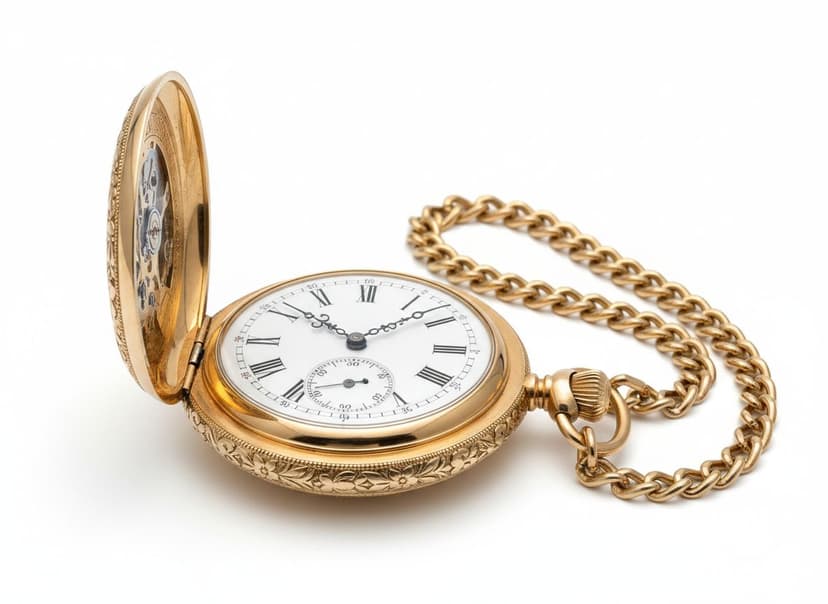
Pocket watches were the pinnacle of personal timekeeping from the 16th century through the early 20th century, and today represent a fascinating collectible market combining mechanical artistry, American history, and precious metals. The American pocket watch industry. Led by Waltham, Elgin, Hamilton, and Illinois. Produced millions of watches from the 1850s to the 1960s, ranging from basic timekeepers to exquisitely finished railroad-grade chronometers. Most common American pocket watches sell for $50-$300, but high-grade railroad watches, gold cases, and complicated Swiss watches from Patek Philippe or Vacheron Constantin can command thousands to hundreds of thousands. The pocket watch market rewards knowledge. Understanding movements, grades, and case materials is essential for accurate valuation.
Pocket watch values depend on the movement grade (railroad-grade watches with 21+ jewels, adjusted to temperature and positions, are most valuable), case material (18K gold > 14K gold > gold-filled > silveroid/nickel), maker and brand (Patek Philippe, Hamilton, and high-grade Waltham command premiums), complication (repeaters, chronographs, and calendar functions add significant value), condition (a running watch with an undamaged dial is worth 2-3x one needing repair), size (16-size railroad watches are most collected, 18-size is also popular), and historical provenance (railroad-issued watches with documentation, presentation watches, and watches with identified original owners carry premiums).
Buying & Selling Tips
Buying
Open the case back and identify the movement. The value is in the movement grade, not the case. Look for the maker name, grade, and jewel count engraved on the movement.
Use the Pocket Watch Database (pocketwatchdatabase.com) to look up serial numbers for Waltham, Elgin, Hamilton, and other American makers. It provides the exact grade, production year, and original specifications.
Check that the watch runs and keeps reasonable time. A watch needing service can cost $150-$400 to repair, which may exceed the watch's value.
Gold-filled cases have value but are NOT solid gold. Look for markings like '14K Gold Filled,' '20 Years,' or '25 Years' indicating the gold-fill warranty period.
Railroad-grade watches must meet specific criteria: 21+ jewels, adjusted to at least 5 positions, and specifically approved for railroad service.
Selling
Research the movement serial number before pricing. The same case can contain a $50 movement or a $500 movement.
Photograph the dial, movement (open case back), case exterior, and any hallmarks or engravings.
Sell gold-case watches to buyers who understand both numismatic and melt value. A 14K case has $200-$500 in gold content alone.
eBay is the primary market for pocket watches. Specialty forums like NAWCC (National Association of Watch and Clock Collectors) attract knowledgeable buyers for premium pieces.
For common watches ($50-$200), sell locally or in lots to save on shipping and fees.
Vintage Pocket Watches FAQ
How do I identify my pocket watch?
Open the case back (most screw off or have a lip to pry open) and look at the movement. The maker's name, grade, and serial number are engraved on the movement plate. Enter the serial number at pocketwatchdatabase.com to identify the exact model, year of manufacture, jewel count, and production quantity. The case may be made by a different manufacturer than the movement. This is normal, as movements and cases were often sold separately.
Is my pocket watch gold?
Look for hallmarks inside the case back. '14K' or '18K' indicates solid gold. 'Gold Filled,' '10K GF,' '14K GF,' or 'Warranted 20/25 Years' indicates gold-filled (a thick gold layer over base metal. Still valuable but worth much less than solid gold). 'Gold Plated' or 'RGP' (Rolled Gold Plate) has minimal gold value. If no gold markings are present, the case is likely nickel, silveroid, or base metal.
What is a railroad-grade pocket watch?
Railroad-grade watches met strict standards set by American railroads after the 1891 Kipton train disaster (caused by an inaccurate watch). Requirements include: 21+ jewels, adjusted to temperature and at least 5 positions, open face case, lever set mechanism (to prevent accidental time changes), plain white dial with bold Arabic numerals, and approval by the specific railroad's time inspection department. Popular railroad grades include Hamilton 992B, Waltham Vanguard, Elgin B.W. Raymond, and Illinois Bunn Special.
Should I have my pocket watch restored?
For a watch you want to use: yes, professional servicing ($150-$400) cleans and lubricates the movement and ensures accuracy. For valuable collector pieces: be cautious. Replacing the dial, hands, or crystal can reduce value. Original parts, even if worn, are preferred by collectors. Never polish gold cases aggressively, and never have a dial repainted without consulting a specialist. Conservation (cleaning and protecting) is preferred over restoration (replacing parts).
Got Vintage Pocket Watches to Value?
Upload a photo and get a free AI-powered valuation in seconds. No sign-up required.