Last updated: September 2026
How Much Is My Breitling Worth?
Breitling has been synonymous with aviation and professional instrument watches since 1884. The Navitimer, introduced in 1952 with its iconic slide rule bezel, is one of the most recognizable chronographs ever made. Breitling watches offer robust Swiss movements, distinctive design, and strong brand recognition. On the secondary market, Breitling watches trade at 35-65% of retail, making them excellent value for buyers while sellers can maximize returns by understanding their specific model's market position.
Get the free app for unlimited scans


Compare real prices
See what breitling watch are listed for right now
Affiliate link: we earn a commission if you buy, at no extra cost to you.
Breitling Watch Value Calculator
Fill in the details below for an accurate estimate
Get the free app for unlimited scans
Why Knowing Your Breitling Watch Value Matters
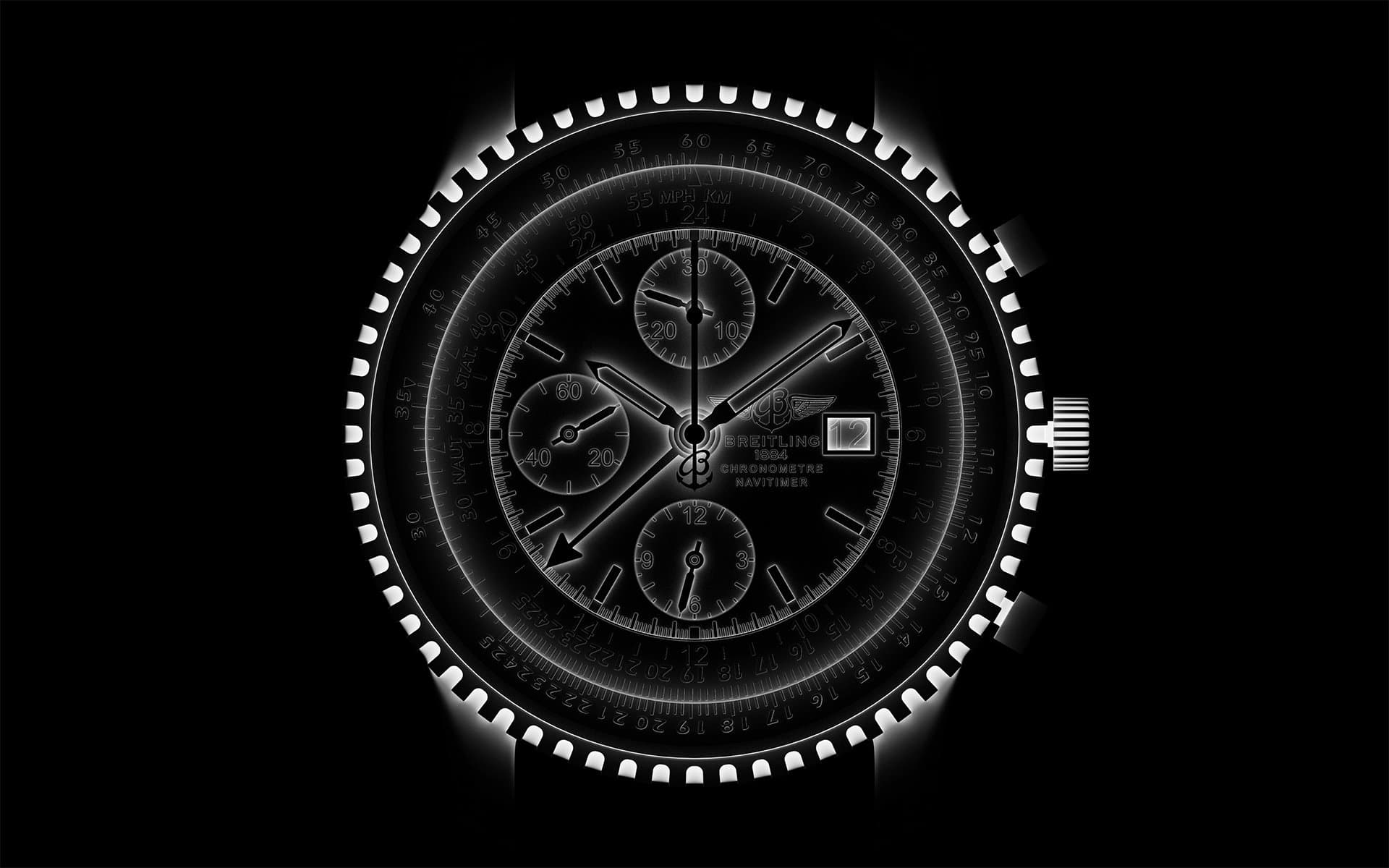
Breitling occupies an important space in the luxury watch market — a brand with genuine heritage and professional-grade timepieces that appeals to both aviation enthusiasts and casual luxury buyers. Under CEO Georges Kern (since 2017), Breitling has undergone a significant brand transformation with refined designs, heritage-focused collections, and improved market positioning. Understanding your Breitling's current market value is essential because the brand's resale landscape varies dramatically by collection and era. Pre-Kern Breitling watches (before 2017) generally trade at steeper discounts from retail, while newer models benefit from the brand's refreshed image and improved retail strategy. The Navitimer remains the crown jewel of the lineup — vintage Navitimers from the 1960s-1970s with Venus 178 or Valjoux 72 movements are actively collected, while modern Navitimer B01 references command the strongest resale values among current production. The Superocean has gained significant traction as a versatile dive watch, and the Chronomat has been repositioned as an everyday luxury sports watch. Box and papers are particularly important for Breitling resale — a complete set adds 10-20% to the watch's value, and Breitling's COSC chronometer certification cards verify the watch's precision credentials.
Key Factors That Affect Breitling Watch Value
Understanding what drives the price of breitling watch helps you get the most accurate valuation.
Collection & Model
Breitling's collections have distinct resale profiles: Navitimer B01 Chronograph 43 (steel): $5,000-$7,000 resale (retail $9,100). Navitimer B01 41: $5,500-$7,500 resale. Superocean Automatic 42: $2,500-$3,500 resale (retail $4,500). Superocean Heritage: $3,000-$4,500 resale. Chronomat B01 42: $4,500-$6,000 resale (retail $8,100). Avenger Chronograph 43: $3,500-$5,000 resale. Premier B01 Chronograph: $3,500-$5,000 resale. Vintage Navitimers (ref. 806, 809) from the 1960s can command $5,000-$30,000+ depending on condition and originality.
Case Material & Size
Steel is by far the most common and liquid material for Breitling on the secondary market. 18k red gold models are limited in production and retain well in absolute terms. Two-tone (steel and gold) is less popular on the secondary market. Case size significantly affects desirability — the market has shifted toward smaller sizes (38-42mm) and away from Breitling's historically larger cases (44-48mm). The Navitimer 41 outsells the 46mm version on the pre-owned market due to current size preferences.
Movement (In-House vs. ETA)
Breitling's in-house B01 chronograph movement (found in modern Navitimer, Chronomat, Premier) commands higher resale values than older ETA/Valjoux-based models. The B01 is COSC-certified, has a 70-hour power reserve, and is considered one of the best integrated chronograph movements available. Models with the B01 typically retain 10-15% more value than equivalent ETA-based predecessors. Breitling's B20 (based on Tudor MT5612) automatic movement is also well-regarded.
Condition & Dial
Breitling watches are built as professional instruments and generally hold up well with regular wear. However, the Navitimer's intricate dial is highly scrutinized — any fading, damage, or moisture intrusion significantly reduces value. Bezel condition matters particularly for the Navitimer (slide rule function) and Superocean (dive bezel). Polished cases can lose 5-10% of value compared to unpolished examples with original finishing. Crystal condition (sapphire on modern models) is typically not an issue.
Box, Papers & Completeness
A complete Breitling set includes the outer box, inner box, warranty card, COSC chronometer certificate, instruction manual, and often a NATO or rubber strap in addition to the bracelet. Complete sets add 10-20% to resale value. The COSC certificate is a unique Breitling feature that verifies the movement passed Swiss official chronometer testing. Breitling warranty cards with authorized dealer stamps are essential for authentication and add buyer confidence.
Tips for Valuing Breitling Watch
Get the most accurate estimate by following these tips when evaluating your breitling watch.
Locate your reference number on the caseback (e.g., AB0127 for Navitimer B01) for accurate market comparison
Identify whether your Breitling has an in-house B01/B20 movement or an ETA-based movement — this significantly affects value
Photograph the dial in good lighting to show the condition of subdials and indices, especially on Navitimer models
Include any extra straps, tools, or accessories that came with the watch — Breitling often includes multiple strap options
Breitling Watch Market Insights
Breitling's secondary market is active on Chrono24 (10,000+ listings), eBay, and through authorized pre-owned dealers like Watchbox and Crown & Caliber. The brand's transformation under Georges Kern has improved resale values for recent production, with the Navitimer B01 showing the strongest retention. WatchCharts data indicates Breitling resale values have stabilized and improved since 2023 after years of discounts. The vintage Breitling market (1960s-1980s Navitimers, Cosmonautes, and Top Times) is robust among collectors, with rare references appearing regularly at auction houses like Phillips and Bonhams. The brand's sustainability initiatives and renewed focus on heritage have attracted a younger collector demographic.
Notable Breitling Watch Values
Real-world examples of what specific breitling watch have sold for, so you can benchmark your own.
| Breitling Watch | Condition | Typical Value |
|---|---|---|
| Breitling Navitimer Ref. 806 (vintage 1950s-60s) | Used / Unpolished | $3,000 - $12,000+ |
| Breitling Navitimer B01 Chronograph 43 (modern, ref. AB0121) | Pre-Owned | $3,500 - $5,500 |
| Breitling Chronomat B01 42 (ref. AB0134) | Pre-Owned | $4,000 - $6,500 |
| Breitling Superocean Heritage II 46 | Pre-Owned | $2,500 - $4,500 |
| Breitling Enduro Pro Ironman (ref. M78365) | Used | $1,200 - $2,800 |
| Breitling Emergency II (ref. E76325) | Pre-Owned | $8,000 - $14,000 |
| Breitling Cosmonaute Ref. 809 (vintage, Scott Carpenter edition) | Authenticated / Used | $5,000 - $18,000+ |
| Breitling Colt Automatic 44 (ref. A17388) | Pre-Owned | $1,200 - $2,200 |
| Breitling Bentley GMT (ref. A47362, 49mm) | Pre-Owned | $3,500 - $7,000 |
Based on Chrono24 sold listings, eBay completed sales, and watch auction records from major houses (Christie's, Phillips, Sotheby's).
Find Out What Your Breitling Watch Are Worth
Upload a photo now and get a free AI-powered valuation in seconds. No sign-up required.
Breitling Watch Valuation FAQ
How much is my Breitling Navitimer worth?
Navitimer values vary by reference and era: Modern Navitimer B01 43mm (steel): $5,000-$7,000. Navitimer B01 41mm: $5,500-$7,500 (41mm is more sought-after). Older Navitimer with ETA movement: $2,500-$4,500. Vintage Navitimer 806 (1960s, good condition): $5,000-$15,000+. Navitimer in 18k red gold: $8,000-$12,000. Blue and green dials on modern references typically command slight premiums. The Navitimer is Breitling's most iconic and best-retaining model on the secondary market.
Where is the best place to sell a Breitling watch?
Top options for selling Breitling: (1) Chrono24 — largest watch marketplace, you control the price, 6-8% seller fees. Best for Navitimer and Chronomat. (2) Crown & Caliber or Watchbox — fast quotes and payment, typically 15-25% below market price. (3) eBay — large audience but higher fees (12-15%) and authentication concerns. (4) Watch forums (Watchuseek, Reddit r/Watchexchange) — no fees, knowledgeable buyers, good for fair-condition pieces. (5) Local watch dealers — convenient but expect 40-50% of retail. For vintage Breitling (pre-1980), specialist vintage dealers or Phillips auctions can achieve the best prices.
Does condition affect Breitling resale value significantly?
Yes. A Breitling in excellent condition can command 15-25% more than the same reference showing heavy wear. Key condition factors for Breitling: Navitimer slide rule bezel (any damage or misalignment is costly to repair), dial condition (the complex chronograph dials are the visual centerpiece), bracelet stretch (common on older Breitling bracelets), and case polishing (over-polished cases lose sharp edges and original finishing). Breitling's professional-grade construction means most watches hold up well, but a service by Breitling ($400-$800 for chronographs) with documentation adds buyer confidence.
Which Breitling watches hold their value best?
Best value retention among Breitling: (1) Navitimer B01 — iconic design with in-house movement, retains 55-70% of retail. (2) Chronomat B01 — versatile sports watch, retains 50-65%. (3) Superocean Heritage — classic dive watch aesthetic, retains 50-60%. (4) Premier B01 — elegant chronograph, retains 45-55%. (5) Vintage references (806 Navitimer, Top Time) — appreciating collectibles. Breitling's value retention has improved significantly since the brand's repositioning. The key factors for retention are in-house movement (B01), moderate case size (38-43mm), and desirable dial color.
Breitling Watch Price Guides
Value anything, anytime
Unlimited valuations, saved history and full reports in the free app.