Last updated: September 2026
How Much Is My Wheat Penny Worth?
Lincoln wheat pennies were minted from 1909 to 1958 and remain one of the most collected US coins. While many are worth just a few cents, key dates like the 1909-S VDB, 1914-D, and 1931-S can be worth hundreds or thousands. Upload a photo and our AI will identify the year, mint mark, and condition to give you an accurate value.
Get the free app for unlimited scans


Compare real prices
See what wheat pennies are listed for right now
Affiliate link: we earn a commission if you buy, at no extra cost to you.
What do you want to value?
Get the free app for unlimited scans
Why Knowing Your Wheat Pennies Value Matters
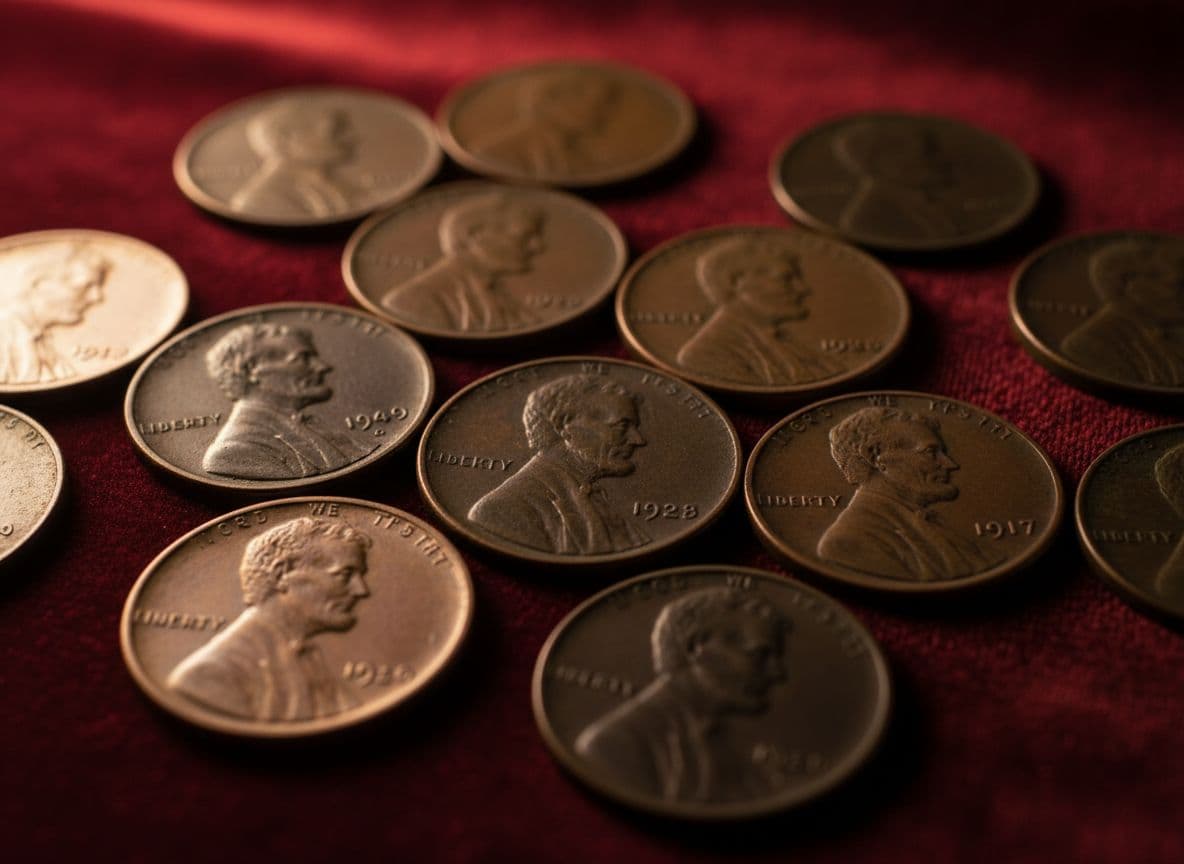
Wheat pennies are the most commonly found old US coin. They turn up in pocket change, coin jars, and inherited collections. Most are worth 3 to 15 cents, but certain dates and mint marks are genuinely rare. A 1909-S VDB in good condition sells for $700+, and a 1914-D can fetch $200-$5,000 depending on grade. Many people discard wheat pennies assuming they are all worthless, when a single key-date coin could pay for a nice dinner or even a vacation. Checking your wheat pennies before spending or selling them takes seconds and could save you from giving away real money.
Key Factors That Affect Wheat Pennies Value
Understanding what drives the price of wheat pennies helps you get the most accurate valuation.
Year & Mint Mark
Key dates include 1909-S VDB ($700-$2,000+), 1914-D ($200-$5,000), 1922 no-D ($500-$20,000), and 1931-S ($75-$200). Semi-key dates like 1909-S, 1911-S, 1912-S, 1913-S, and 1915-S range from $20-$150.common dates (most 1940s-1950s) are worth 3-15 cents.
Condition & Grade
A common-date wheat penny in Good condition is worth about 5 cents, but the same coin in Mint State (MS-65) could be worth $10-$30. For key dates the spread is enormous. A 1914-D in Good is $200, but in MS-65 it exceeds $5,000.
Errors & Varieties
The 1955 doubled die obverse ($1,000-$2,000) is the most famous wheat penny error. Other valuable errors include the 1922 no-D (missing mint mark), 1943 bronze (copper instead of steel, $100,000+), and various repunched mint marks.
Metal Composition
Most wheat pennies are 95% copper, giving them a melt value of about 2-3 cents. The 1943 steel penny (zinc-coated steel) is unique and worth 10-50 cents normally. The ultra-rare 1943 copper penny is worth $100,000+ because it was struck on the wrong planchet.
Color & Surface
Uncirculated wheat pennies are classified as Red (RD), Red-Brown (RB), or Brown (BN). Full Red coins command 2-5x premiums over Brown examples of the same grade. Original surfaces without cleaning are essential for collector value.
Tips for Valuing Wheat Pennies
Get the most accurate valuation by following these tips when photographing your wheat pennies.
Photograph both sides clearly with the date and mint mark visible
Check below the date on the obverse for a small D or S mint mark
Never clean your wheat pennies. Even light cleaning destroys collector value
Look closely at 1955 pennies for doubled lettering, which indicates the valuable doubled die variety
Wheat Pennies Market Insights
Wheat pennies are the entry point for most coin collectors and maintain strong, stable demand.common dates in circulated grades sell easily on eBay for $1-$5 in small lots. Key dates have appreciated steadily over decades and show no signs of slowing. The hobby benefits from new collectors constantly discovering wheat pennies in circulation or inherited collections. Roll searching. Buying rolls of pennies from banks to hunt for wheat cents. Remains a popular and accessible hobby that drives ongoing interest.
Notable Wheat Pennies Values
Real-world examples of what specific wheat pennies have sold for, so you can benchmark your own.
| Wheat Pennie | Condition | Typical Value |
|---|---|---|
| 1909-S VDB Lincoln Wheat Cent | Fine (F-12) | $700 - $1,500 |
| 1909-S VDB Lincoln Wheat Cent | Graded MS-65 (PCGS/NGC) | $8,000 - $20,000+ |
| 1914-D Lincoln Wheat Cent | Very Good (VG-8) | $200 - $350 |
| 1922 Plain (No D) Lincoln Wheat Cent | Fine (F-12) | $500 - $900 |
| 1931-S Lincoln Wheat Cent | Extra Fine (EF-40) | $80 - $150 |
| 1955 Doubled Die Obverse Lincoln Cent | Fine to Very Fine | $1,200 - $2,500 |
| 1909 VDB Lincoln Wheat Cent (Philadelphia) | Circulated (G to VF) | $10 - $25 |
| Common Date Wheat Penny (1940s-1958) | Circulated | $0.05 - $0.50 |
| 1943 Steel Wheat Cent | Circulated | $0.25 - $3 |
Based on PCGS Price Guide, NGC coin values, and recent eBay sold listings for graded and raw examples.
Find Out What Your Wheat Pennies Are Worth
Upload a photo now and get a free AI-powered valuation in seconds. No sign-up required.
Wheat Pennies Valuation FAQ
Are all wheat pennies valuable?
Most wheat pennies are worth 3 to 15 cents in circulated condition. However, key dates (1909-S VDB, 1914-D, 1922 no-D, 1931-S) and error coins can be worth hundreds to thousands. It's always worth checking the date and mint mark.
What year wheat penny is worth the most?
The 1909-S VDB is the most valuable regular-issue wheat penny, worth $700-$2,000+ in Good condition. The 1943 copper penny (a mint error) is the most valuable overall at $100,000+. Among affordable key dates, the 1931-S ($75-$200) is the most attainable.
Where is the mint mark on a wheat penny?
The mint mark is located on the obverse (front) of the coin, directly below the date. D = Denver, S = San Francisco. No mint mark means it was minted in Philadelphia. The mint mark is small, so use a magnifying glass if needed.
Should I clean my wheat pennies?
Never clean your wheat pennies. Cleaning removes the natural patina and leaves microscopic scratches that coin graders can detect. A cleaned coin can lose 50-90% of its collector premium. Leave them exactly as you found them.
How can I tell if my 1943 penny is copper or steel?
Use a magnet. Steel pennies (normal 1943) are magnetic and stick to magnets. Copper pennies (extremely rare error, worth $100,000+) are NOT magnetic. If your 1943 penny doesn't stick to a magnet, have it authenticated immediately by a professional grading service.
Value anything, anytime
Unlimited valuations, saved history and full reports in the free app.