Last updated: September 2026
How Much Are War Nickels Worth?
War nickels (1942-1945) are unique in US coinage history. They're the only regular-issue US nickels that contain silver. During World War II, nickel was a critical war material needed for armor plating, so the US Mint replaced it with a 35% silver alloy. These coins are identified by a large mint mark (P, D, or S) above the dome of Monticello on the reverse. Every war nickel contains 0.0563 troy ounces of silver, making them worth $1.50-$2.00+ just for their metal content.
Get the free app for unlimited scans


Compare real prices
See what war nickels are listed for right now
Affiliate link: we earn a commission if you buy, at no extra cost to you.
What do you want to value?
Get the free app for unlimited scans
Why Knowing Your War Nickels Value Matters
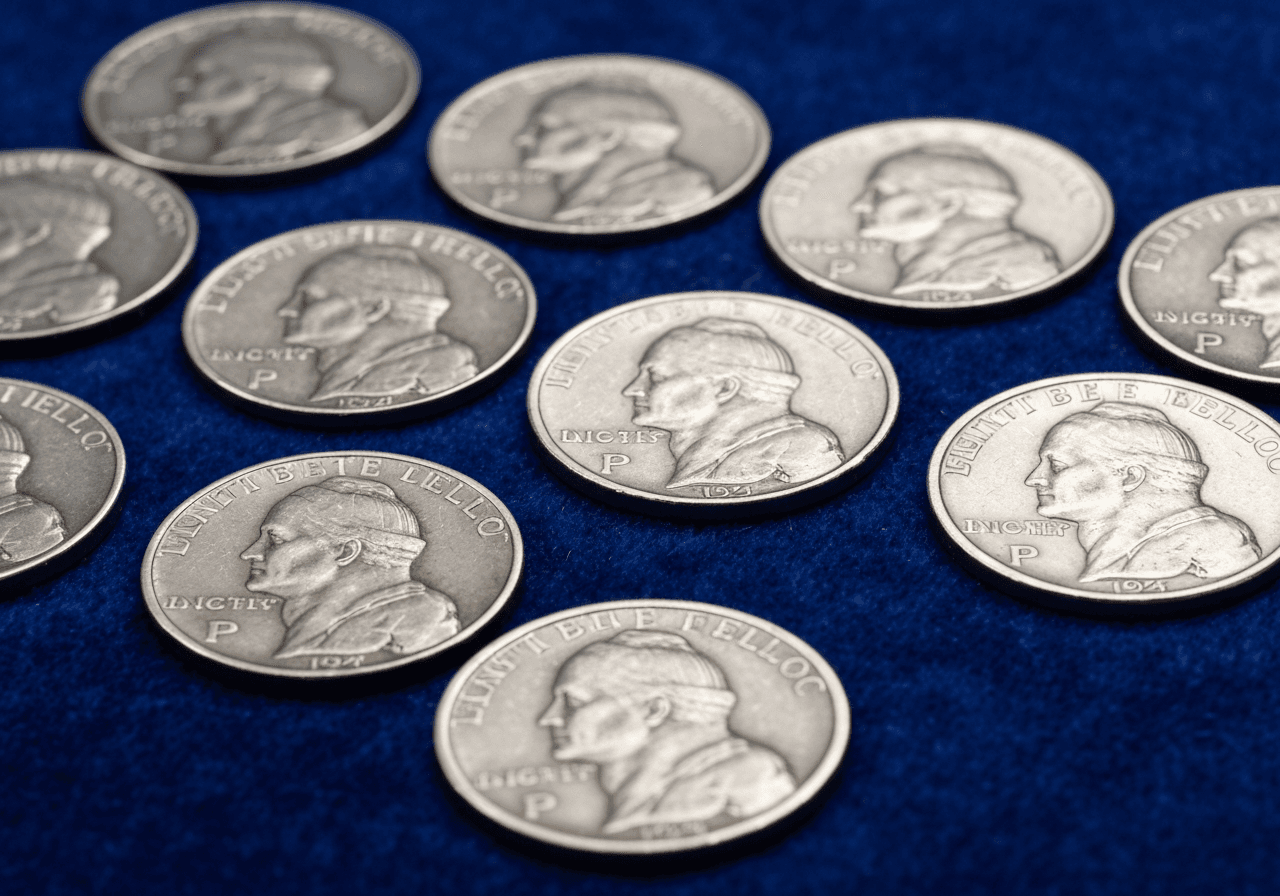
War nickels are one of the most accessible and underappreciated silver coins. They still turn up in circulation and in rolls from banks. Many people don't realize these nickels contain silver. They look similar to regular nickels but are worth 20-30x face value for silver content alone. Because they were heavily circulated, finding war nickels in high grade is challenging, making uncirculated examples surprisingly valuable. The 1943/2 overdate variety (a 3 punched over a 2) is worth $50-$500+, and full-step specimens of any date command strong premiums.
Key Factors That Affect War Nickels Value
Understanding what drives the price of war nickels helps you get the most accurate valuation.
Silver Content
All war nickels contain 35% silver (0.0563 troy ounces per coin). At current silver prices, each war nickel has a base melt value of approximately $1.50-$2.00. This silver content provides a price floor that rises with the silver market, making war nickels a popular way to accumulate silver affordably.
Date & Mint Mark
War nickels were struck from mid-1942 through 1945 at Philadelphia (P), Denver (D), and San Francisco (S). The 1942-P and 1942-S (silver type) are slightly scarcer first-year issues. The 1943-P 3/2 overdate is the key variety worth $50-$500+. Most common dates are worth $1.50-$3 in circulated grades.
Full Steps (FS) Designation
The Monticello (Jefferson's home) on the reverse has steps leading to the entrance. Coins with 5 or 6 fully-struck, complete steps receive the Full Steps (FS) designation from grading services. FS war nickels are scarce and command 3-10x premiums over non-FS examples. Some dates are extremely difficult in FS, particularly 1944-P and 1945-P.
Condition & Grade
Circulated war nickels: $1.50-$3 for common dates. Extremely Fine: $3-$5. Uncirculated (MS-63): $10-$25. Gem (MS-65): $25-$75 for common dates, $100+ for scarcer dates. MS-65 Full Steps: $50-$500+ depending on date and rarity in FS.
How to Identify War Nickels
The key identifier is the large mint mark (P, D, or S) above the dome of Monticello on the reverse. Regular nickels have a small mint mark to the right of Monticello (or none at all). The oversized mint mark was intentionally used so the silver coins could be easily identified and pulled from circulation after the war. War nickels may also appear more gray or tarnished than regular nickels.
Tips for Valuing War Nickels
Get the most accurate valuation by following these tips when photographing your war nickels.
Look for the large P, D, or S mint mark above the dome of Monticello. This identifies silver war nickels
War nickels often appear more gray or tarnished than regular nickels. This is normal for the alloy
Check the steps on Monticello's entrance for the Full Steps designation
For the 1943-P, look closely at the date. The 3/2 overdate variety is worth $50-$500+
War Nickels Market Insights
War nickels occupy a unique niche as affordable silver coins with historical significance. They're popular with both coin collectors and silver stackers. The premiums over silver melt value are typically modest for circulated examples, making them an efficient way to accumulate physical silver. Coin roll hunters regularly find war nickels mixed in with modern nickels, as many were never pulled from circulation. The hobby of searching bank rolls for war nickels has grown thanks to YouTube, driving incremental demand. Full Steps examples continue to appreciate as collectors increasingly pursue registry set completion.
Find Out What Your War Nickels Are Worth
Upload a photo now and get a free AI-powered valuation in seconds. No sign-up required.
War Nickels Valuation FAQ
How do I identify a silver war nickel?
Look at the reverse (back) of the coin above the dome of Monticello. War nickels have a large, prominent P, D, or S mint mark above the dome. Regular nickels have a small mint mark to the right of the building (or none). The large mint mark was intentionally placed there so silver coins could be easily identified. War nickels date from mid-1942 to 1945.
Are all 1942 nickels silver?
No. In 1942, both regular copper-nickel and silver alloy nickels were produced. Silver 1942 nickels have the large P or S mint mark above Monticello's dome on the reverse. Regular 1942 nickels (no mint mark or small D) are copper-nickel and worth face value. Check the reverse carefully.
Can I still find war nickels in circulation?
Yes! War nickels are still found in bank rolls and pocket change, though they're becoming scarcer. Coin roll hunting (searching through rolls from banks) is a popular method. Look for nickels that appear slightly gray or tarnished compared to regular nickels, then check for the large mint mark above Monticello.
How much silver is in a war nickel?
Each war nickel contains 0.0563 troy ounces of silver (the alloy is 56% copper, 35% silver, 9% manganese). At current silver prices, this gives a melt value of approximately $1.50-$2.00 per coin. A roll of 40 war nickels contains 2.25 troy ounces of silver.
Should I save or sell my war nickels?
War nickels are excellent coins to save. They provide affordable silver exposure, have historical significance, and their silver content provides a price floor that rises with the precious metals market. Unless you need the money immediately, holding war nickels is a solid long-term strategy. At $1.50-$2.00 each, you're getting silver at a modest premium.
War Nickels Guides & Articles
Value anything, anytime
Unlimited valuations, saved history and full reports in the free app.