Last updated: September 2026
How Much Is My Standing Liberty Quarter Worth?
Standing Liberty quarters were minted from 1916 to 1930 and feature one of the most beautiful designs in US coinage. Values range from $5 for common worn dates to $10,000+ for the rare 1916 key date. Upload a photo for an instant AI valuation.
Get the free app for unlimited scans


Compare real prices
See what standing liberty quarters are listed for right now
Affiliate link: we earn a commission if you buy, at no extra cost to you.
What do you want to value?
Get the free app for unlimited scans
Why Knowing Your Standing Liberty Quarters Value Matters
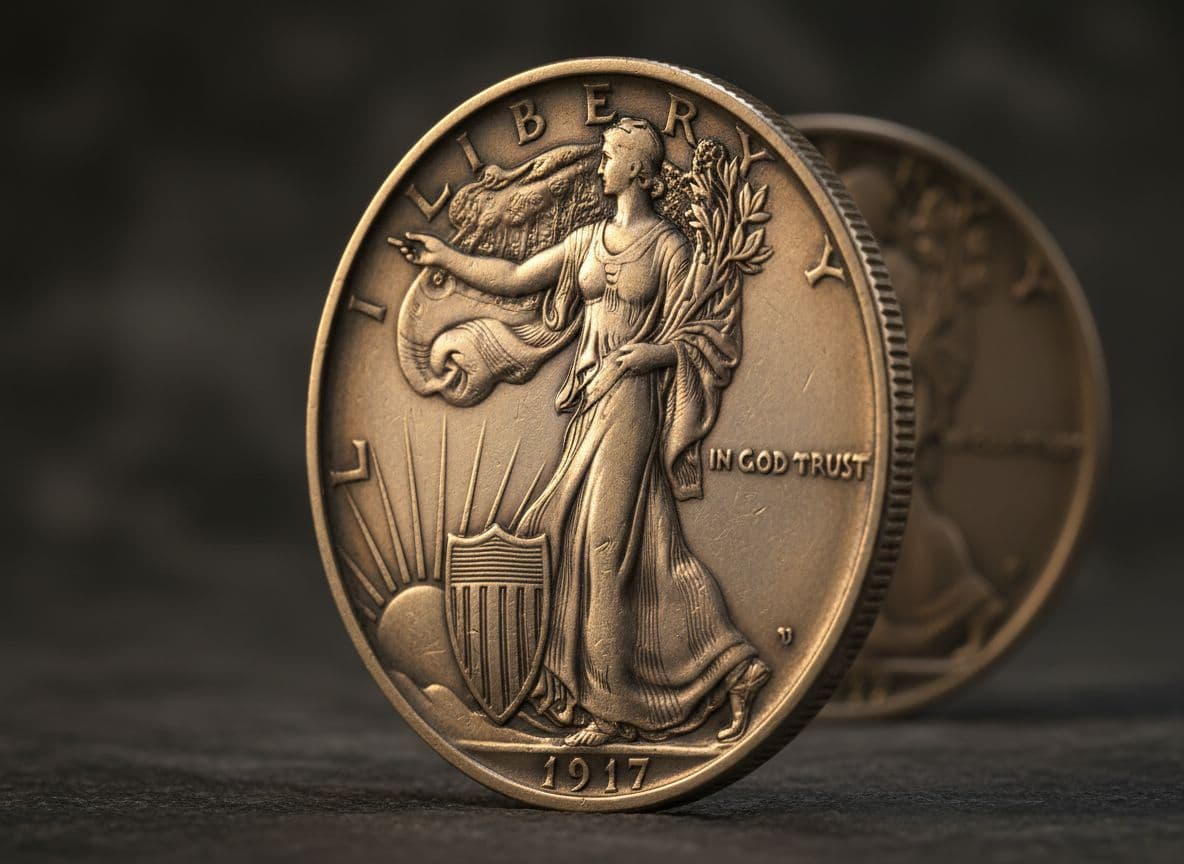
Standing Liberty quarters are prized for their stunning Art Deco design but are notorious for weak dates. The date wore off quickly in circulation. A dateless Standing Liberty quarter is worth $3-$5 for silver, but a readable 1916 is worth $3,000+. Even common dates with clear dates bring $10-$30 in circulated grades. Checking the date is the single most important value determination.
Key Factors That Affect Standing Liberty Quarters Value
Understanding what drives the price of standing liberty quarters helps you get the most accurate valuation.
Date Visibility
Dateless (worn flat): $3-$5 (silver value only). Partial date visible: $5-$15. Full date readable: $10-$100+ depending on year. The date location (on a raised area) caused rapid wear, making readable dates significantly more valuable.
Key Dates
1916 (first year, only 52,000 minted): $3,000-$10,000+. 1918/7-S overdate: $1,500-$5,000+. 1921: $75-$300. 1923-S: $50-$200. 1927-S: $20-$100. All other dates with readable dates: $10-$50 in circulated grades.
Type 1 vs Type 2
Type 1 (1916-1917): Liberty's right breast is exposed. Type 2 (1917-1930): chain mail covers Liberty's breast. Both types were produced in 1917. Type 1 coins from 1917 are worth slight premiums in higher grades.
Full Head (FH) Designation
Coins with fully struck hair detail on Liberty's head receive the Full Head (FH) designation from grading services. FH coins command 2-5x premiums over non-FH examples. This designation makes a dramatic value difference in uncirculated grades.
Silver Content
All Standing Liberty quarters contain 0.1808 troy ounces of 90% silver, providing a minimum value of $5-$7 based on current silver prices. Even dateless examples are worth more than face value for their silver content.
Tips for Valuing Standing Liberty Quarters
Get the most accurate valuation by following these tips when photographing your standing liberty quarters.
Photograph the obverse (front) in good light. Date visibility is critical for value
Angle the light to try to reveal faint date digits on worn coins
Check for the mint mark on the obverse, to the left of the date
Look carefully at Liberty's head for full hair detail (Full Head designation)
Standing Liberty Quarters Market Insights
Standing Liberty quarters have a devoted collector base drawn to the beautiful design. The series is challenging to complete in high grade because the coins circulated heavily and the date wore quickly. Full Head examples are particularly scarce and in strong demand. The 1916 key date is one of the most iconic US coin rarities.
Find Out What Your Standing Liberty Quarters Are Worth
Upload a photo now and get a free AI-powered valuation in seconds. No sign-up required.
Standing Liberty Quarters Valuation FAQ
How can I read the date on a worn Standing Liberty quarter?
Try angling a bright light across the coin's surface. Faint date digits may become visible. A magnifying glass helps. If the date is completely flat, the coin is worth only its silver value ($5-$7). Acid date restoration is possible but reduces collector value.
What is the most valuable Standing Liberty quarter?
The 1916 is the key date with only 52,000 minted. Worth $3,000+ in Good condition and $10,000+ in Fine. The 1918/7-S overdate is the second most valuable at $1,500+ in Good. The 1921 ($75-$300) is the most attainable semi-key date.
Are all Standing Liberty quarters silver?
Yes. All Standing Liberty quarters (1916-1930) are 90% silver, containing 0.1808 troy ounces. This gives every coin a minimum value of $5-$7 at current silver prices, even if dateless or damaged.
What does Full Head mean on a Standing Liberty quarter?
Full Head (FH) means all three leaves on Liberty's head are fully visible with complete hair detail. Most coins were weakly struck in this area. FH coins are scarce and command 2-5x premiums, making it a highly sought-after designation.
Where is the mint mark on Standing Liberty quarters?
The mint mark is on the obverse (front), to the left of the date at the base. D = Denver, S = San Francisco. No mint mark = Philadelphia. On worn coins, the mint mark may be more visible than the date.
Value anything, anytime
Unlimited valuations, saved history and full reports in the free app.