Last updated: September 2026
How Much Is My Silver Dollar Worth?
US silver dollars span over 200 years of history. From early Bust and Seated Liberty dollars to Morgan, Peace, and Eisenhower dollars. Our AI identifies your coin type, date, mint mark, and condition to provide an accurate market value in seconds.
Get the free app for unlimited scans


Compare real prices
See what silver dollars are listed for right now
Affiliate link: we earn a commission if you buy, at no extra cost to you.
What do you want to value?
Get the free app for unlimited scans
Why Knowing Your Silver Dollars Value Matters
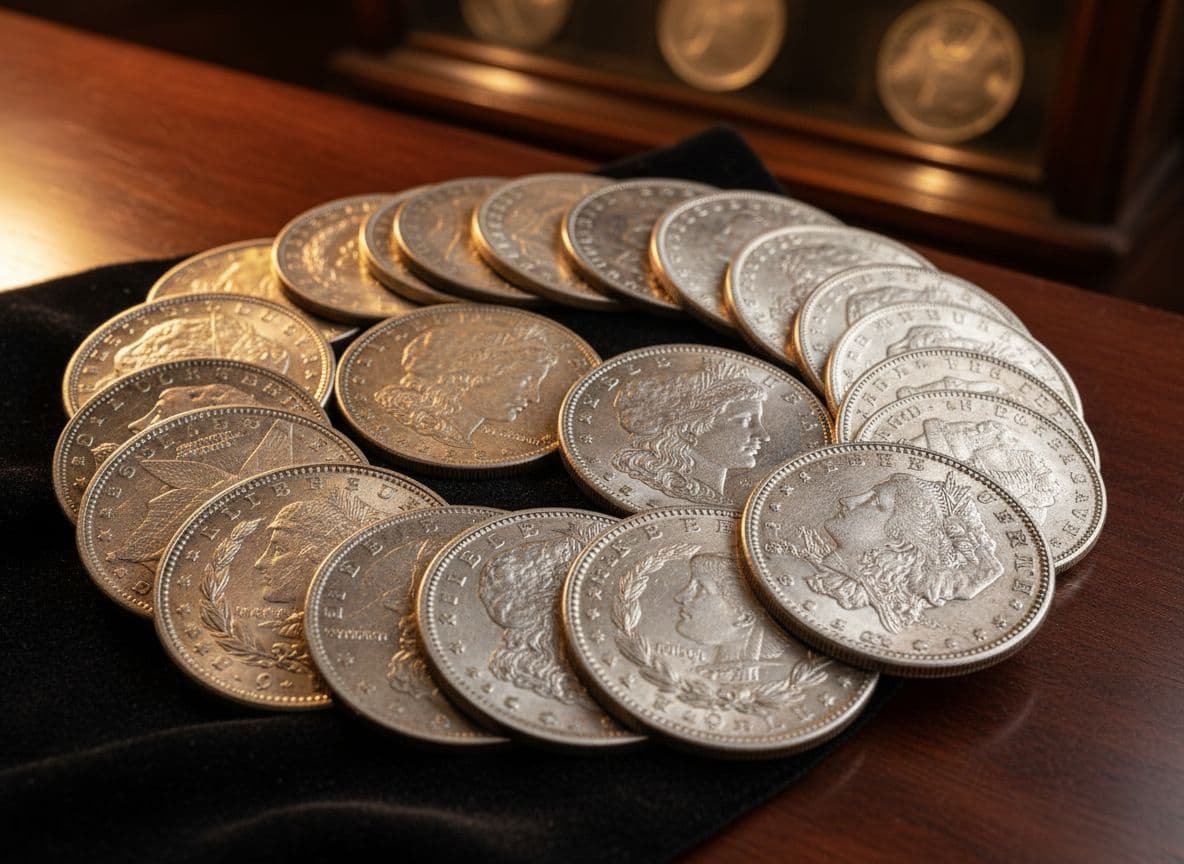
Silver dollars are among the most recognizable and collected US coins. They carry both numismatic value and precious metal content, making them appealing to collectors and investors alike. Even common-date silver dollars are worth $20-$50 due to their silver content, while rare dates can reach thousands or even millions. Many people inherit silver dollars without knowing whether they have common coins worth melt value or rare gems worth a fortune. A quick AI scan can tell you in seconds.
Key Factors That Affect Silver Dollars Value
Understanding what drives the price of silver dollars helps you get the most accurate valuation.
Type & Era
Bust dollars (1794-1804) start at $1,000+. Seated Liberty dollars (1840-1873) range from $200-$2,000+. Trade dollars (1873-1885) are $100-$500+. Morgan dollars (1878-1921) are $30-$100,000+. Peace dollars (1921-1935) are $25-$200+. Eisenhower dollars (1971-1978) are $1-$30 for most.
Silver Content
Morgan and Peace dollars contain 0.77 oz of 90% silver. Eisenhower dollars from 1971-1976 came in both clad (no silver, face value) and 40% silver (collector sets, worth $8-$15). Knowing which version you have is essential.
Date & Mint Mark
Key dates vary by type. For Morgans: 1893-S, 1895, 1889-CC. For Peace dollars: 1921 (high relief), 1928, 1934-S. Mint marks dramatically affect rarity and value, especially CC (Carson City) marks on Morgans.
Condition & Surfaces
Silver dollars in uncirculated condition are worth multiples of circulated examples. Original, untouched surfaces with natural toning are preferred. Cleaned or polished coins lose 30-70% of their numismatic premium.
Provenance & Holders
GSA (Government Services Administration) Morgan dollars in original holders carry 20-50% premiums. Coins from famous collections or hoards can also command premiums. Professional grading (PCGS, NGC) adds value and liquidity.
Tips for Valuing Silver Dollars
Get the most accurate valuation by following these tips when photographing your silver dollars.
Photograph both sides of the coin in natural or bright light
Show the date clearly and check for small mint marks
Do not clean or polish the coin before photographing
If the coin is in a holder or case, photograph it inside the holder
Silver Dollars Market Insights
Silver dollars benefit from dual demand. Collectors want specific dates and grades, while investors buy them for silver content. This creates a reliable price floor that other collectibles lack. The market is massive and liquid, with millions of transactions annually on eBay, Heritage Auctions, and at coin shows. Silver price movements directly impact common-date silver dollar values, while numismatic demand drives key-date prices independently.
Notable Silver Dollars Values
Real-world examples of what specific silver dollars have sold for, so you can benchmark your own.
| Silver Dollar | Condition | Typical Value |
|---|---|---|
| 1921 Morgan Silver Dollar | Circulated (VF-XF) | $25 - $55 |
| 1881-S Morgan Silver Dollar | Uncirculated (MS-63) | $90 - $160 |
| 1922 Peace Silver Dollar | Circulated (VF-EF) | $28 - $50 |
| 1927-S Peace Silver Dollar | Circulated (VF) | $80 - $200 |
| 1893-S Morgan Silver Dollar | Circulated (VG-F) | $5,000 - $20,000+ |
| 1895 Morgan Silver Dollar (Proof) | Proof (PR-63 to PR-65) | $30,000 - $75,000+ |
| 1971-D Eisenhower Dollar | Circulated | $1 - $5 |
| 1971-S Eisenhower Dollar (Silver) | Uncirculated (MS-63) | $15 - $35 |
| 1884-CC Morgan Silver Dollar | Uncirculated (MS-63) | $350 - $700 |
Based on PCGS Price Guide, NGC Price Guide, and recent eBay sold listings and heritage auction records.
Find Out What Your Silver Dollars Are Worth
Upload a photo now and get a free AI-powered valuation in seconds. No sign-up required.
Silver Dollars Valuation FAQ
Are all silver dollars actually silver?
No. Morgan (1878-1921) and Peace (1921-1935) dollars are 90% silver. Some Eisenhower dollars (1971-1978) are 40% silver (special mint/proof sets only). most Ike dollars are copper-nickel clad with no silver content. Susan B. Anthony and Sacagawea dollars contain no silver.
What is the most valuable silver dollar?
The 1794 Flowing Hair dollar. The first US dollar coin. Sold for $10 million. Among more commonly available types, the 1893-S Morgan ($3,000+) and 1928 Peace dollar ($200+) are the most valuable key dates.
How much is a common silver dollar worth?
Common-date Morgan and Peace dollars in circulated condition are typically worth $30-$50, which includes their silver melt value plus a small collector premium. The exact value depends on current silver prices.
Should I sell silver dollars individually or as a lot?
Sell key dates and high-grade coins individually to maximize value. Sell common-date circulated coins in lots. Dealers and investors buy them by the roll or bag based on silver content. Our AI helps you identify which approach is best for each coin.
What year silver dollars are worth the most?
For Morgans: 1893-S, 1895 (proof), 1889-CC. For Peace dollars: 1921 high relief, 1928, 1934-S. For all silver dollars: earlier types (Bust, Seated Liberty) are generally more valuable due to age and rarity.
Value anything, anytime
Unlimited valuations, saved history and full reports in the free app.