Last updated: September 2026
How Much Is My Morgan Silver Dollar Worth?
Morgan silver dollars (1878-1921) are the most popular and widely collected US coins. Values range from $25 for common dates in circulated grades to over $100,000 for rare key dates in mint state. Upload a clear photo and our AI will estimate your coin's value based on date, mint mark, and condition.
Get the free app for unlimited scans


Compare real prices
See what morgan silver dollars are listed for right now
Affiliate link: we earn a commission if you buy, at no extra cost to you.
What do you want to value?
Get the free app for unlimited scans
Why Knowing Your Morgan Silver Dollars Value Matters
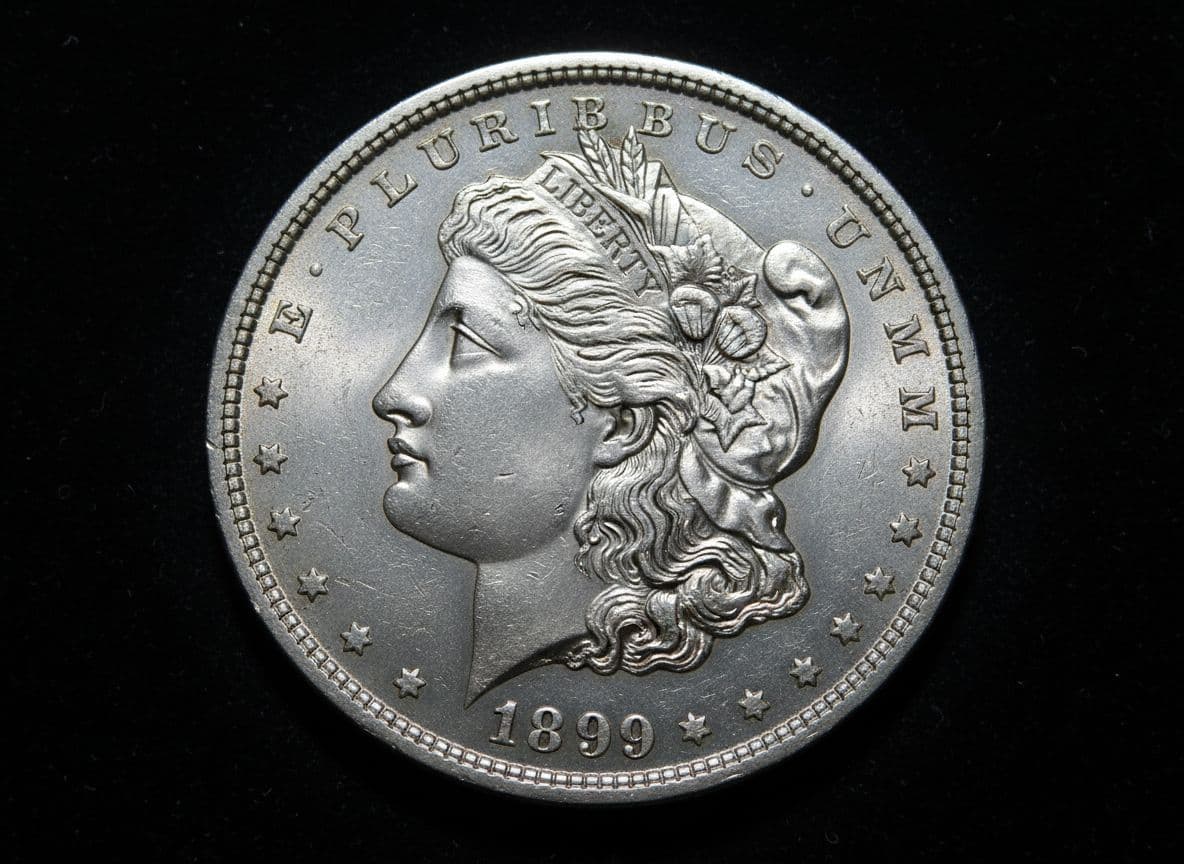
Morgan dollars contain 0.77 troy ounces of silver, giving every coin a base melt value of $20+. But collector premiums often far exceed melt value. Even common dates in AU condition sell for $40-$60. Key dates like 1893-S ($3,000+), 1889-CC ($500+), and 1895 proof ($50,000+) are among the most valuable US coins. Many Morgan dollars were stored in bank vaults and Treasury bags, meaning high-grade examples surface regularly. Whether you inherited a single coin or a full collection, knowing the value before selling is essential to avoid getting lowballed by dealers.
Key Factors That Affect Morgan Silver Dollars Value
Understanding what drives the price of morgan silver dollars helps you get the most accurate valuation.
Date & Mint Mark
Key dates include 1893-S ($3,000+), 1895 proof-only ($50,000+), 1889-CC ($500+), 1879-CC ($300+), and 1884-S ($200+).common dates like 1881-S, 1882-S, and 1885-O are worth $30-$60 in most grades. The mint mark (O, S, CC, D) is on the reverse above the DO in DOLLAR.
Condition & Grade
Morgans in VG-VF grade average $30-$50 for common dates. AU coins bring $45-$70. MS-63 jumps to $60-$120, and MS-65 can reach $150-$500+. For key dates, the grade multiplier is even more dramatic. A 1893-S in VG is $3,000 but in MS-65 exceeds $200,000.
Carson City (CC) Mint
Any Morgan dollar from the Carson City mint carries a significant premium due to lower mintages and collector demand. Even common CC dates like 1882-CC and 1883-CC are worth $80-$150, compared to $30-$50 for the same dates from other mints.
Toning & Eye Appeal
Original, naturally toned Morgan dollars. Especially those with rainbow or crescent toning.command strong premiums from collectors. A beautifully toned MS-65 Morgan can sell for 2-5x the price of a plain white example in the same grade.
VAM Varieties
VAM (Van Allen-Mallis) varieties are die varieties cataloged across the Morgan dollar series. Popular VAMs like the 1878 8 Tail Feather, 1887 Donkey Tail, and various doubled dies can add 20-200% premiums over normal coins.
Tips for Valuing Morgan Silver Dollars
Get the most accurate valuation by following these tips when photographing your morgan silver dollars.
Photograph both obverse (Liberty head) and reverse (eagle) in good lighting
Check for the mint mark on the reverse, above 'DO' in 'DOLLAR'
Never clean or polish your Morgan dollar. Original surfaces are critical for value
Look for Carson City (CC) mint mark. These are always worth a premium
Morgan Silver Dollars Market Insights
Morgan dollars are the backbone of the US coin market. They have the largest collector base of any US coin series and excellent liquidity. You can sell a Morgan dollar anywhere in the world. The series benefits from both numismatic demand and silver bullion demand, providing a price floor tied to silver spot prices. GSA (Government Services Administration) hoard Morgans in original holders command premiums of 20-50% above raw coins. The market is mature and well-documented, making it one of the safest areas of coin collecting for preservation of value.
Notable Morgan Silver Dollars Values
Real-world examples of what specific morgan silver dollars have sold for, so you can benchmark your own.
| Morgan Silver Dollar | Condition | Typical Value |
|---|---|---|
| 1878 7TF Morgan Dollar (Philadelphia) | Circulated (VF-XF) | $40 - $90 |
| 1881-S Morgan Dollar | Mint State (MS-63) | $100 - $180 |
| 1884-O Morgan Dollar | Mint State (MS-64) | $90 - $160 |
| 1889-CC Morgan Dollar | Circulated (VF-30) | $700 - $1,500 |
| 1893-S Morgan Dollar | Circulated (VG-8) | $4,000 - $8,000 |
| 1895 Morgan Dollar (Proof) | Proof (PR-60 to PR-63) | $20,000 - $45,000 |
| 1921 Morgan Dollar (Philadelphia) | Circulated (AU-55) | $25 - $45 |
| 1879-CC Morgan Dollar | Circulated (F-12) | $120 - $250 |
| 1896-O Morgan Dollar | Mint State (MS-63) | $300 - $700 |
Based on PCGS price guides, NGC price guides, and recent eBay sold listings and major auction records.
Find Out What Your Morgan Silver Dollars Are Worth
Upload a photo now and get a free AI-powered valuation in seconds. No sign-up required.
Morgan Silver Dollars Valuation FAQ
What is the most valuable Morgan silver dollar?
The 1895 proof Morgan dollar is the rarest, with only 880 struck and no business strike coins known. It's worth $50,000+. Among circulating coins, the 1893-S is the key date at $3,000+ in Good condition. The 1889-CC, 1879-CC, and 1884-S are also highly valuable.
How much silver is in a Morgan dollar?
Each Morgan dollar contains 0.7734 troy ounces of 90% silver. At current silver prices, this gives every Morgan dollar a minimum melt value of around $20-$25, regardless of date or condition.
Where is the mint mark on a Morgan dollar?
The mint mark is on the reverse (back) of the coin, centered above the 'DO' in 'DOLLAR' and below the wreath. O = New Orleans, S = San Francisco, CC = Carson City, D = Denver (1921 only). No mint mark = Philadelphia.
Are all Morgan silver dollars valuable?
Yes. Every Morgan dollar is worth at least its silver melt value ($20-$25+).common dates in circulated condition sell for $30-$50. Key dates, high-grade examples, and Carson City mint coins are worth significantly more.
What's the difference between Morgan and Peace dollars?
Morgan dollars (1878-1921) feature Lady Liberty with a Phrygian cap. Peace dollars (1921-1935) show Liberty with a radiant crown. Both contain 0.77 oz of silver. Morgans are generally more valuable due to greater collector demand and more key dates.
Morgan Silver Dollars Guides & Articles
Value anything, anytime
Unlimited valuations, saved history and full reports in the free app.