Last updated: September 2026
How Much Is My Mercury Dime Worth?
Mercury dimes (officially Winged Liberty Head dimes) were minted from 1916 to 1945. Most common dates are worth $2-$5 for their silver content, but key dates like the 1916-D ($1,000+) and Full Bands examples can be worth significantly more. Upload a photo for a fast, free valuation.
Get the free app for unlimited scans


Compare real prices
See what mercury dimes are listed for right now
Affiliate link: we earn a commission if you buy, at no extra cost to you.
What do you want to value?
Get the free app for unlimited scans
Why Knowing Your Mercury Dimes Value Matters
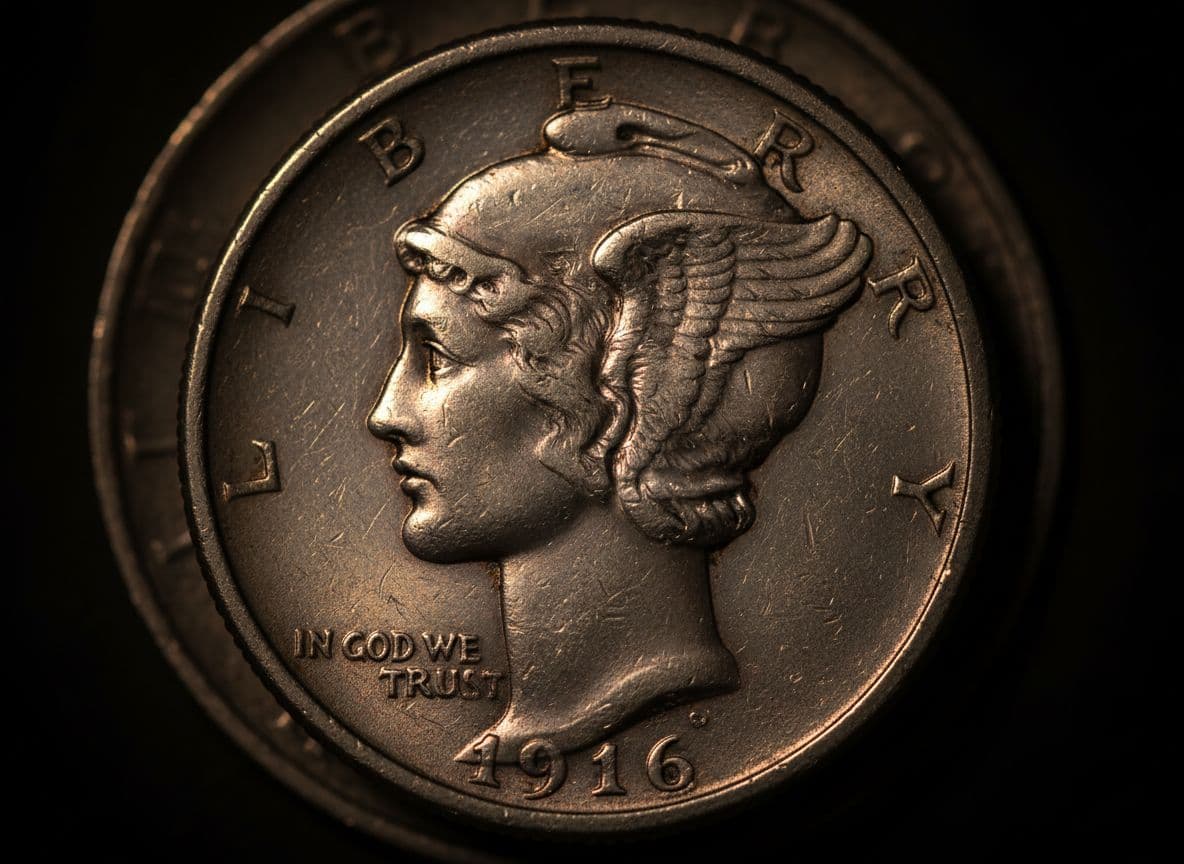
Mercury dimes are small coins with big potential value. The 1916-D Mercury dime is one of the most famous US key-date coins, with only 264,000 minted. Worth $1,000+ even in Good condition. Beyond key dates, Full Bands (FB) Mercury dimes. Those with complete separation of the horizontal bands on the fasces.command major premiums. A common-date Mercury dime in MS-65 might be worth $15, but the same coin with Full Bands designation could be worth $50-$200.
Key Factors That Affect Mercury Dimes Value
Understanding what drives the price of mercury dimes helps you get the most accurate valuation.
The 1916-D Key Date
The 1916-D Mercury dime had a mintage of only 264,000. The lowest in the series. It's worth $1,000+ in Good, $3,000+ in Fine, and $10,000+ in MS-63. It's one of the most counterfeited US coins, so authentication is important for valuable examples.
Other Key & Semi-Key Dates
1921 ($50-$200+), 1921-D ($60-$250+), 1926-S ($15-$200+), 1931-D ($10-$50+), and 1931-S ($8-$40+) are the main semi-key dates. Overdates like 1942/1 ($400+) and 1942/1-D ($500+) are valuable errors.
Full Bands (FB) Designation
The reverse features a fasces (bundle of rods) with horizontal bands. If these bands are fully separated and distinct, the coin receives a Full Bands designation from grading services. FB coins command 2-10x premiums over non-FB examples.
Silver Content
Mercury dimes are 90% silver with 0.0723 troy ounces of silver per coin.common dates are worth at least $2-$3 for their silver content. Silver investors buy them in bulk as 'junk silver'. typically sold by face value ($1.40 = 14 dimes).
Condition & Grade
Common dates in Good condition are worth $2-$5. Fine: $3-$8. XF: $5-$15. MS-63: $10-$30. MS-65 FB: $50-$200+. For key dates, grade matters enormously. Each step up in condition can double or triple the value.
Tips for Valuing Mercury Dimes
Get the most accurate valuation by following these tips when photographing your mercury dimes.
Photograph both sides with the date clearly visible on the obverse
Check the reverse for the mint mark. It's to the left of the fasces at the bottom
For potential Full Bands coins, get a close-up of the horizontal bands on the fasces
Compare 1916 dimes carefully. The rare 1916-D has a D mint mark on the reverse
Mercury Dimes Market Insights
Mercury dimes are one of the most popular US coin series, valued for their beautiful Art Deco design and accessible price points. The series offers collecting goals for every budget. From completing a set of common dates ($200-$500) to pursuing key dates and Full Bands examples worth thousands. Junk silver demand from precious metals investors ensures strong liquidity for common dates. The 1916-D remains a perennial top-10 most-wanted US coin.
Notable Mercury Dimes Values
Real-world examples of what specific mercury dimes have sold for, so you can benchmark your own.
| Mercury Dime | Condition | Typical Value |
|---|---|---|
| 1916-D Mercury Dime | Fine (F-12) | $800 - $1,800 |
| 1916-D Mercury Dime | Graded MS-63 | $15,000 - $35,000+ |
| 1942/41 Mercury Dime (Philadelphia) | Fine to VF | $300 - $700 |
| 1942/41-D Mercury Dime | Fine to VF | $500 - $1,200 |
| 1921 Mercury Dime | Good to Fine | $60 - $180 |
| 1921-D Mercury Dime | Good to Fine | $80 - $220 |
| Common Date Mercury Dime (1934-1945) Full Bands | Graded MS-65 FB | $80 - $400 |
| Common Date Mercury Dime (1930s-1940s) | Average Circulated (G-VF) | $3 - $8 |
| 1945 Micro S Mercury Dime | Fine to AU | $15 - $60 |
Based on PCGS and NGC price guides, NGC auction records, and recent eBay sold listings for Mercury Dimes.
Find Out What Your Mercury Dimes Are Worth
Upload a photo now and get a free AI-powered valuation in seconds. No sign-up required.
Mercury Dimes Valuation FAQ
How do I tell if my Mercury dime is a 1916-D?
Check the reverse for a small 'D' mint mark to the left of the fasces, near the bottom. The 1916-D is heavily counterfeited, so if you believe you have one, professional authentication by PCGS or NGC is strongly recommended.
What does Full Bands mean on a Mercury dime?
Full Bands (FB) refers to complete, distinct separation of the horizontal bands on the fasces on the reverse. This feature was often weakly struck, making FB coins scarcer and more valuable. Typically 2-10x the price of non-FB examples.
Are Mercury dimes real silver?
Yes. All Mercury dimes (1916-1945) are 90% silver, containing 0.0723 troy ounces of silver each. This gives every Mercury dime a minimum melt value of about $2-$3 at current silver prices.
What is a 1942 over 1 Mercury dime?
The 1942/1 overdate was created when a 1942-dated die was punched over a 1941-dated die, leaving visible traces of the '1' beneath the '2'. Both Philadelphia and Denver versions exist, worth $400+ and $500+ respectively in Fine condition.
How should I store Mercury dimes?
Store individual valuable coins in 2x2 cardboard flips or plastic capsules. For bulk storage, use coin tubes or albums with non-PVC pages. Keep them in a cool, dry place. Never use PVC plastic (soft, flexible holders) as it damages coins over time.
Mercury Dimes Guides & Articles
Value anything, anytime
Unlimited valuations, saved history and full reports in the free app.