Last updated: September 2026
How Much Is My Violin Worth?
Whether you have an antique European violin, a modern handmade instrument, a student violin, or an inherited family instrument, our AI analyzes the maker, origin, age, and condition to provide a market valuation. From student instruments to concert-quality violins worth thousands, get an informed estimate before selling.
Get the free app for unlimited scans


Compare real prices
See what violins are listed for right now
Affiliate link: we earn a commission if you buy, at no extra cost to you.
What do you want to value?
Get the free app for unlimited scans
Why Knowing Your Violins Value Matters
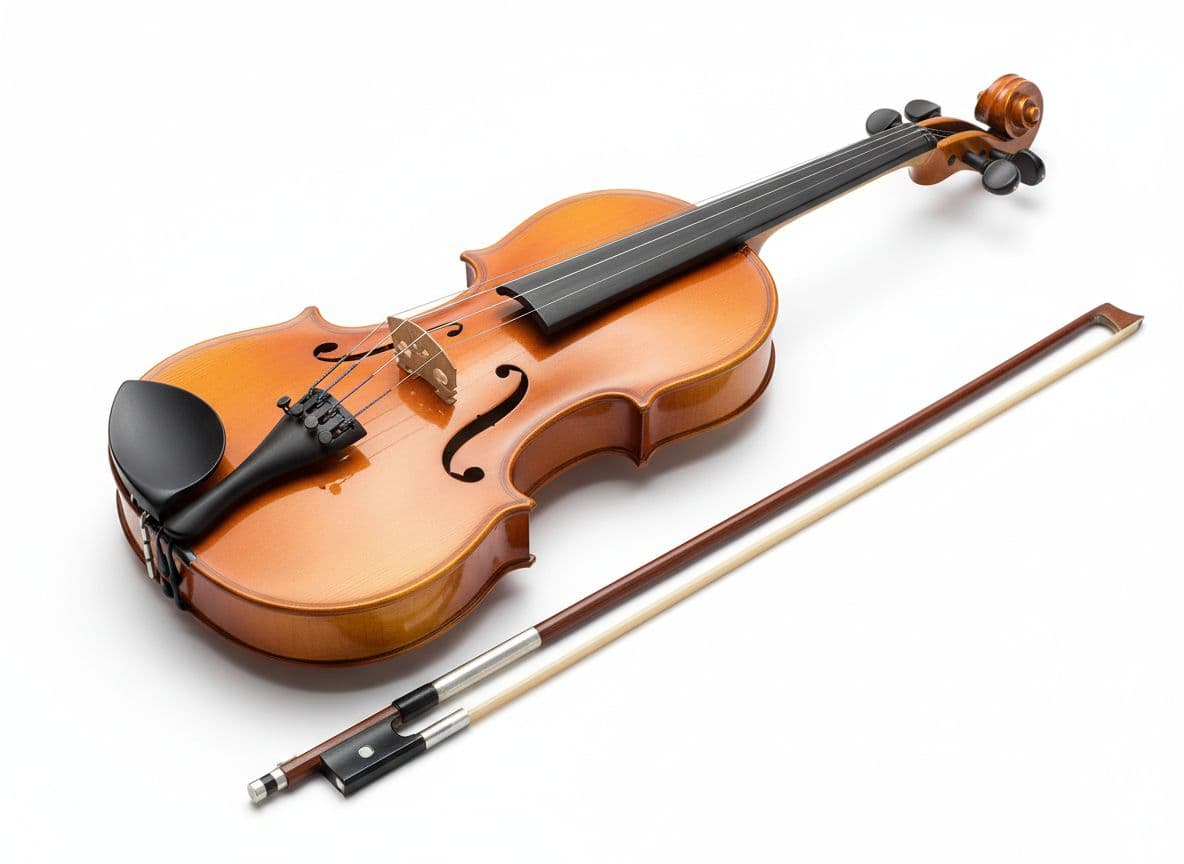
The violin market spans one of the widest value ranges of any single item category. From $50 student instruments to multi-million-dollar Stradivarius masterpieces. Most people who inherit a violin have no idea whether they are holding a $100 factory instrument or a $10,000 handmade treasure. The labels inside violins are notoriously unreliable. Thousands of student instruments carry labels reading 'Stradivarius' or 'Guarneri' that are simply model designations, not authentic attribution. Conversely, some unmarked violins from skilled European workshops are worth thousands. Professional appraisal typically costs $50-$200, but even a preliminary estimate can tell you whether your violin warrants that investment. The condition of the top plate, soundpost, bridge, neck angle, and varnish all significantly affect both playability and value. Cracks, especially in the top plate, can reduce value by 50% or more if unrepaired, yet expert repair can preserve most of the value. Whether you are settling an estate, selling a student instrument your child has outgrown, or curious about a family heirloom, understanding violin values prevents costly mistakes.
Key Factors That Affect Violins Value
Understanding what drives the price of violins helps you get the most accurate valuation.
Maker & Origin
Italian violins from Cremona, Brescia, and other workshop cities command the highest prices. German workshop violins (Mittenwald, Markneukirchen) are the most common antique violins, ranging from $500 to $10,000+. French violins from makers like Vuillaume and Bernardel are highly valued. Modern American luthiers and contemporary makers can produce instruments worth $5,000-$50,000+. Chinese and Eastern European factory instruments are the most common and least valuable.
Age & Period
Age alone does not determine value. A 200-year-old German factory violin may be worth less than a 20-year-old handmade instrument. However, violins from the 1700s Italian golden age are the most valuable instruments in the world. 18th and 19th-century European workshop instruments are valued based on maker attribution and quality. Pre-war (before 1940) European instruments generally carry more collector interest than post-war examples.
Condition & Structural Integrity
Cracks are the most significant condition issue. Top plate cracks near the soundpost or f-holes can reduce value 30-60% even when properly repaired. Back cracks are slightly less critical. Neck resets, bridge and soundpost condition, peg function, and fingerboard wear all affect playability and value. Original varnish is important for high-value instruments. Revarnishing reduces collector value significantly. A well-set-up instrument with good strings, bridge, and soundpost is worth more than one needing work.
Sound Quality
Unlike most collectibles, violins are functional instruments and their sound quality directly impacts value. A violin that sounds exceptional is worth more than one of similar provenance that sounds mediocre. Tone evaluation is subjective but experienced players and dealers can assess projection, warmth, and responsiveness. For high-value instruments, sound quality can add or subtract thousands from the value based on maker attribution alone.
Provenance & Documentation
Certificates of authenticity from recognized experts (Bein & Fushi, Tarisio, leading dealers) significantly increase value and buyer confidence. A documented ownership history, especially for instruments with named maker attribution, adds value. Auction records from houses like Tarisio, Christie's, and Sotheby's establish market precedents. For instruments without documentation, expert examination of wood, varnish, and construction style determines attribution.
Tips for Valuing Violins
Get the most accurate valuation by following these tips when photographing your violins.
Photograph the violin from the front, back, and both sides showing the full outline, varnish condition, and any visible damage
Include a close-up of the label inside the violin (visible through the f-hole). use your phone's flashlight for a clear photo
Show the scroll from the front and side, as scroll carving quality indicates the instrument's quality level
Photograph any cracks, repairs, wear patterns, or damage. These significantly affect value assessment
Violins Market Insights
The violin market operates through specialized channels quite different from general collectibles. Tarisio is the leading online auction house for string instruments, providing transparent pricing data. Major dealers like Bein & Fushi, Reuning & Son, and Rare Violins of New York handle high-value instruments. For student and intermediate instruments, local violin shops offer consignment and trade-in programs. Online marketplaces (eBay, Reverb) work for instruments under $2,000 but lack the authentication and trust needed for valuable pieces. The market for quality antique European violins remains strong, driven by professional players, advanced students, and collectors. Chinese-made instruments have dramatically improved in quality, creating strong competition in the $500-$3,000 range. If you have inherited a violin, the most important first step is having it examined by a reputable violin shop. Many offer free initial assessments that can determine if a full appraisal is warranted.
Notable Violins Values
Real-world examples of what specific violins have sold for, so you can benchmark your own.
| Violin | Condition | Typical Value |
|---|---|---|
| Student Violin (factory-made, 4/4, Chinese) | Used | $50 - $300 |
| German Trade Violin (late 19th-early 20th century) | Used | $200 - $1,500 |
| Antonio Stradivari Copy (modern luthier-made) | Used | $500 - $5,000 |
| Workshop Violin attributed to Mittenwald School (c. 1880-1920) | Authenticated | $1,000 - $6,000 |
| Nicolò Gagliano School Violin (Naples, 18th century) | Authenticated | $30,000 - $150,000 |
| Giovanni Battista Guadagnini (attributed, c. 1760-1780) | Authenticated | $200,000 - $800,000 |
| Joseph Guarnerius del Gesù (c. 1730-1744) | Authenticated | $3,000,000 - $10,000,000+ |
| Antonio Stradivari (authentic, c. 1700-1720) | Authenticated | $5,000,000 - $16,000,000+ |
| Modern Soloist Violin by living luthier (award-winning) | New | $10,000 - $80,000 |
Based on major auction house records (Tarisio, Skinner, Brompton's), dealer catalogs, and reported private sale data for string instruments.
Find Out What Your Violins Are Worth
Upload a photo now and get a free AI-powered valuation in seconds. No sign-up required.
Violins Valuation FAQ
My violin says Stradivarius inside. Is it real?
Almost certainly not. Millions of student and workshop violins carry labels reading 'Antonius Stradivarius Cremonensis' or similar. These are model designations, not claims of authenticity. Genuine Stradivarius violins (about 650 survive) are worth $1-$20+ million and are all documented and accounted for. However, the violin could still have value based on its actual maker and quality, so it is worth having it examined.
How do I find out who made my violin?
Start with the label inside (visible through the left f-hole), but labels are often inaccurate, replaced, or generic. An experienced violin dealer or luthier can examine the wood, varnish, construction details, and style to estimate the origin (Italian, German, French, etc.) and approximate date. For potentially valuable instruments, expert appraisers at firms like Tarisio or Bein & Fushi provide definitive attributions. Many local violin shops offer free preliminary assessments.
Are old violins worth more than new ones?
Not necessarily. A high-quality modern handmade violin ($5,000-$50,000) can sound as good as or better than a 100-year-old workshop instrument of similar value. The most valuable old violins are by recognized Italian makers and their value is driven by rarity and historical significance.common old German and Czech workshop violins (the majority of inherited instruments) are typically worth $200-$2,000. Often less than a good modern instrument.
What should I do with an inherited violin?
Take it to a reputable violin shop for a free initial assessment. Most shops will tell you the approximate value range and whether a formal appraisal is worthwhile. Do not attempt to clean, repair, or modify the instrument, as improper handling can reduce value. Store it in its case, away from extreme temperatures and humidity. If the instrument has value, the shop can discuss consignment, private sale, or auction options.
How much does a violin appraisal cost?
Formal written appraisals typically cost $50-$200 for insurance or estate purposes. Many violin shops offer free verbal estimates that can tell you the approximate value range without a formal document. For high-value instruments requiring expert attribution, appraisals from recognized authorities may cost more but are essential for authentication. Always get an appraisal before selling a potentially valuable instrument to avoid accepting a fraction of its worth.
Violins Price Guides
Value anything, anytime
Unlimited valuations, saved history and full reports in the free app.