Last updated: September 2026
How Much Is My Record Collection Worth?
Vinyl records have experienced an extraordinary resurgence, with new and vintage pressings commanding serious money from collectors and music lovers alike. Our calculator analyzes your collection's size, genres, era, condition, and pressing types to provide an accurate market valuation. Whether you inherited a crate of 1960s jazz records, built a collection of original punk pressings, or have boxes of classic rock LPs in your basement, understanding the true value of your vinyl is essential before selling, insuring, or dividing an estate.
Get the free app for unlimited scans


Compare real prices
See what record collection are listed for right now
Affiliate link: we earn a commission if you buy, at no extra cost to you.
Record Collection Value Value Calculator
Fill in the details below for an accurate estimate
Get the free app for unlimited scans
Why Knowing Your Record Collection Value Value Matters
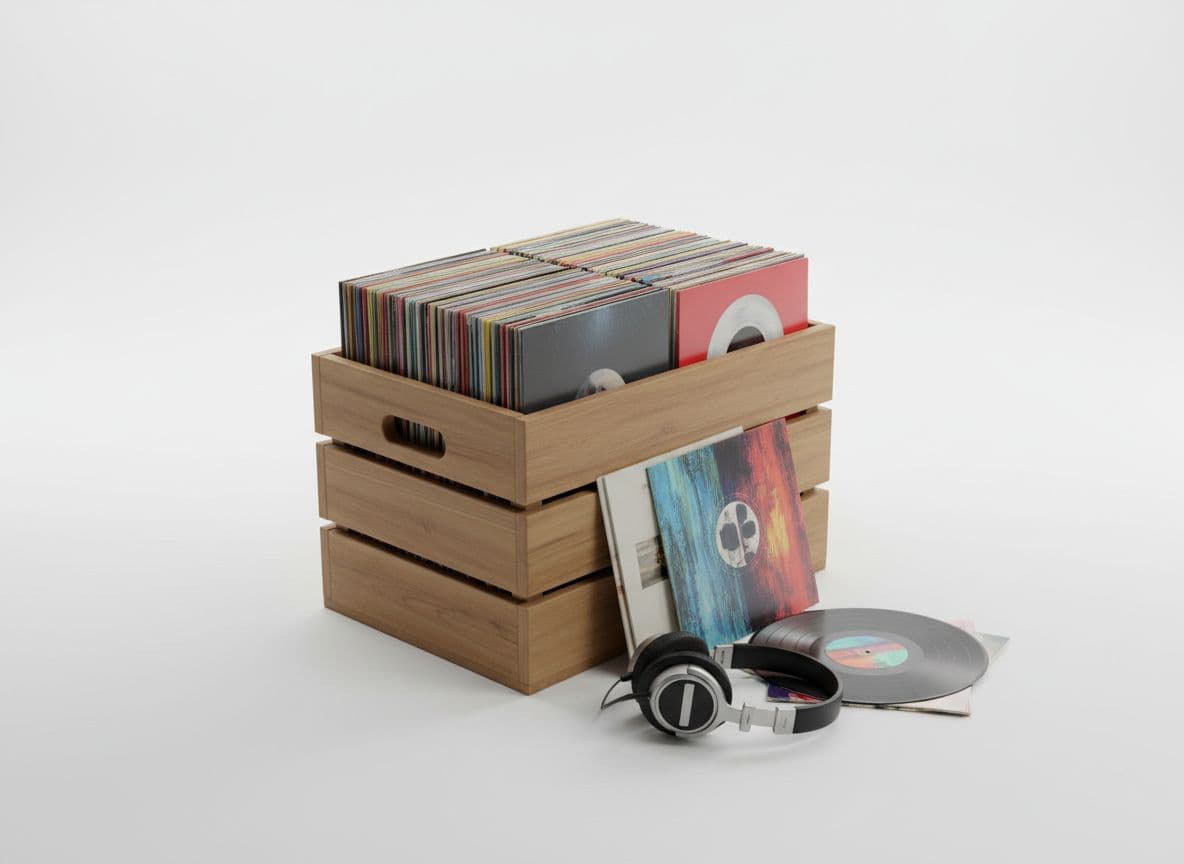
Record collections are one of the most commonly undervalued assets in households across America. A collection of 200-500 records that appears to be 'old junk' can easily be worth $1,000-$10,000 or more if it contains the right titles. Original pressings of landmark albums routinely sell for $100-$500 each. A first pressing of Led Zeppelin's debut album fetches $500-$3,000, early Blue Note jazz LPs bring $200-$5,000, and original hip-hop pressings from the late 1980s and 1990s sell for $50-$300. Even common classic rock titles in excellent condition bring $10-$30 each, meaning a well-maintained collection of 500 records could be worth $5,000-$15,000. The vinyl market has grown over 50% in the last five years, with US vinyl sales surpassing $1.2 billion annually. Many sellers unknowingly accept bulk offers of $1-$2 per record from dealers who cherry-pick the valuable titles and resell them individually for 10-50x that amount. Professional appraisals cost $100-$500 depending on collection size, and most record shops will only offer 25-40% of retail value. Our free calculator helps you understand your collection's true worth so you can make informed decisions about selling individual records versus lots, negotiating with dealers, or listing on Discogs.
Key Factors That Affect Record Collection Value Value
Understanding what drives the price of record collection value helps you get the most accurate valuation.
Pressing & Label Variations
Original first pressings are the holy grail for vinyl collectors and can be worth 5-100x more than reissues of the same album. Key indicators include matrix/runout numbers etched in the dead wax, label variations (e.g., 'deep groove' Blue Note, 'red plum' Atlantic, 'promo stamp' copies), and country of pressing. A first pressing UK Beatles album might be worth $200-$1,000, while a later reissue of the same title sells for $10-$30. Promotional copies ('promo,' 'DJ copy,' white label) often carry 2-5x premiums over standard pressings.
Genre & Artist
Genre dramatically affects collectibility and value. Jazz (especially Blue Note, Prestige, Impulse! labels from the 1950s-60s) commands the highest per-record values, with rare titles reaching $1,000-$50,000. Classic rock (Led Zeppelin, Pink Floyd, Beatles, Rolling Stones) is the most broadly collected genre with strong, stable prices. Early hip-hop originals (1986-1996) have surged in value. Punk and post-punk original pressings from small labels bring $50-$500. Classical vinyl has a smaller but dedicated collector base. Pop, easy listening, and common orchestral records have the lowest per-unit values ($1-$5).
Condition (Vinyl & Sleeve)
Record condition is graded using the Goldmine standard: Mint (M), Near Mint (NM), Very Good Plus (VG+), Very Good (VG), Good (G), Fair (F), and Poor (P). The difference between grades is enormous. A VG+ copy might sell for $50 while the same title in NM condition fetches $200. Both the vinyl and the cover/sleeve are graded separately (e.g., NM/VG+ means near-mint vinyl in a very good plus sleeve). Surface noise, scratches, warps, ring wear on covers, split seams, and writing on labels all reduce value significantly.
Collection Composition
A collection's value depends heavily on its composition. A curated collection of 200 well-chosen titles in great condition can be worth more than 2,000 random records. Key factors include the ratio of desirable genres to common ones, the percentage of original pressings versus reissues, and the overall condition consistency. Collections focused on specific genres or eras (e.g., 1960s psychedelic rock, 1950s jazz) often command premium prices from specialist dealers and collectors.
Completeness & Extras
Records with all original inserts, lyric sheets, posters, stickers, and OBI strips (Japanese pressings) are worth significantly more. A Beatles 'White Album' with the original photos and poster can be worth 2-3x a copy without them. Sealed/unopened records command the highest premiums. A sealed original pressing can sell for 5-20x the price of an opened near-mint copy. Box sets, limited editions, colored vinyl pressings, and autographed copies all carry additional value.
Tips for Valuing Record Collection Value
Get the most accurate estimate by following these tips when evaluating your record collection value.
Count your records accurately and separate them by genre. Jazz, classic rock, and hip-hop collections are worth significantly more per record than pop or easy listening
Check the dead wax (the smooth area near the label) for matrix numbers and etchings that identify original pressings versus reissues
Grade your records honestly using the Goldmine standard. Play a few representative records to assess average condition and note any that skip or have heavy surface noise
Look for records on valuable labels like Blue Note, Prestige, Sun Records, Chess, and original pressings on major labels. These are often the hidden gems in a collection
Record Collection Value Market Insights
The vinyl record market has experienced remarkable growth, with revenues increasing every year for nearly two decades. In the US alone, vinyl sales exceeded $1.2 billion in recent years, outselling CDs for the first time since the 1980s. The collector market is driven by multiple buyer segments: nostalgic baby boomers completing collections, millennials and Gen Z discovering vinyl for the first time, audiophiles seeking superior sound quality, and serious collectors hunting rare pressings. Discogs.com has become the dominant marketplace, with over 60 million items in its database and transparent pricing history. Record Store Day releases and limited pressings create artificial scarcity that drives up prices for modern releases. Vintage records from the 1950s-1970s in excellent condition continue to appreciate steadily at 5-10% annually, while the 1990s hip-hop and electronic music vinyl markets have seen explosive growth of 20-30% in recent years. The biggest risk in the market is condition inflation. Online sellers often overgrade their records, making in-person inspection or buying from reputable sellers important for high-value purchases.
Notable Record Collection Value Values
Real-world examples of what specific record collection value have sold for, so you can benchmark your own.
| Record Collection Value | Condition | Typical Value |
|---|---|---|
| The Beatles - "White Album" (UK Mono First Press, low serial number) | Near Mint | $3,000 - $15,000+ |
| Miles Davis - Kind of Blue (Columbia 6-Eye Mono, US original) | Near Mint | $400 - $1,500 |
| Led Zeppelin - Led Zeppelin I (UK Atlantic Turquoise Plum label) | Very Good+ | $300 - $1,200 |
| Pink Floyd - The Piper at the Gates of Dawn (UK Mono Columbia) | Very Good | $200 - $800 |
| Michael Jackson - Thriller (US Original, 1982) | Near Mint / Sealed | $30 - $150 |
| Nirvana - Nevermind (DGC US Original, 1991) | Very Good+ | $40 - $200 |
| Common 1970s Rock LP (standard major label repress) | Used / Played | $2 - $15 |
| Bob Dylan - The Freewheelin' Bob Dylan (Withdrawn Mono Stereo, rare tracks) | Very Good | $8,000 - $35,000+ |
| Wu-Tang Clan - Enter the Wu-Tang (36 Chambers, US original) | Very Good+ | $80 - $350 |
Based on Discogs sold listings, eBay completed sales, and major auction house records (Heritage, Sotheby's).
Find Out What Your Record Collection Value Are Worth
Upload a photo now and get a free AI-powered valuation in seconds. No sign-up required.
Record Collection Value Valuation FAQ
How do I know if my records are original pressings or reissues?
Check the dead wax (the smooth area between the last groove and the label) for matrix/runout numbers. These codes identify the pressing plant and often the pressing run. Original pressings typically have hand-etched matrix numbers, while reissues often have machine-stamped ones. The label design also helps: record labels changed their look over the decades (e.g., Columbia's '6-eye' label dates to the 1950s-early 1960s, while the '2-eye' came later). Discogs.com is the best free resource for identifying specific pressings. Search for the album and compare your copy's details to the listed variations. Barcode presence usually indicates a later pressing, as barcodes weren't common on records until the 1980s.
What are the most valuable vinyl records?
The most valuable records combine rarity, cultural significance, and demand. Some of the highest-selling records include: original Blue Note jazz pressings ($1,000-$50,000+), Beatles 'butcher cover' Yesterday and Today ($5,000-$125,000), Sex Pistols 'God Save the Queen' on A&M ($10,000-$20,000), Robert Johnson 78rpm originals ($10,000-$30,000), and early Elvis Sun Records 45s ($5,000-$15,000). In more common collections, original pressings of Led Zeppelin, Pink Floyd 'Dark Side of the Moon,' and Miles Davis 'Kind of Blue' in excellent condition consistently sell for $200-$1,000.
Should I sell my records individually or as a complete collection?
This depends on the collection's composition and your time availability. For maximum value, sell the top 10-20% of records individually on Discogs or eBay. These will typically account for 60-80% of the collection's total value. The remaining common records can be sold as bulk lots to dealers or at record fairs. Selling everything individually maximizes total return but can take months or years for a large collection. Selling to a dealer is fastest but expect to receive 25-50% of retail value. A hybrid approach. Selling the gems individually and the rest in genre-based lots. Usually offers the best balance of return and effort.
Do scratched or worn records have any value?
Records in Good (G) or Fair (F) condition still have value, but significantly less than cleaner copies. Typically 10-25% of the near-mint price. However, for very rare records, even heavily worn copies can be valuable because collectors want any copy they can find. A beat-up original pressing of a rare jazz or blues record might still sell for $50-$200 because clean copies rarely appear on the market. Records that skip or are badly warped have minimal collector value but may still sell for $1-$5 each as 'filler' copies, decorative items, or craft materials. Always try playing questionable records before assuming they're worthless. Many records that look rough actually play surprisingly well.
How does the vinyl resurgence affect my collection's value?
The vinyl revival has significantly increased values across the board. Records that sold for $5-$10 at garage sales a decade ago now routinely fetch $20-$50 online. The increased demand has particularly boosted prices for classic rock, jazz, soul/funk, and hip-hop genres. New collectors entering the market create sustained demand, while the finite supply of original pressings means values continue to climb. However, the resurgence has also flooded the market with high-quality reissues (from labels like Analog Productions, Mobile Fidelity, and Music On Vinyl), which can sometimes reduce demand for common original pressings. The net effect is strongly positive for collections heavy on rare titles, original pressings, and well-maintained records.
Record Collection Value Guides & Articles
Value anything, anytime
Unlimited valuations, saved history and full reports in the free app.